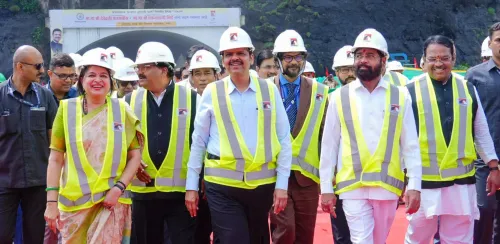
CM Fadnavis Launches NAINA Development Works, Distributes Property Cards in Navi Mumbai
Synopsis
The Chief Minister's Office of Maharashtra announced inauguration of NAINA zone development works, distribution of property cards to landholders, and launch of major connectivity projects in Navi Mumbai on 25 October 2026, with CM Devendra Fadnavis and PM Modi associated with the event.
Key Takeaways
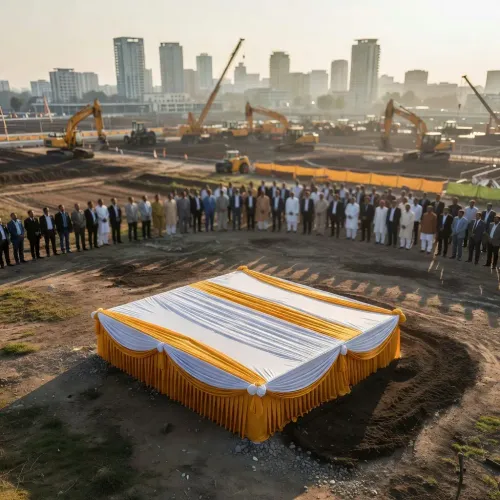
The Chief Minister's Office of Maharashtra announced inauguration of development works in the NAINA (Navi Mumbai Airport Influence Notified Area) zone on 25 October 2026 .
Property cards (मालमत्ता पत्रक) were distributed to landholders in the NAINA zone, providing formal ownership documentation.
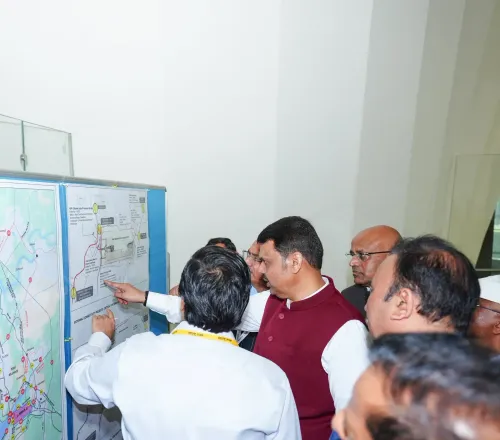
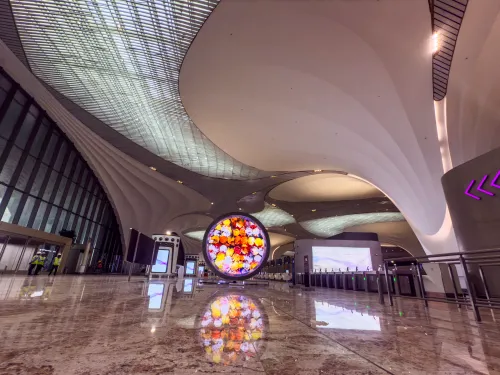
Key connectivity projects in Navi Mumbai were also inaugurated at the same event.
Chief Minister Devendra Fadnavis and Prime Minister Narendra Modi were both associated with the launches.
NAINA is a specially notified planning zone around the proposed Navi Mumbai International Airport , a project with roots going back to in-principle approval in the 1990s .
The property card distribution addresses longstanding legal and administrative uncertainty for landowners in the airport influence zone.
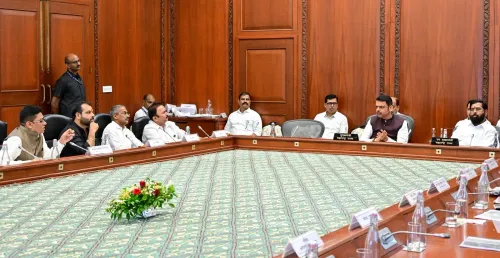
A decade-long promise to landowners around Maharashtra's most ambitious airport project took a concrete step forward on Sunday, 25 October 2026, as the Chief Minister's Office of Maharashtra announced the inauguration of development works in the NAINA (Navi Mumbai Airport Influence Notified Area) zone, the distribution of property cards to landholders, and the launch of key connectivity projects in Navi Mumbai — with Chief Minister Devendra Fadnavis and Prime Minister Narendra Modi both associated with the event.
What NAINA is — and why property cards matter here
NAINA is a specially notified planning zone carved out to regulate and guide development in the influence area of the upcoming Navi Mumbai International Airport. Since its notification, thousands of original landowners in the zone have lived in legal and administrative limbo — their land absorbed or ring-fenced by planning authorities, yet formal title documents often remaining elusive. The distribution of mालमत्ता पत्रक (property cards) to these landholders is a significant administrative act: it formally acknowledges ownership records, enabling residents to access credit, government schemes, and legal certainty over their holdings.
Maharashtra governments have for years tied land-record modernisation and title distribution in notified airport zones to the broader project of building stakeholder confidence in the development process. Getting the paperwork right is, in many ways, the unglamorous prerequisite for everything else.
Navi Mumbai's connectivity push — the bigger picture
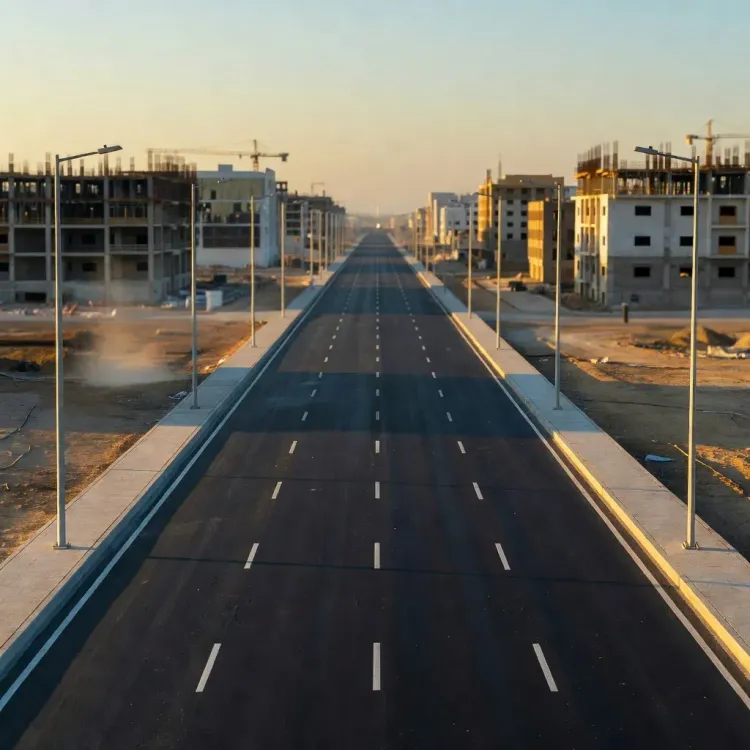
Alongside the NAINA works and property card distribution, the event also saw the inauguration of 'important connectivity projects' in Navi Mumbai — a city built by CIDCO since the 1970s as a planned counterweight to an overcrowded Mumbai. The Mumbai Metropolitan Region has long faced pressure to expand eastward, and every metro line, interchange, and road link in this corridor directly affects how efficiently the airport — when fully operational — plugs into the region's economy.
The Navi Mumbai International Airport project itself stretches back to in-principle approvals in the 1990s, with environmental and regulatory clearances advancing in the decades that followed. Each wave of infrastructure launches in the zone signals that the clock on actual airport operationalisation is ticking louder.
Fadnavis and Modi: a signature infrastructure pairing
The tagging of both @Dev_Fadnavis and @narendramodi in the Chief Minister's Office post underscores the dual ownership of this push — state execution, central political gravity. Fadnavis has made Mumbai Metropolitan Region infrastructure a centrepiece of his administration, while Modi-era branding of large urban and airport projects has become standard across states. The optics reinforce a message: Maharashtra's development story is moving, and it has national backing.
For the landowners who finally receive their property cards, though, the significance is less about optics and more about a document they have waited years for — one that, for the first time, puts legal ground beneath their feet.
Point of View
Property card distribution, and Navi Mumbai connectivity projects signals Maharashtra's intent to move the long-pending airport ecosystem from paper to pavement. Distributing property cards to landholders in a notified airport zone is politically astute — it converts potential opponents of land acquisition into stakeholders with a documented stake in the project's success. The co-branding with the Prime Minister places this squarely within the Centre-state infrastructure narrative that has defined large urban projects since the mid-2010s. The real test will be whether these inaugurations translate into visible construction timelines at the airport site itself.
NationPress
25 Oct 2026
Frequently Asked Questions
What is NAINA in Navi Mumbai?
NAINA stands for Navi Mumbai Airport Influence Notified Area — a specially designated planning zone around the proposed Navi Mumbai International Airport, notified to regulate and guide development in the region surrounding the airport site.
What are property cards and why are they being distributed in NAINA?
Property cards (मालमत्ता पत्रक) are official government documents that formally record land ownership. In the NAINA zone, their distribution gives landholders legal title certainty over their holdings, enabling them to access credit and government schemes — addressing years of administrative ambiguity for those whose land fell within the notified airport influence area.
Who inaugurated the NAINA development works and Navi Mumbai connectivity projects?
The Chief Minister's Office of Maharashtra announced the inaugurations, with both Chief Minister Devendra Fadnavis and Prime Minister Narendra Modi associated with the event on 25 October 2026.
When was the Navi Mumbai International Airport project first approved?
The Navi Mumbai International Airport project received in-principle approval in the 1990s, with environmental clearance and regulatory processes advancing over the following decades.
What is CIDCO's role in Navi Mumbai's development?
CIDCO (City and Industrial Development Corporation) has been the planning and development authority for Navi Mumbai since the 1970s, overseeing the city's growth as a planned satellite to Mumbai, including infrastructure for the NAINA zone.