Delhi Police arrest two in ₹2.10 crore digital-arrest cyber fraud case
Synopsis
A ₹2.10 crore 'digital arrest' fraud — in which a Janakpuri woman was allegedly coerced into transferring crores to fake law enforcement officials — has led to the arrest of two men in Delhi for operating a mule bank account that funnelled part of the proceeds. The case highlights the growing scale of digital-arrest scams targeting individuals across the capital.
Key Takeaways
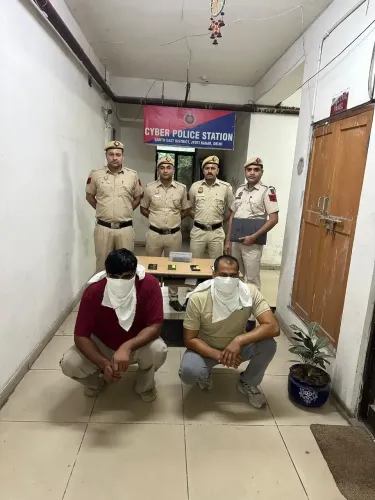
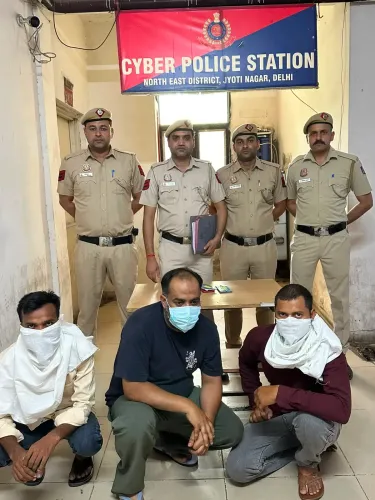
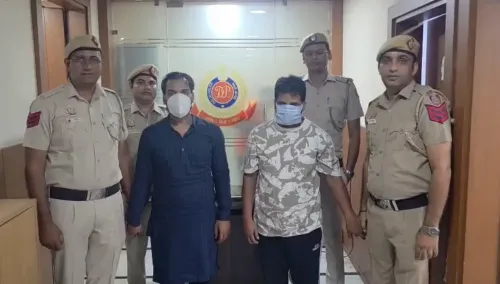
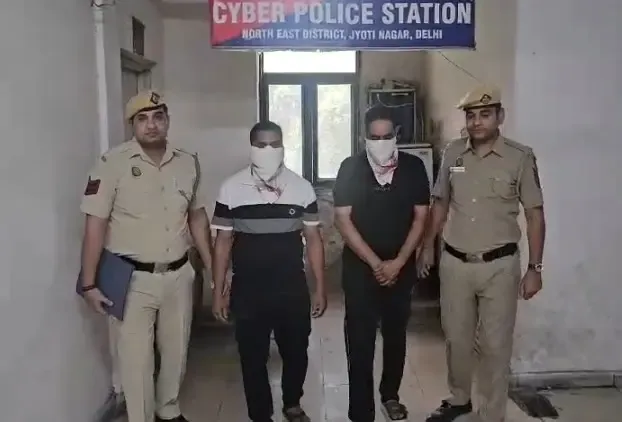
Delhi's North-East District Cyber Police Station arrested two men — Sonu Khan ( 36 , Ghaziabad) and Arjun Chaudhary ( 38 , Shahdara) — in connection with the case.
The fraud victim, Pratibha Jain of Janakpuri , allegedly lost approximately ₹2.10 crore in a 'digital arrest' scam.
A mule bank account in Yamuna Vihar received ₹98,592 on 12 October 2026 as part of the fraud proceeds.
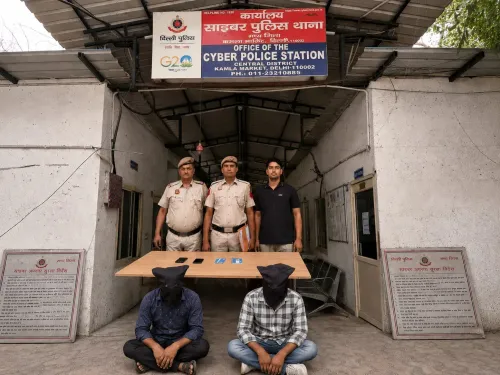
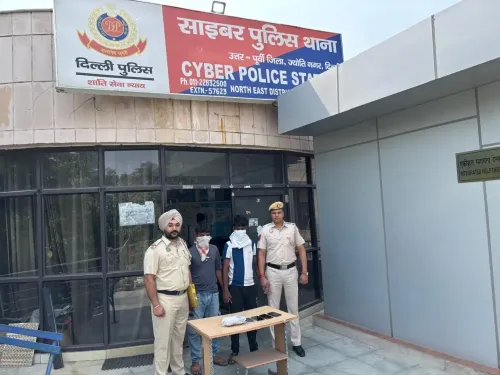
Police recovered 4 mobile phones , 6 debit cards , and 10 chequebooks from the two accused.
The case is registered under Sections 318(4) , 319 , and 340 of the Bharatiya Nyaya Sanhita (BNS) ; further investigation is ongoing.
The Cyber Police Station of Delhi's North-East District has arrested two men for their alleged role in operating a mule bank account linked to a ₹2.10 crore digital-arrest cyber fraud — one of the largest such cases reported in the capital this month. The arrests were made following sustained technical surveillance and a trail of suspicious transactions flagged on the national cybercrime portal.
How the Case Unravelled
The investigation began after scrutiny of complaints registered on the National Cyber Crime Reporting Portal (NCRP). One complaint was shortlisted, and investigators found that a suspected mule bank account in Yamuna Vihar, Delhi, had received ₹98,592 on 12 October. Of this, ₹49,000 was withdrawn in cash the same day, with the remainder withdrawn via cheque.
The transactions were traced to E-FIR No. 0170/2026, dated 15 October 2026, registered at the Special Cell's IFSO unit in Delhi under Sections 318(4), 319, and 340 of the Bharatiya Nyaya Sanhita (BNS). The complaint had been filed by Pratibha Jain, a resident of Janakpuri, Delhi, who alleged she was defrauded of approximately ₹2.10 crore by fraudsters using a so-called 'digital arrest' scheme.
The Accused and Evidence Recovered
Through technical surveillance, police traced the mule account to its holder, Sonu Khan (36), a resident of Ghaziabad, Uttar Pradesh, who was allegedly operating a shop dealing in disposable items in Ashok Nagar, North-East Delhi. From Khan, police recovered three mobile phones, 10 chequebooks, and six debit cards belonging to different banks.
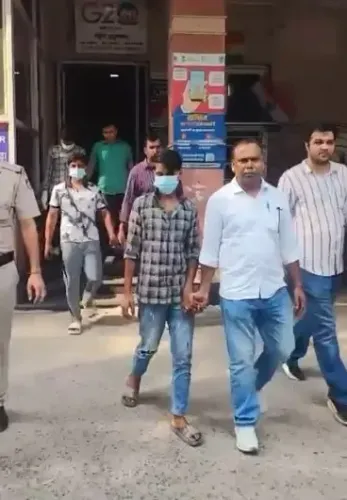
According to police, Khan allegedly disclosed during interrogation that he was working for Arjun Chaudhary (38), a resident of Gali No. 3, Ram Nagar, Shahdara, Delhi, who had reportedly helped set up the shop. Chaudhary was subsequently apprehended, and one mobile phone was recovered from him. Police records indicate neither accused has any prior criminal history.
What Is a 'Digital Arrest' Scam
The 'digital arrest' fraud typically involves criminals impersonating law enforcement or government officials — often via video call — and falsely claiming that the victim is under investigation or faces imminent arrest. Victims are coerced into paying large sums to avoid prosecution. The scheme has been flagged repeatedly by the Ministry of Home Affairs and cybercrime units across India as among the most financially damaging categories of online fraud. Notably, this is at least the third such case of this scale reported from Delhi in 2026.
Investigation Status
A total of four mobile phones, six debit cards, and 10 chequebooks have been seized across both arrests. Further investigation is ongoing, with police examining additional financial trails to determine whether the mule network extends beyond the two accused. Investigators have not yet publicly named any of the masterminds alleged to have orchestrated the original fraud against Pratibha Jain.
Point of View
Often through employment or business-loan lures. Until enforcement reaches that tier, arrests of peripheral figures will do little to deter the scheme's organisers.
NationPress
25 Oct 2026
Frequently Asked Questions
What is a digital-arrest scam?
A digital-arrest scam involves fraudsters impersonating police officers, CBI agents, or other government officials — typically over video call — and falsely claiming the victim is under investigation or faces imminent arrest. Victims are then pressured into transferring large sums of money to avoid prosecution, often losing crores before realising they have been defrauded.
Who are the two men arrested by Delhi Police?
The arrested men are Sonu Khan (36), a resident of Ghaziabad, Uttar Pradesh, and Arjun Chaudhary (38), a resident of Ram Nagar, Shahdara, Delhi. Khan allegedly operated a mule bank account linked to the fraud proceeds, while Chaudhary reportedly facilitated the setup of Khan's shop and operation.
How much money did the fraud victim lose?
Pratibha Jain, a resident of Janakpuri, Delhi, allegedly lost approximately ₹2.10 crore to cyber fraudsters through a digital-arrest scheme. Her complaint, registered on 15 October 2026, triggered the investigation that led to the two arrests.
What is a mule bank account and how was it used in this case?
A mule bank account is a legitimate bank account used — knowingly or unknowingly — to receive and transfer money obtained through criminal activity, obscuring the fraud trail. In this case, a bank account in Yamuna Vihar, Delhi, received ₹98,592 from the alleged fraud proceeds on 12 October 2026, with funds quickly withdrawn in cash and via cheque.
What is the current status of the investigation?
Police say further investigation is in progress. Four mobile phones, six debit cards, and ten chequebooks have been seized. Investigators are examining additional financial trails to determine whether the mule network extends beyond the two accused; the masterminds behind the original fraud have not yet been publicly identified.