Gujarat CM Patel's three-pillar approach to holistic healthcare

Synopsis
The Chief Minister's Office of Gujarat spotlights CM Bhupendra Patel's 'holistic health care' vision — a three-pillar framework of disease prevention, health promotion, and affordable treatment — under its 'Always Forward, Gujarat' governance banner.
Key Takeaways
Gujarat's CMO describes the state's health strategy as a triveni (confluence) of disease prevention, health promotion, and affordable treatment.
Chief Minister Bhupendra Patel has led Gujarat since September 2021 and is the named driver of this integrated health approach.
Gujarat's health policy lineage includes the Mukhyamantri Amrutam Yojana (launched 2012) , a cashless tertiary care scheme later integrated with Ayushman Bharat .
The approach aligns with the National Health Policy 2017 framework, which called for a shift from disease treatment to a broader wellness model.
The post is part of Gujarat's recurring #AgressorGujarat ('Always Forward') governance communications campaign.
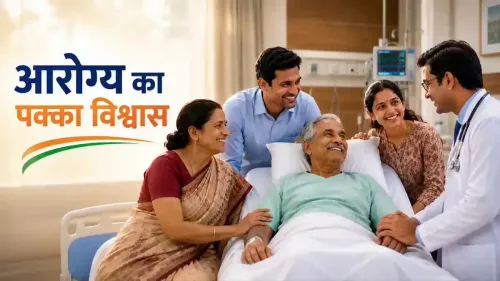
Prevention, promotion, and affordable treatment — Gujarat is framing its public health strategy around a three-point mandate under Chief Minister Bhupendra Patel, with the state's official office highlighting the approach in a post on Sunday, 25 October 2026. The Chief Minister's Office of Gujarat calls it a triveni — a confluence — of disease prevention, health promotion, and accessible care, positioning the state as a model of what it terms 'holistic health care'.
The post, shared under the hashtag #agres_gujarat (Sada Agressor Gujarat — 'Always Forward, Gujarat'), frames the initiative in the state's signature governance language: progress as a continuous, forward-moving identity rather than a one-off announcement. The message invites citizens to learn about the health direction being set under CM Patel's leadership, underscoring the administration's emphasis on communicating its governance philosophy directly and visibly.
The three pillars: what Gujarat's health framework looks like
The CMO's framing rests on three distinct but interlocking ideas. Disease prevention targets upstream intervention — reducing the burden before it reaches hospitals. Health promotion focuses on awareness, lifestyle, and community-level engagement. Affordable treatment closes the loop by ensuring that when illness does strike, cost is not a barrier to care.
This architecture is consistent with Gujarat's longer health policy lineage. The state launched the Mukhyamantri Amrutam Yojana in 2012, one of India's earliest cashless tertiary healthcare schemes for low-income families. That programme was later folded into the national Ayushman Bharat framework, giving Gujarat a foundation on which subsequent health equity measures have been built.
Where Gujarat's messaging fits India's broader health push
Gujarat's emphasis on integrated health strategy is not unique to the state — it mirrors the direction of the National Health Policy 2017, which explicitly called for a shift from a disease-centric to a wellness-centric model. What Gujarat is doing, with visible regularity, is anchoring that national framework to a local identity. The 'Sada Agressor Gujarat' framing is deliberate: it turns a policy stance into a state brand.
Indian states have increasingly competed on health indicators as markers of governance competence, and official communications have become a key part of that contest. Gujarat has historically highlighted health and development outcomes in its public messaging — a pattern this post continues.
As state budget cycles approach and health data for the year takes shape, the real measure will be whether Gujarat's indicators — disease prevalence, treatment access, out-of-pocket expenditure — bear out the ambition the CMO is projecting. The three-pillar slogan is the promise. The numbers will be the verdict.
Point of View
Ayushman Bharat integration) inside a fresh, memorable three-pillar narrative. For CM Bhupendra Patel, health outcomes serve a dual purpose: genuine service delivery and a competitive governance credential as states increasingly benchmark themselves against each other on welfare indicators. The 'Always Forward, Gujarat' idiom is also politically strategic — it positions the state as a pacesetter ahead of potential budget and election cycles. Whether the rhetoric translates into measurable shifts in disease burden and treatment access will determine how durable this brand identity proves.
NationPress
25 Oct 2026
Frequently Asked Questions
What is Gujarat's holistic health care approach under CM Bhupendra Patel?
Gujarat's holistic health care approach, as outlined by the Chief Minister's Office, rests on three pillars: disease prevention, health promotion, and affordable treatment — described together as a 'triveni' or confluence of strategies aimed at improving overall public health outcomes.
What is the Mukhyamantri Amrutam Yojana in Gujarat?
The Mukhyamantri Amrutam Yojana was launched by Gujarat in 2012 to provide cashless tertiary healthcare to low-income families. It was later aligned with the national Ayushman Bharat scheme to broaden coverage.
Who is the Chief Minister of Gujarat in 2026?
Bhupendra Patel is the Chief Minister of Gujarat. He has held the position since September 2021 .
What does #AgressorGujarat mean?
The hashtag translates from Gujarati as 'Always Forward, Gujarat' — it is a recurring branding phrase used by the Gujarat government in official communications to project the state as a leader in governance and development.
How does Gujarat's health policy align with national frameworks?
Gujarat's integrated prevention-promotion-treatment model is consistent with the National Health Policy 2017 , which called for a shift from a disease-centric to a wellness-centric model across Indian states.