Anurag Thakur Highlights Local Products Going Global
Synopsis
BJP MP Anurag Thakur highlighted Vocal for Local success stories from Mann Ki Baat: Purnia makhana reaching Greece, Kalaburagi dal going to Maldives, and Maharashtra tribal brand Shabri Naturals winning Japan's prestigious Good Design Award for tribal-art-inspired packaging.
Key Takeaways
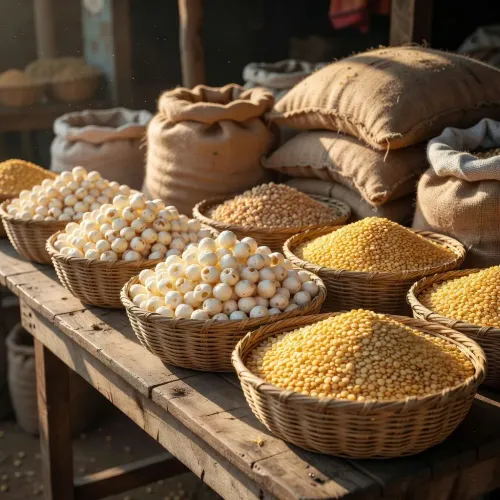
Purnia makhana from Bihar is reportedly now being exported to Greece , per Anurag Thakur's post referencing Mann Ki Baat.
Kalaburagi arhar dal from Karnataka is said to be reaching the Maldives , extending the Vocal for Local campaign's global footprint.
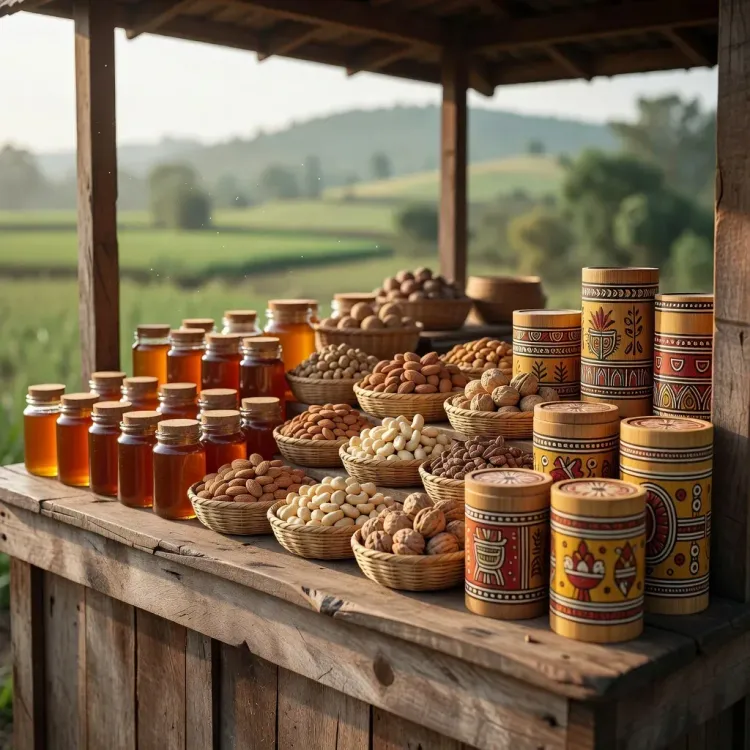
Maharashtra tribal brand Shabri Naturals markets honey, mahua, chironji, and bamboo products with tribal-art packaging.
Shabri Naturals' packaging has won Japan's Good Design Award , established in 1957 and globally recognised for design excellence.
The 'Vocal for Local' campaign was launched under Atmanirbhar Bharat in May 2020 and has increasingly pivoted toward export promotion.
The government's strategy combines GI tagging, branding upgrades, and export promotion to link tribal and rural producers to international markets.
From a Bihar wetland to Greek shelves, and from a Karnataka field to Maldivian kitchens — BJP MP Anurag Thakur on Sunday, 25 October 2026 spotlighted a quiet but consequential shift: India's local produce and tribal craft are breaking into international markets, carried by the momentum of the 'Vocal for Local' campaign.
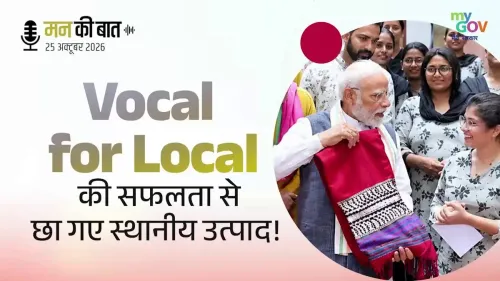
Sharing observations tied to Prime Minister Narendra Modi's monthly radio programme Mann Ki Baat, Thakur pointed to Purnia district in Bihar, whose makhana — the prized fox nut grown in freshwater marshes — is reportedly now reaching Greece. Alongside it, arhar dal cultivated in Kalaburagi, Karnataka, is said to be making its way to the Maldives. Two geographically distant commodities, one shared arc: rural produce finding foreign buyers.
Shabri Naturals and the Japan 'Good Design Award'
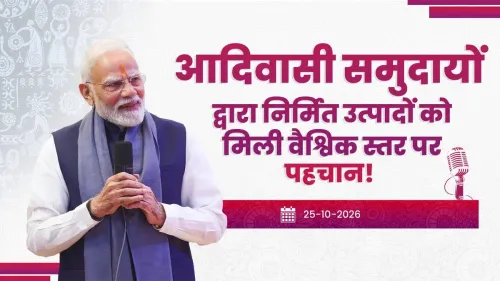
The post's sharpest detail sits in Maharashtra. Tribal communities there, working through a brand called 'Shabri Naturals', have brought to market honey, mahua, chironji, and bamboo-based products. The differentiator is packaging — each unit carries an imprint of tribal art, turning the wrapper itself into a cultural statement. That packaging earned the brand Japan's prestigious 'Good Design Award', an annual recognition established in 1957 that flags outstanding industrial and graphic design on a global stage. Winning it is not a small footnote: it places an adivasi community's craft vocabulary on an international design jury's radar.
Vocal for Local's Journey from Slogan to Export Strategy
'Vocal for Local' entered the national vocabulary as part of the Atmanirbhar Bharat economic package announced in May 2020. Its original framing was domestic — buy Indian, support Indian producers. What Thakur's post underlines is the campaign's outward pivot: the same products that were being urged upon Indian consumers are now competing on international shelves. The mechanism is a combination of GI tagging, export promotion, and — as the Shabri Naturals story illustrates — deliberate investment in design and branding. A product that looks good travels further.
The broader government push since 2020 has linked rural and tribal economies to overseas markets through exactly this chain: identify the produce, authenticate it, package it well, and find the buyer. The makhana, the dal, the forest honey — each represents a different node in that chain becoming operational.
Why Packaging Became the Pivot
For tribal and rural producers, the gap between a good product and a sold product has historically been branding. The Shabri Naturals case is being cited as a model precisely because the design investment paid off in recognition the market understands. A Japanese design award on a product sourced from Maharashtra's forests is the kind of signal that unlocks premium shelf space and export conversations. It converts 'local' into 'distinctive' — and distinctive travels.
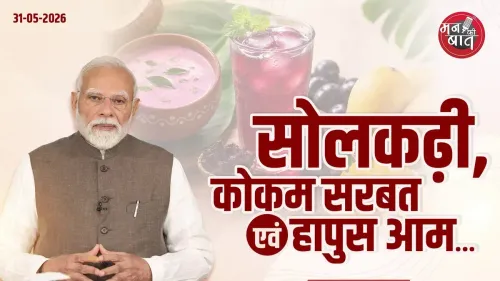
The #MannKiBaat tag on Thakur's post places these examples within the broader communication architecture that the government uses to amplify grassroots success stories — keeping the narrative of rural-to-global progress in regular public circulation. These aren't policy announcements; they're proof points, and the MP is broadcasting them.
Point of View
Not welfare-dependent, which aligns closely with the BJP's Atmanirbhar Bharat branding. The export destinations cited — Greece and Maldives — are carefully chosen to signal both European and neighbourhood market penetration, broadening the story's geographic reach. Whether these become consistent export corridors or remain showcase examples will determine whether Vocal for Local evolves from campaign to durable trade policy.
NationPress
25 Oct 2026
Frequently Asked Questions
What is Vocal for Local and when was it launched?
'Vocal for Local' is a campaign to promote indigenous Indian products domestically and for export. It was launched as part of the Atmanirbhar Bharat economic package in May 2020 .
What is Shabri Naturals and why is it in the news?
Shabri Naturals is a brand through which tribal communities in Maharashtra sell forest products including honey, mahua, chironji, and bamboo goods. It has won Japan's prestigious Good Design Award for its tribal-art-inspired packaging.
What is Japan's Good Design Award?
Japan's Good Design Award is an annual recognition established in 1957 that honours outstanding industrial and graphic design from around the world. Winning it signals globally competitive design quality.
What is makhana and where is it produced in India?
Makhana , or fox nut, is a water crop grown in freshwater marshes. Purnia district in Bihar is one of India's best-known centres for makhana production.
What is Mann Ki Baat?
Mann Ki Baat is a monthly radio programme started by Prime Minister Narendra Modi in October 2014 , used to highlight grassroots success stories and government initiatives directly to citizens.