Rijiju: Bihar Makhana Reaches Greece, Karnataka Dal to Maldives

Synopsis
Union Minister Kiren Rijiju amplified PM Modi's Mann Ki Baat highlights on October 25, 2026, citing Purnia makhana reaching Greece and Kalaburagi's arhar dal reaching the Maldives as evidence that India's Vocal for Local drive is converting regional agricultural specialties into live export corridors.
Key Takeaways
Purnia, Bihar's GI-tagged makhana (foxnut) is now being exported to Greece , according to PM Modi's Mann Ki Baat address.
Kalaburagi, Karnataka's arhar dal (pigeon pea) is reaching the Maldives under the same export push.
Union Minister Kiren Rijiju shared the update on October 25, 2026 , quoting PM Narendra Modi's Mann Ki Baat programme.
The exports are framed as proof of the Vocal for Local initiative, a core pillar of the Atmanirbhar Bharat package announced in May 2020 .
Both crops carry strong regional identity — Purnia's makhana holds a Geographical Indication tag, while Kalaburagi is one of India's leading pigeon-pea districts.
Sustained export volume data from the Ministry of Commerce will be the real indicator of whether these are systemic trade corridors or one-off wins.
A foxnut from the wetlands of Purnia, Bihar is now on a shelf in Greece. A pulse harvested in Kalaburagi, Karnataka is feeding tables in the Maldives. Union Parliamentary Affairs and Minority Affairs Minister Kiren Rijiju amplified these two data points from Prime Minister Narendra Modi's Mann Ki Baat on Sunday, October 25, 2026, framing them as proof that the Vocal for Local spirit has graduated from a domestic slogan into a live export story.
Rijiju quoted PM Modi directly: 'Vocal for Local ki bhavna ab hamare utpadon ko duniya ke baazaron tak pahuncha rahi hai' — 'The spirit of Vocal for Local is now carrying our products to markets across the world.' The minister highlighted two specific corridors: Purnia's makhana (foxnut) reaching Greece, and Kalaburagi's arhar dal (pigeon pea) reaching the Maldives.
Purnia's Makhana: From Bihar's Wetlands to European Tables
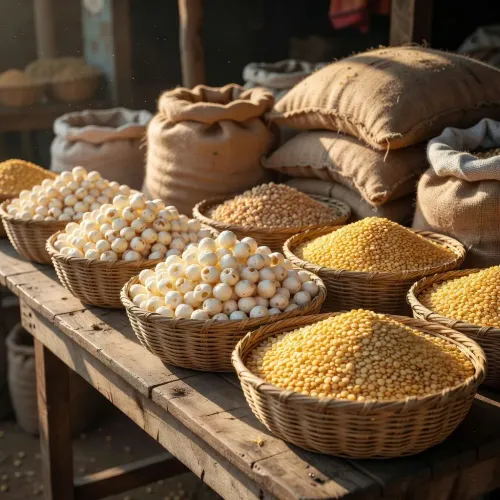
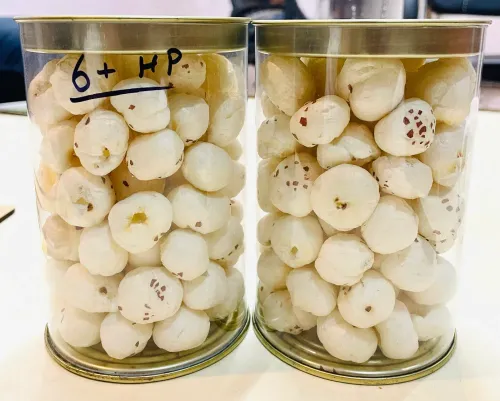
Purnia district in northern Bihar sits at the heart of India's makhana belt, where farmers cultivate the aquatic foxnut in still-water ponds and seasonal floodplains. The crop has long carried a Geographical Indication tag, tying it to the region's specific ecology and traditional processing craft. Its emergence as an export item to a European market like Greece marks a qualitative shift — from a niche Indian health-food product to one competing on global shelves.
The broader agricultural export push has aimed to move precisely these kinds of GI-linked regional specialties beyond traditional partner nations. Greece, with its own food-culture pride, represents a non-obvious destination — which is exactly the kind of market diversification the government's export strategy has been targeting.
Kalaburagi's Arhar Dal and India's Pulse-Export Pivot
Kalaburagi (formerly Gulbarga) in northern Karnataka is one of India's foremost pigeon-pea producing districts, a region where arhar dal farming shapes the local economy at a household level. The Maldives, heavily dependent on food imports given its island geography, represents a natural and proximate export market for Indian agricultural goods — but the specific routing of Kalaburagi's produce to Maldivian tables illustrates how origin-specific supply chains are being built, not just bulk commodity flows.
Mann Ki Baat as an Export-Narrative Platform
PM Modi's monthly Mann Ki Baat radio programme has consistently served as a broadcast mechanism for citizen-level success stories — small farmers, artisans, and self-help groups who have broken into new markets. By surfacing these two export wins in the same episode, the programme reinforces the Atmanirbhar Bharat framework's central argument: that self-reliance is not about isolation, but about building the domestic base strong enough to compete abroad.
The Atmanirbhar Bharat package, announced in May 2020, embedded Vocal for Local as a structural pillar — less a consumer sentiment campaign and more a production-and-export doctrine. Six years on, ministerial communications are now pointing to specific district-level origin stories as evidence of that doctrine bearing fruit.
The next test is scale. Anecdotal export wins in a radio address are one thing; sustained volume data from the Ministry of Commerce will determine whether Purnia's makhana farmers and Kalaburagi's arhar growers are riding a genuine trade corridor — or a headline moment.
Point of View
Kalaburagi's arhar — in a national broadcast reflects a maturing communications strategy around Atmanirbhar Bharat: moving from macro sloganeering to micro proof-points that voters and farmers can personally identify with. For the BJP, this framing also serves a political geography purpose, spotlighting agricultural wins in Bihar and Karnataka ahead of any electoral cycle. The deeper policy question, however, is whether these exports represent scalable, policy-backed supply chains or cherry-picked anecdotes; the government's credibility on the Vocal for Local promise will ultimately be settled by Ministry of Commerce export data, not radio addresses.
NationPress
25 Oct 2026
Frequently Asked Questions
What is Vocal for Local and how does it relate to exports?
Vocal for Local is an initiative under India's Atmanirbhar Bharat framework, launched in May 2020, to promote domestic production and consumption. It has since expanded to encourage Indian regional products — including GI-tagged agricultural goods — to compete in global export markets.
Why is Purnia famous for makhana?
Purnia district in Bihar is the heartland of India's makhana (foxnut) cultivation, where farmers grow the aquatic crop in still-water ponds and floodplains. The region holds a Geographical Indication tag for makhana, recognising its unique ecological and cultural origins.
What is Mann Ki Baat and why does PM Modi use it to highlight export stories?
Mann Ki Baat is Prime Minister Narendra Modi's monthly radio programme that spotlights citizen-level achievements, grassroots entrepreneurship, and government scheme outcomes. It serves as a direct narrative platform to publicise local success stories — including agricultural export milestones — without the filter of formal press channels.
Why is Kalaburagi known for arhar dal?
Kalaburagi (formerly Gulbarga) in northern Karnataka is one of India's most productive pigeon-pea (arhar dal) growing districts, with the crop forming a central part of the local agrarian economy and the region's agricultural identity.
What is Atmanirbhar Bharat and when was it announced?
Atmanirbhar Bharat ('Self-Reliant India') is an economic framework announced by PM Modi in May 2020, combining fiscal stimulus with structural reforms aimed at boosting domestic manufacturing, agriculture, and technology. Vocal for Local is one of its core pillars.