Anurag Thakur joins Maha Mamayi Jagran in Baddi
Synopsis
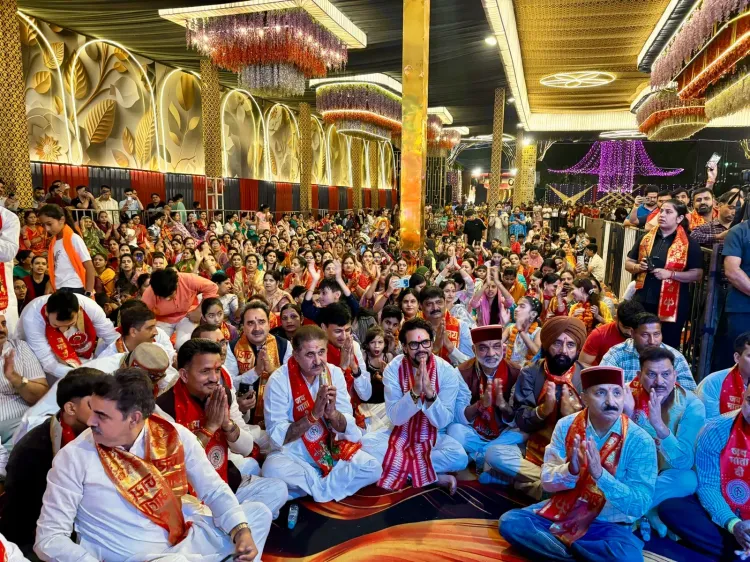
BJP MP Anurag Thakur joined the Maha Mamayi Jagran and Himachali Kangri Dham in Baddi on 18 October 2026, organised by Devbhoomi Social Welfare Society, calling culture the soul of the nation and a vital instrument of social cohesion.
Key Takeaways
BJP MP Anurag Thakur participated in the Maha Mamayi Jagran and Himachali Kangri Dham in Baddi, Himachal Pradesh on 18 October 2026 .
The event was organised by Devbhoomi Social Welfare Society, Baddi , led by president Shri Rajesh Patiyal .
Former legislators Shri Paramjit Singh Pammi and Shri K.
Thakur , along with BJP District President Shri Ratan Singh Pal , were present.
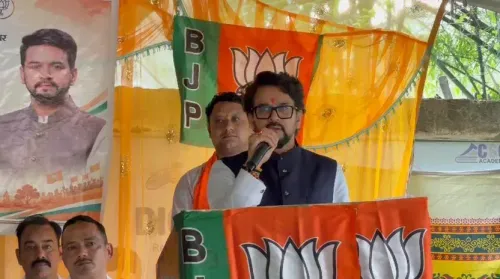
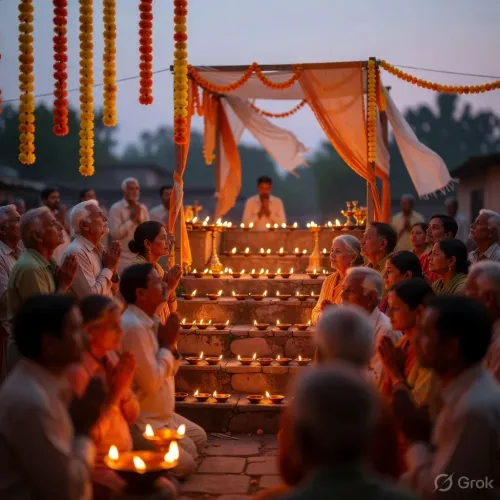
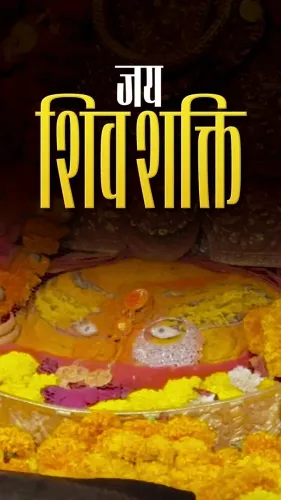
Thakur addressed devotees and participated in Aadishakti Mata devotional prayers alongside the congregation.
He described cultural programmes as essential tools for social cohesion, preservation of traditions, and community awareness in a diverse India.
The Himachali Kangri Dham component celebrated traditional Kangra regional cuisine as a distinct cultural heritage element.
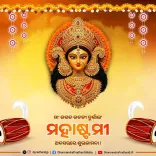
Faith, folk tradition, and constituency outreach converged in Baddi, Himachal Pradesh, on Sunday, 18 October 2026, as BJP MP Anurag Thakur participated in a grand Maha Mamayi Jagran and Himachali Kangri Dham organised by Devbhoomi Social Welfare Society, Baddi — addressing a congregation of devotees and joining them in devotion to Aadishakti Mata.
Posting on X in Hindi, Thakur reflected on the deeper purpose of cultural events: 'Sanskriti kisi rashtra ki aatma hoti hai' — 'Culture is the soul of a nation, and cultural programmes are the most effective means of keeping that soul alive.' He underlined that in a country as diverse as India, such gatherings are far more than entertainment — they are instruments of social cohesion, preservation of values, awareness, and transformation.
Devbhoomi Society's grand Baddi congregation
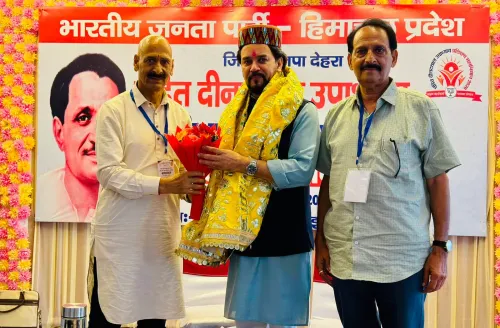
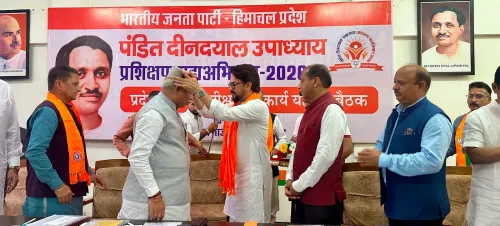
The event was organised by Devbhoomi Social Welfare Society, with its president Shri Rajesh Patiyal among the prominent faces present. Joining him were former legislators Shri Paramjit Singh Pammi and Shri K. L. Thakur, along with Shri Ratan Singh Pal, the BJP District President, lending the gathering a cross-section of community and political leadership from the Baddi belt.
Baddi, an industrial hub in Solan district, sits within Thakur's broader Hamirpur constituency catchment and has a growing population of workers and families drawn from across Himachal Pradesh — making a Shakti jagran an especially resonant gathering for a region that carries the Devbhoomi identity with deep pride.
Shakti worship and Himachal's living tradition
Himachal Pradesh has one of India's most vibrant living traditions of local deity worship. Jagran events — overnight or extended devotional assemblies in honour of the goddess — draw thousands in towns and villages across the state, functioning simultaneously as spiritual practice and community forum. The Himachali Kangri Dham, a traditional feast native to the Kangra region, added a distinct cultural dimension, celebrating regional culinary heritage alongside devotion.
For elected representatives, participation in such events is a durable form of constituency engagement — one that bridges the ceremonial and the political without conflating them. Thakur's remarks on culture as social glue carry particular weight given his tenure as Union Minister overseeing both broadcasting and youth affairs, portfolios where questions of cultural identity and soft power were central to policy.
In a state where assembly elections sharpen grassroots competition, a sitting Lok Sabha MP's visible presence at community gatherings reinforces the ground-level connect that every constituency contest ultimately turns on. The goddess, it turns out, draws a crowd that no campaign rally can quite replicate.
Point of View
His framing of cultural events as instruments of social transformation — not mere entertainment — echoes themes he consistently advanced in office. In a state like Himachal Pradesh, where local deity traditions anchor community identity, such appearances carry symbolic weight well beyond the ceremony itself. With political competition intensifying at the ground level, sustained engagement in community religious life remains among the most durable tools of electoral consolidation.
NationPress
18 Oct 2026
Frequently Asked Questions
What event did Anurag Thakur attend in Baddi on 18 October 2026?
Anurag Thakur attended the Maha Mamayi Jagran and Himachali Kangri Dham organised by Devbhoomi Social Welfare Society in Baddi, Himachal Pradesh on 18 October 2026.
What is a Jagran in the context of Himachal Pradesh traditions?
A Jagran is an overnight or extended devotional assembly held in honour of a goddess, common across Himachal Pradesh. It serves as both a spiritual gathering and a community forum, drawing devotees from surrounding areas.
What is Himachali Kangri Dham?
Himachali Kangri Dham is a traditional feast originating from the Kangra region of Himachal Pradesh. It is served as part of cultural and religious gatherings to celebrate the state's distinctive culinary and cultural heritage.
Who organised the Baddi jagran event Anurag Thakur attended?
The event was organised by Devbhoomi Social Welfare Society, Baddi, with its president Shri Rajesh Patiyal leading the organisation.
What did Anurag Thakur say about the importance of cultural events?
Thakur stated that culture is the soul of a nation and that cultural programmes are not just entertainment but vital means of social cohesion, preservation of values, awareness, and bringing about social change in a diverse country like India.