Rajasthan CMO echoes Modi's 'development with heritage' vision
Synopsis
The Chief Minister's Office of Rajasthan on 18 October 2026 shared PM Narendra Modi's vision that development and cultural heritage must advance together, tagging CM Bhajan Lal Sharma under the 'Agrani Rajasthan' campaign — signalling state-level ownership of a defining BJP policy theme.
Key Takeaways
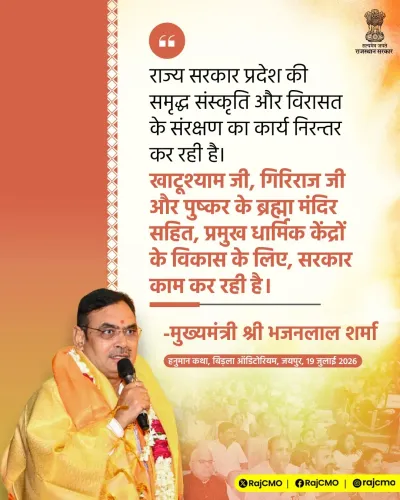
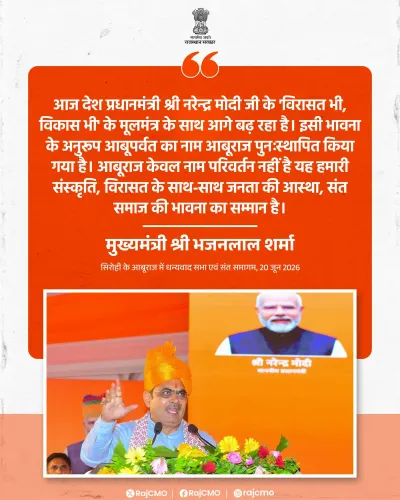
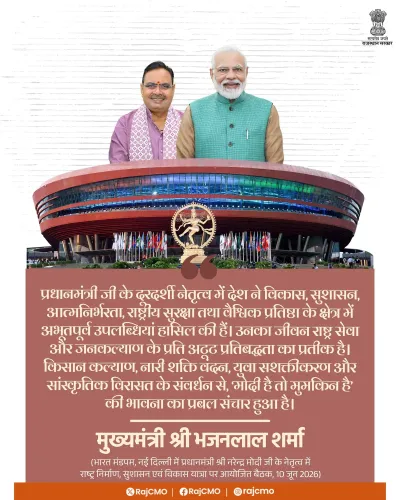
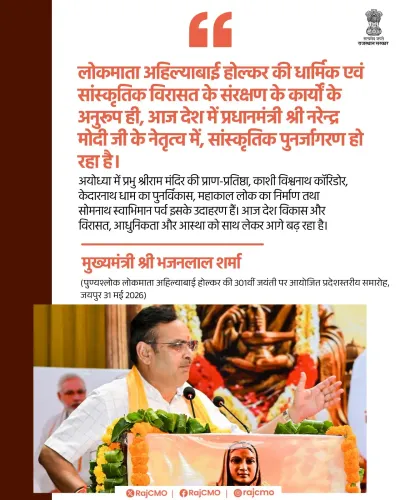
The Rajasthan CMO posted on 18 October 2026 echoing PM Narendra Modi 's belief that 'development and heritage must walk together.' Chief Minister Bhajan Lal Sharma was tagged directly, signalling state-level commitment to the message.
The post carried the campaign hashtag #आपणो_अग्रणी_राजस्थान ('Our Leading Rajasthan'), branding Rajasthan as a front-runner in implementing central priorities.
The Centre's Swadesh Darshan and PRASAD schemes, launched in 2014-15 , are the primary policy instruments linking tourism infrastructure investment to heritage conservation in states like Rajasthan.
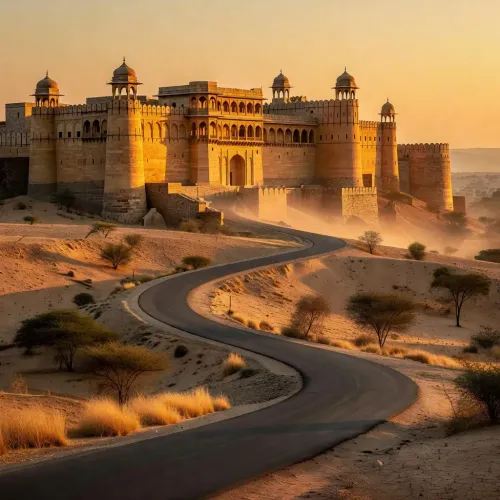
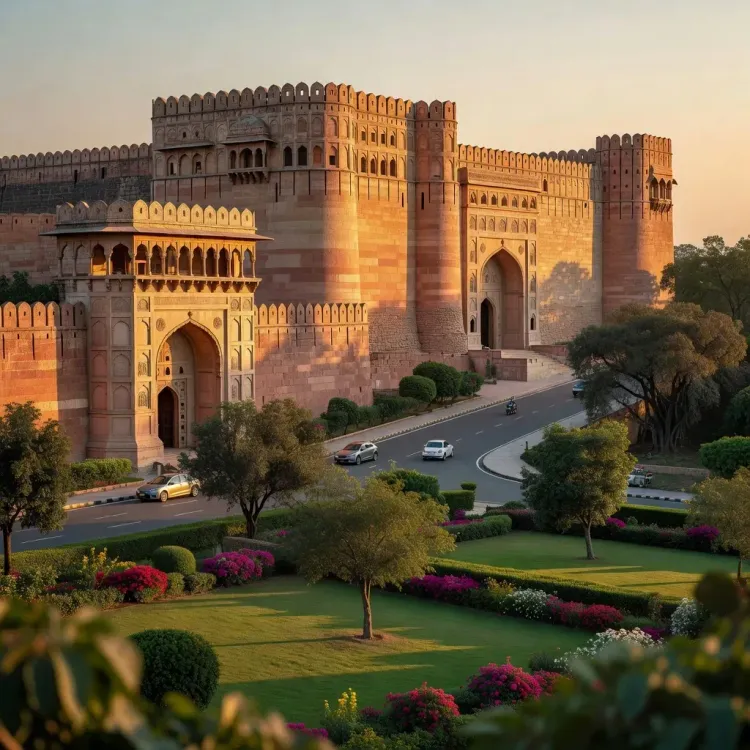
Rajasthan's major monuments — including the hill forts of Amer, Chittorgarh and Kumbhalgarh — make it a critical theatre for this development-heritage philosophy.
Development and cultural heritage are not competing ambitions — they are, in the BJP government's framing, twin engines of the same journey. The Chief Minister's Office of Rajasthan reinforced that philosophy on Sunday, 18 October 2026, sharing Prime Minister Narendra Modi's oft-stated conviction alongside a tag to Chief Minister Bhajan Lal Sharma under the campaign hashtag #आपणो_अग्रणी_राजस्थान ('Our Leading Rajasthan').
The post quoted the Prime Minister's belief directly: 'विकास और विरासत साथ-साथ चलनी चाहिए' — 'Development and heritage must walk together.' Brief as the message is, it lands inside a larger policy conversation that Rajasthan, with its unmatched density of forts, palaces and temples, is uniquely positioned to lead.
Why Rajasthan sits at the heart of this idea
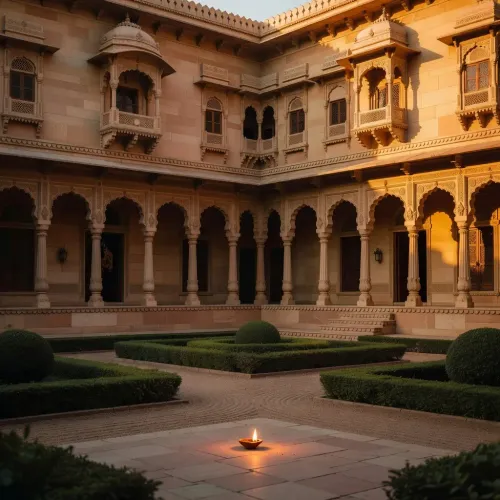
Rajasthan is home to some of India's most visited UNESCO-listed and state-protected monuments — from the hill forts of Amer, Chittorgarh and Kumbhalgarh to the temple towns of Pushkar and Nathdwara. Heritage tourism is not incidental to the state's economy; it is foundational. Any infrastructure push that ignores conservation risks destroying the very asset it is built around.
That tension is precisely what the Centre's Swadesh Darshan and PRASAD schemes, both launched in 2014-15, were designed to resolve — funding tourism circuits and pilgrimage-site infrastructure while tying disbursement to conservation norms. Rajasthan has been among the leading beneficiary states under both programmes.
Bhajan Lal Sharma's Rajasthan and the 'Agrani' mandate
Chief Minister Bhajan Lal Sharma, in office since December 2023, has positioned the state as a front-runner — agrani — in implementing central priorities at the ground level. The CMO's tagging of Sharma in this post signals that the heritage-plus-development message is being actively owned at the state level, not merely relayed from Delhi.
The BJP has consistently used temple redevelopments, fort restorations and theme-based tourism corridors across multiple states as visible proof points for this philosophy. Rajasthan, with its sheer volume of heritage assets, offers the most photogenic canvas for that argument.
The question now is whether this message presages concrete announcements — new heritage circuit funding, a state budget allocation, or a tourism ministry update specific to Rajasthan sites. The philosophy is clear; the next move is a project.
Point of View
The state government amplifies it, and a regional campaign hashtag localises ownership. For Rajasthan, the stakes are high: its heritage economy is too large to treat development and conservation as separate silos, and any credible infrastructure push must demonstrate both. Sharma's tagging suggests the government wants the 'Agrani Rajasthan' brand closely associated with this balanced approach ahead of potential budget or tourism-ministry announcements. If concrete project allocations follow, the message becomes a policy milestone; without them, it remains a well-timed ideological restatement.
NationPress
18 Oct 2026
Frequently Asked Questions
What did the Rajasthan CMO post about on 18 October 2026?
The Chief Minister's Office of Rajasthan shared PM Narendra Modi's belief that development and cultural heritage must advance together, tagging CM Bhajan Lal Sharma under the 'Agrani Rajasthan' campaign.
What is the meaning of #आपणो_अग्रणी_राजस्थान?
The hashtag translates to 'Our Leading Rajasthan' and is used by the Rajasthan government to position the state as a front-runner in adopting central development priorities.
What are the Swadesh Darshan and PRASAD schemes?
Swadesh Darshan and PRASAD are central government tourism schemes launched in 2014-15 that fund heritage-themed tourist circuits and pilgrimage infrastructure while tying support to conservation standards; Rajasthan is among their leading beneficiary states.
Who is Bhajan Lal Sharma?
Bhajan Lal Sharma is the BJP Chief Minister of Rajasthan, in office since December 2023, responsible for implementing central development priorities at the state level.
How does Rajasthan's heritage connect to its economy?
Rajasthan's forts, palaces and temples — including UNESCO-listed sites at Amer, Chittorgarh and Kumbhalgarh — are central to its tourism economy, making heritage conservation directly linked to the state's growth prospects.