CM Himanta's CMAAA Scheme Turns Sonitpur Bag Maker Self-Reliant
Synopsis
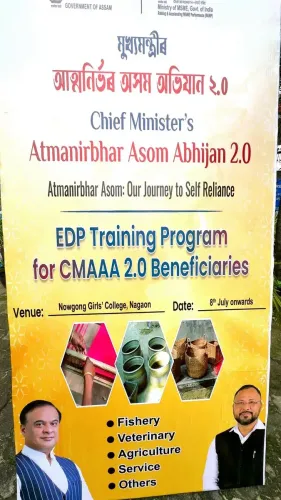
Assam CM Himanta Biswa Sarma showcased CMAAA beneficiary Ranjan from Sonitpur, who used state financial assistance to buy machinery, expand his bag-making business, and employ others — a concrete step under the #AtmanirbharAssam self-reliance drive.
Key Takeaways
Ranjan from Sonitpur, Assam received financial assistance through the CMAAA scheme to purchase machinery for his bag-making business.
He expanded production and created employment for others, moving from recipient to employer.
CM Himanta Biswa Sarma highlighted the case as progress under the #AtmanirbharAssam agenda on October 18, 2026 .
The initiative aligns with the national Atmanirbhar Bharat Abhiyan launched in May 2020 , which prioritises micro-enterprise support and local manufacturing.
The Assam government has pursued similar livelihood schemes across districts to convert state assistance into independent, job-generating enterprises.
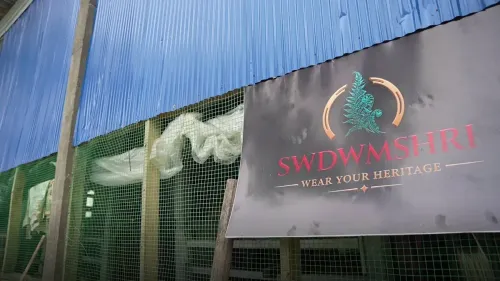
A bag-making enterprise in Sonitpur, Assam, has become the latest proof point for Chief Minister Himanta Biswa Sarma's push to convert state welfare spending into durable livelihoods — one machine, one owner, one district at a time.
From grant to growth: Ranjan's Sonitpur story
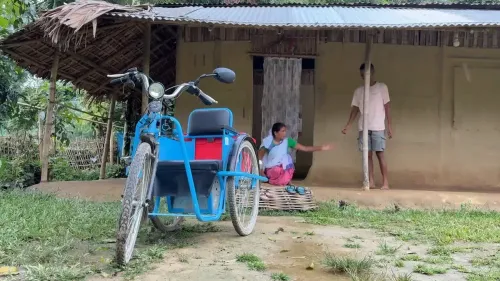
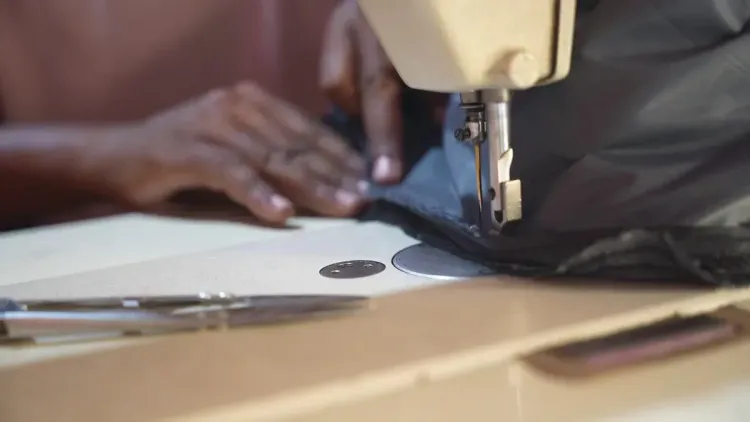
In a post shared on Sunday, October 18, 2026, CM Sarma spotlighted Ranjan from Sonitpur, a beneficiary of the state's CMAAA scheme. With financial assistance channelled through the programme, Ranjan acquired machinery for his bag-making business, scaled up production, and — critically — began hiring others. The arc is precisely what self-employment schemes are designed to deliver: a single beneficiary becoming an employer in his own right.
Sarma framed the milestone explicitly under the #AtmanirbharAssam banner: 'A step towards AtmanirbharAssam, one enterprise at a time.' The phrasing echoes the national Atmanirbhar Bharat Abhiyan, launched by the Government of India in May 2020, which placed micro-enterprise support and local manufacturing at the centre of economic self-reliance policy.
How CMAAA fits Assam's micro-enterprise push
The Assam government has run a suite of state-level self-employment schemes targeting small business owners — particularly in districts like Sonitpur where informal manufacturing and trade remain primary livelihoods. The CMAAA framework provides direct financial assistance for machinery purchase and business expansion, deliberately keeping the barrier low so that individual entrepreneurs can access capital they would otherwise struggle to raise.
What distinguishes stories like Ranjan's is the downstream effect: employment creation beyond the primary beneficiary. Every micro-enterprise that moves from assisted start-up to independent employer extends the scheme's reach without additional state expenditure — a multiplier the Assam government has leaned into as a key metric of success.
The broader #AtmanirbharAssam drive
Sarma has consistently used social media to document individual beneficiary journeys, building a public narrative around the state's livelihood agenda. The approach serves a dual purpose: accountability through visibility, and signal-sending to other potential applicants across Assam's districts. With North-East India carrying some of the country's highest youth unemployment numbers, schemes that convert financial assistance into tangible job creation carry outsized political and economic weight in the region.
The question the government now faces is one of scale — whether the CMAAA model, effective at the individual level, can be replicated systematically across Assam's diverse economic geographies. Ranjan's bag factory in Sonitpur is a compelling data point. The real test is how many more follow.
Point of View
Or do they require continuous state support? The #AtmanirbharAssam framing ties state welfare spending to a nationally resonant self-reliance narrative, giving local schemes political capital that outlasts any single budget cycle. For a North-East state historically dependent on central transfers, demonstrating job-multiplying returns from livelihood investment is both economic necessity and political differentiation. The next benchmark is aggregate data — not individual success stories, but district-level enterprise registration and employment trends.
NationPress
18 Oct 2026
Frequently Asked Questions
What is the CMAAA scheme in Assam?
CMAAA is an Assam government scheme that provides financial assistance to micro-entrepreneurs for purchasing machinery and expanding small businesses, aimed at building self-reliant livelihoods.
Who is Ranjan from Sonitpur mentioned by CM Himanta Biswa Sarma?
Ranjan is a micro-entrepreneur from Sonitpur district, Assam , who used CMAAA scheme funds to buy machinery for his bag-making business, scale up production, and create employment for others.
What is #AtmanirbharAssam?
#AtmanirbharAssam is the Assam government's self-reliance initiative, aligned with the national Atmanirbhar Bharat Abhiyan, that supports micro-enterprises and local manufacturing to reduce economic dependence.
What is the Atmanirbhar Bharat Abhiyan?
The Atmanirbhar Bharat Abhiyan was launched by the Government of India in May 2020 to promote economic self-reliance through support for micro-enterprises, local manufacturing, and small businesses.
What is Sonitpur district known for in Assam?
Sonitpur is a district in Assam where informal manufacturing and small trade are primary livelihoods, making it a key target area for the state government's self-employment and livelihood schemes.