CM Rekha Gupta Joins Chalo Yamuna Abhiyan at Hathi Ghat, ITO
Synopsis
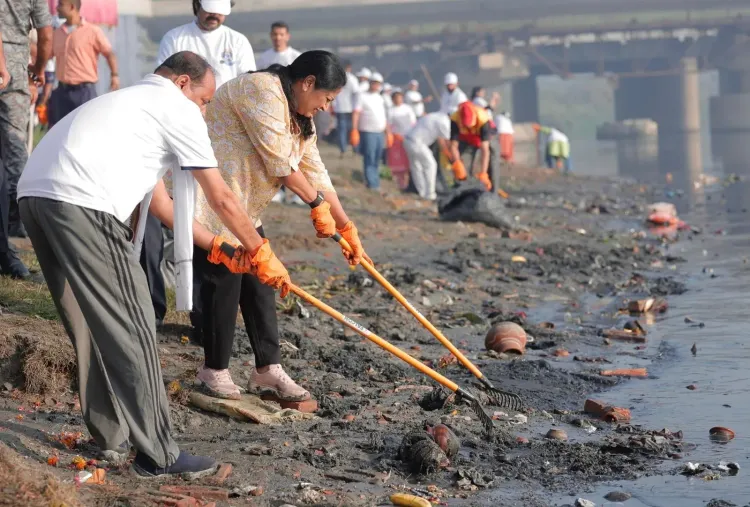
Delhi Chief Minister Rekha Gupta joined thousands of volunteers at Hathi Ghat, ITO, for the Chalo Yamuna Abhiyan on 18 October 2026, as a city-wide shramdaan covered all 70 Yamuna ghats simultaneously and CM Gupta called on Delhiites to become 'Yamuna Prahari'.
Key Takeaways
Delhi CM Rekha Gupta personally participated in the Chalo Yamuna Abhiyan shramdaan at Hathi Ghat, ITO on 18 October 2026 .
The drive covered all 70 Yamuna ghats in Delhi simultaneously, with thousands of residents, youth groups and civil-society volunteers participating.
Delhi Assembly Chief Whip and MLA Abhay Verma joined CM Gupta at Hathi Ghat.
CM Gupta appealed to citizens to stop dumping plastic, puja material and other waste on ghats and riverbanks.
She coined the call to action 'Yamuna Prahari' (Guardian of the Yamuna), urging Delhiites to make ghat cleanliness a personal habit, not just a campaign event.
The Yamuna has been the subject of cleanup efforts since the Yamuna Action Plan of 1993 , with central programmes like Namami Gange (2014) also covering the river.
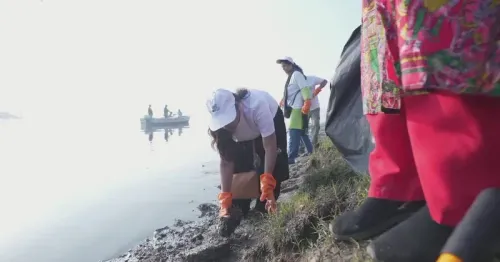
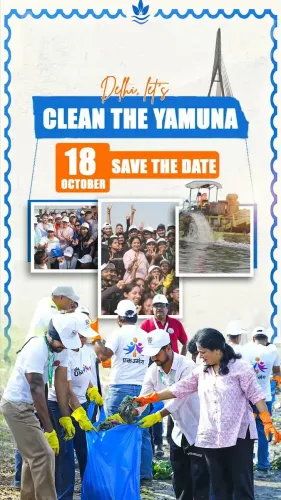
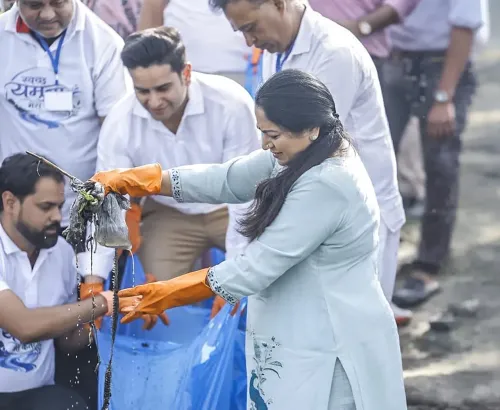
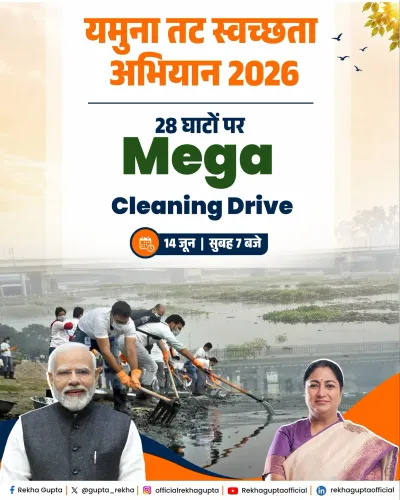
Thousands of Delhi residents fanned out across 70 Yamuna ghats on Sunday, 18 October 2026, sweeping, scrubbing and collecting waste in a single coordinated push — and Delhi Chief Minister Rekha Gupta was among them, lending her hands to the shramdaan drive at Hathi Ghat, ITO, under the banner of the 'Chalo Yamuna Abhiyan' (Come to the Yamuna campaign).
Posting on X, CM Gupta described the scene: young volunteers, civil-society organisations and local citizens joining elected representatives in a collective act of service. Delhi Assembly Chief Whip and BJP MLA Abhay Verma was among those present at Hathi Ghat, adding legislative weight to what the Chief Minister framed as a civic awakening.
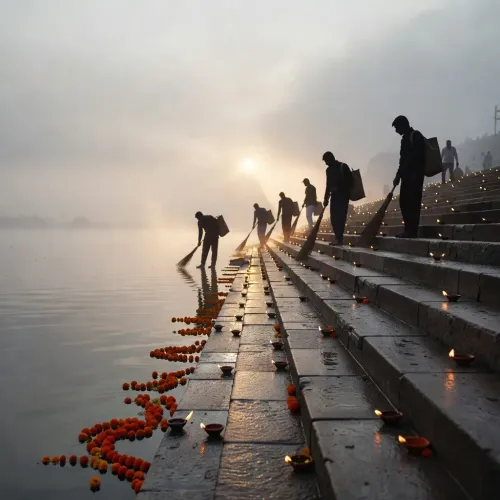
70 Ghats, One Morning
The scale of Sunday's mobilisation — spanning all 70 Yamuna ghats in the capital simultaneously — marks the campaign's most visible single-day effort yet. While exact volunteer counts from every ghat remain unconfirmed, the simultaneous deployment across the city's entire Yamuna frontage signals a shift from symbolic one-point events to a city-wide operational model.
CM Gupta used the occasion to issue a direct public appeal: stop dumping plastic, puja material and household waste on ghats and riverbanks. Her call to action was precise — 'Yamuna Prahari' (Guardian of the Yamuna) — asking Delhiites not just to clean up once but to make riverfront cleanliness a personal habit rather than a campaign milestone.
A River With a Long Waiting List of Promises
The Yamuna has been a political and environmental flashpoint in Delhi for decades. The Yamuna Action Plan, launched in 1993 with Japanese assistance, was India's first structured push to cut the river's pollution load — it was followed by the Swachh Bharat Abhiyan in 2014 and the Namami Gange programme in the same year, which included tributary management covering the Yamuna. The National Green Tribunal has maintained active oversight of river-cleaning timelines and compliance across successive Delhi governments.
The river's condition remains a live grievance for millions of Delhiites who use its ghats for religious observance and recreation. Ritual waste — flowers, diyas, idols, synthetic offerings — compounds the industrial and sewage load that engineers have struggled to contain. The Chalo Yamuna Abhiyan's explicit targeting of puja debris alongside plastic signals a politically delicate but ecologically necessary broadening of scope.
From Shramdaan to Swabhav
CM Gupta's closing formulation carries its own policy ambition: move the campaign beyond periodic shramdaan and turn clean-ghat behaviour into what she called 'swabhav' — a natural disposition. That framing echoes the communication strategy behind Swachh Bharat, which sought to reframe sanitation as civic identity rather than government instruction.
Whether enforcement — against plastic vendors, waste dumpers and unregulated ritual discharge — follows the citizen mobilisation will determine whether October 2026's city-wide sweep translates into lasting change for the river Delhiites call Maa Yamuna.
Point of View
Visible Yamuna action is also a direct answer to years of opposition attacks on the river's condition under previous administrations. The 70-ghat simultaneous model borrows from the grassroots mobilisation playbook of Swachh Bharat, but the real test — as with every Yamuna initiative since 1993 — is whether citizen momentum is backed by enforceable waste-discharge and ritual-offering regulation. CM Gupta's 'swabhav' framing suggests the campaign is positioning itself as a behaviour-change effort, not merely a one-day spectacle, which will be the benchmark against which its long-term credibility is judged.
NationPress
18 Oct 2026
Frequently Asked Questions
What is the Chalo Yamuna Abhiyan?
The Chalo Yamuna Abhiyan is a public cleanliness campaign organised by the Delhi government targeting the Yamuna river's ghats and riverbanks through volunteer shramdaan drives and awareness efforts to reduce plastic and ritual waste dumping.
Where did CM Rekha Gupta participate in the Yamuna cleanup?
CM Rekha Gupta participated in the shramdaan drive at Hathi Ghat, ITO, in Delhi, on 18 October 2026.
How many Yamuna ghats were covered in the 18 October 2026 drive?
All 70 Yamuna ghats across Delhi were included in the 18 October 2026 Chalo Yamuna Abhiyan, with thousands of residents and volunteers participating simultaneously.
Who is Yamuna Prahari?
'Yamuna Prahari' — meaning Guardian of the Yamuna — is a citizen-stewardship identity coined by CM Rekha Gupta, calling on Delhiites to permanently avoid dumping plastic or puja waste on ghats and to inspire others to do the same.
What is the history of Yamuna cleanup efforts in Delhi?
The Yamuna Action Plan was launched in 1993 with Japanese assistance to reduce river pollution. The Swachh Bharat Abhiyan (2014) and Namami Gange programme (2014) further incorporated Yamuna cleanup components, with the National Green Tribunal maintaining ongoing oversight of remediation timelines.