CM Rekha Gupta calls Delhi to clean Yamuna ghats on Mahashtami
Synopsis
Delhi Chief Minister Rekha Gupta has called thousands of residents to clean all 70 Yamuna ghats simultaneously on Mahashtami, framing river stewardship as a shared civic and spiritual duty under the #ChaloYamuna campaign.
Key Takeaways
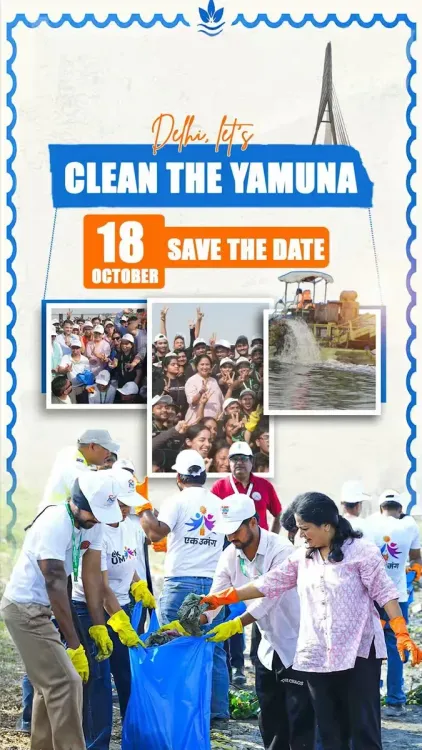
Delhi CM Rekha Gupta announced a mass Yamuna ghat cleanliness drive for Mahashtami morning, 18 October 2026 .
The campaign spans 70 Yamuna ghats across Delhi, with thousands of residents expected to participate simultaneously.
Gupta urged citizens to bring family and friends to their nearest ghat, calling it a ' saanjhi zimmedari ' — shared responsibility.
The drive is branded under #ChaloYamuna and #स्वच्छ_यमुना_प्रहरी , signalling an intent to sustain the campaign beyond a single event.
The initiative follows a pattern of festival-timed river cleanliness mobilisations linked to India's Swachh Bharat Mission (launched 2014 ) and earlier Yamuna Action Plans .
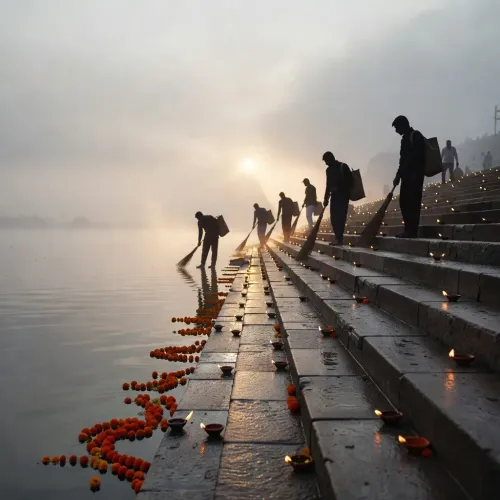
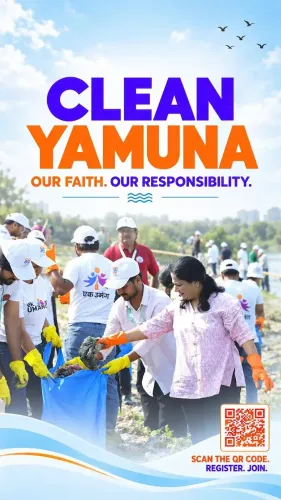
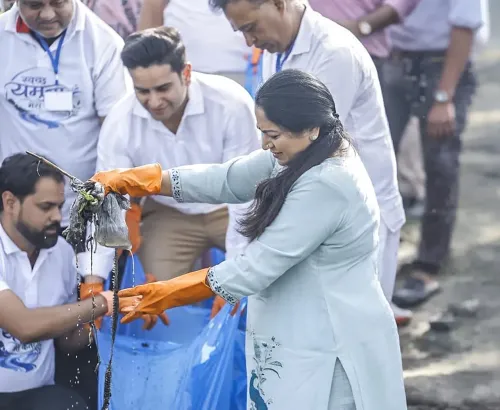
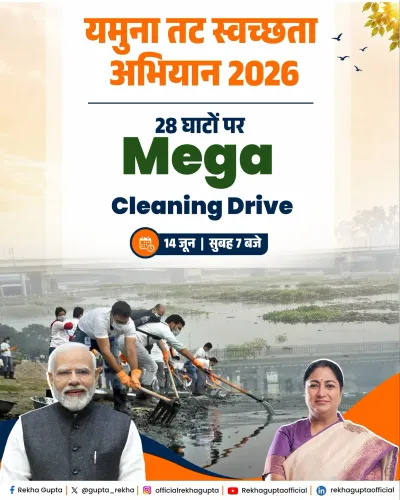
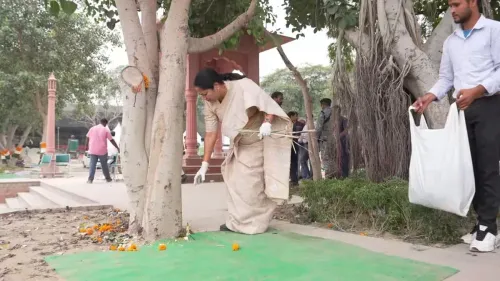
On the auspicious morning of Mahashtami, thousands of Delhi residents are being called to the banks of the Yamuna — not for prayer alone, but for brooms, buckets, and collective action. Delhi Chief Minister Rekha Gupta announced on Saturday, 18 October 2026, that a mass cleanliness drive will be held simultaneously across 70 Yamuna ghats in the national capital, inviting citizens to begin the festival morning with service to the river.
Posting in Hindi, CM Gupta wrote: 'महाअष्टमी के पावन अवसर पर कल सुबह हम सभी मां यमुना के घाटों की सफाई के साथ अपने दिन की शुरुआत करेंगे' — 'On the auspicious occasion of Mahashtami, tomorrow morning we will all begin our day with the cleaning of Mother Yamuna's ghats.' She urged every Delhiite to arrive at their nearest ghat with family and friends, calling the campaign 'apna abhiyan' — their own mission.70 ghats, one morning, one river
The scale is deliberate. Spreading the drive across all 70 of Delhi's Yamuna ghats means the campaign cannot be dismissed as a symbolic photo-op at a single, camera-friendly location. The Yamuna, which cuts through the length of the capital, has long borne the weight of urban waste, untreated sewage, and industrial discharge — a crisis that multiple government plans over three decades have struggled to reverse.
Gupta framed the drive in the language of shared ownership: 'मां यमुना हम सबकी हैं और उनके घाटों को स्वच्छ रखना हम सबकी साझा जिम्मेदारी है' — 'Mother Yamuna belongs to all of us, and keeping her ghats clean is our collective responsibility.' That framing — civic duty wrapped in devotion — is a well-tested formula for mobilising participation during Navratri.
Festival timing and the politics of river clean-up
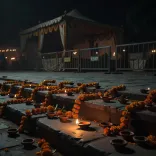
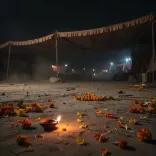
Anchoring a cleanliness drive to Mahashtami, one of the most observed days in the Navratri calendar, is not accidental. River ghats fill naturally during this period for religious rituals, giving any organised campaign a ready crowd and a receptive mood. Indian governments — at both central and state levels — have periodically used festival windows to launch high-visibility environmental mobilisations, a pattern that stretches back to the early years of the Swachh Bharat Mission, launched in 2014, which explicitly included riverfront and ghat cleanliness as pillars of urban sanitation.
The Yamuna Action Plans, the first of which was drawn up in the 1990s, have sought to reduce pollution in the Delhi stretch through a combination of sewage treatment infrastructure and public participation drives. Decades on, the river's condition in Delhi remains a live political issue — and any new administration inherits both the problem and the pressure to show visible progress.
What the #ChaloYamuna campaign signals
The hashtags #ChaloYamuna and #स्वच्छ_यमुना_प्रहरी ('Clean Yamuna Guardian') suggest a branding effort aimed at sustaining momentum beyond a single morning. Whether that momentum translates into structured, recurring drives — or into harder policy moves on sewage treatment capacity and industrial discharge regulation — is the question Delhi's river conservation groups will be watching closely.
For now, the ask is simple and immediate: show up at the ghat nearest to you, before the morning prayers begin, and pick up what does not belong in the river. A river this burdened has seen many promises. Saturday's test is whether thousands actually arrive.
Point of View
CM Rekha Gupta is making a visible ownership claim over the Yamuna clean-up narrative — a politically charged issue in Delhi that her predecessors were repeatedly criticised over. The 'shared responsibility' framing is smart: it invites citizens into the effort while deflecting sole accountability onto collective action. The real policy test, however, will come after the cameras leave — whether this mobilisation feeds into sustained infrastructure investment in sewage treatment or remains a well-photographed festival moment is what will define its long-term significance.
NationPress
18 Oct 2026
Frequently Asked Questions
What is the #ChaloYamuna campaign announced by Delhi CM Rekha Gupta?
#ChaloYamuna is a mass Yamuna ghat cleanliness drive called by Delhi Chief Minister Rekha Gupta, scheduled for Mahashtami morning on 18 October 2026, spanning 70 ghats across Delhi with thousands of residents expected to participate.
When and where is the Yamuna ghat cleaning drive taking place?
The drive is scheduled for the morning of 18 October 2026 — Mahashtami — simultaneously across all 70 Yamuna ghats in Delhi.
Why is the Yamuna river cleaning drive being held on Mahashtami?
Mahashtami is one of the most observed days in the Navratri festival, when river ghats naturally draw large crowds for religious rituals, making it an effective window to mobilise mass public participation in a cleanliness campaign.
How can Delhi residents participate in the #ChaloYamuna drive?
CM Rekha Gupta has urged all Delhi residents to visit their nearest Yamuna ghat on the morning of 18 October 2026 with family and friends and join the cleanliness effort.
What is the history of Yamuna clean-up efforts in Delhi?
Multiple Yamuna Action Plans since the 1990s and the Swachh Bharat Mission launched in 2014 have sought to reduce Yamuna pollution through sewage treatment infrastructure and public participation drives, though the river's condition in Delhi remains a persistent challenge.