CM Himanta Takes Viewers Inside AIIMS Guwahati
Synopsis
Assam CM Himanta Biswa Sarma posted a personal video tour of AIIMS Guwahati on 18 October 2026, spotlighting the PMSSY-approved institute as one of the Northeast's biggest healthcare centres and lifting the curtain on a long-promised infrastructure milestone for the region.
Key Takeaways
Assam Chief Minister Himanta Biswa Sarma shared a personal video tour of AIIMS Guwahati on 18 October 2026 .
AIIMS Guwahati was approved under the Pradhan Mantri Swasthya Suraksha Yojana (PMSSY) in 2015 to address healthcare gaps in the Northeast.
The institute is designed to serve all eight northeastern states , providing tertiary and specialist care closer to home.
CM Sarma described it as one of Northeast India's biggest healthcare centres .
Key milestones ahead include full bed-strength rollout, activation of all specialty departments, and integration with state referral systems.
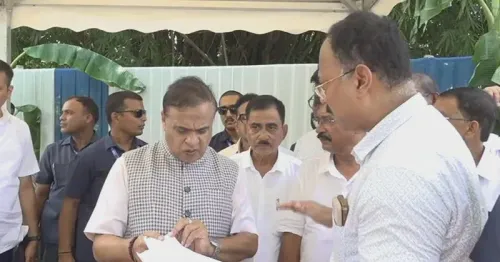
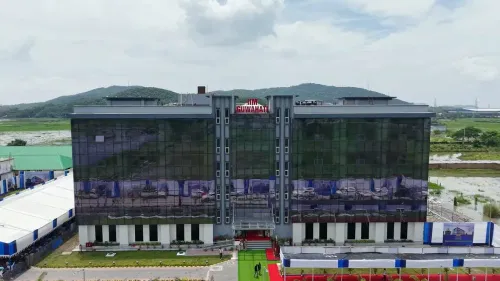
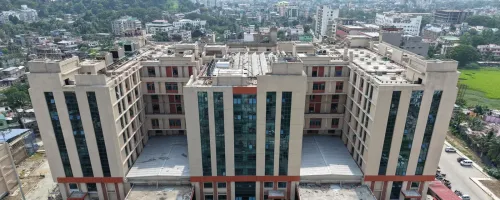
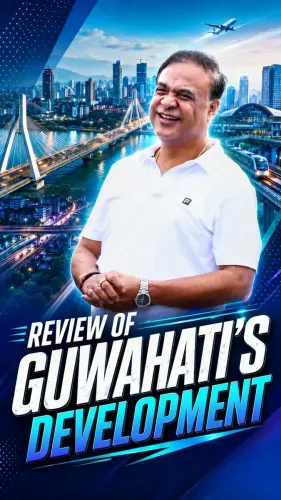
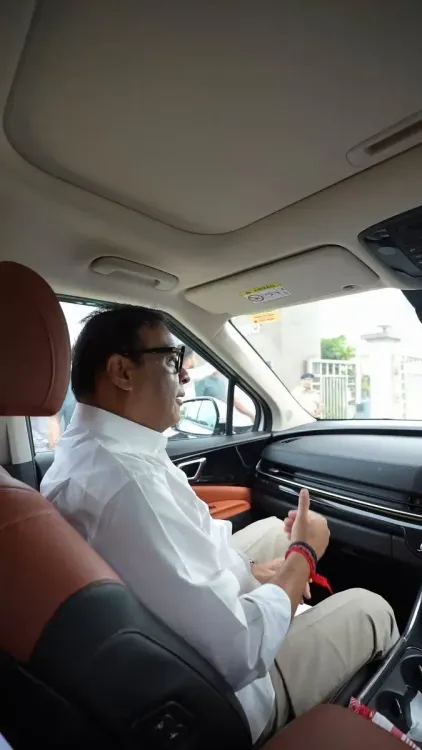
A healthcare landmark for eight states is finally getting its close-up. Assam Chief Minister Himanta Biswa Sarma on Sunday, 18 October 2026, shared a video tour of AIIMS Guwahati, calling it one of Northeast India's biggest healthcare centres and inviting followers to walk through the facility alongside him.
A New AIIMS in a Long-Underserved Region
AIIMS Guwahati is one of a fresh generation of All India Institutes of Medical Sciences approved under the Pradhan Mantri Swasthya Suraksha Yojana (PMSSY) in 2015, a central government scheme designed specifically to address the stark gap in tertiary medical infrastructure outside major metros. For decades, patients from Assam, Meghalaya, Nagaland, Mizoram, Manipur, Tripura, Arunachal Pradesh, and Sikkim had to travel thousands of kilometres to reach specialist care. That calculus is changing.
The rationale behind locating a premier institute in Guwahati — the region's commercial and transit hub — was deliberate: a single referral anchor that all eight northeastern states could realistically access. Specialist departments, advanced diagnostics, and postgraduate medical training under one roof, right at the gateway of the Northeast.
CM Sarma's Role and the NEDA Health Push
Himanta Biswa Sarma, as Chief Minister of Assam and convenor of the North-East Democratic Alliance (NEDA), has positioned improved healthcare infrastructure as a signature regional priority. His decision to personally tour the facility on camera and share it publicly signals both the political stakes attached to the project and a deliberate effort to build public awareness of services now available closer to home.
The video format — a direct walkthrough rather than a press statement — puts faces and corridors to what was, for many residents, an abstract policy promise. That matters in a region where trust in central schemes has historically been built slowly.
What the Full Rollout Will Determine
The broader test for AIIMS Guwahati lies ahead: scaling up bed strength, activating all specialty departments, and weaving the institute into state-level referral networks so that patients in remote districts of the Northeast are actually directed here rather than to distant cities. The institution's ability to attract and retain faculty in a geographically remote posting will also shape whether its promise translates into outcomes.
For now, the Chief Minister's tour puts a flagship project squarely in public view — and raises the expectation bar for what comes next.
Point of View
Visible dividend for the Northeast. For the BJP and NEDA, demonstrating delivery on infrastructure promises ahead of state electoral cycles in the region is strategically significant. The PMSSY framework has long been a talking point; the challenge now is operational depth — whether the institute achieves full specialty coverage and faculty retention. The tour sets a visibility benchmark that will make any subsequent shortfalls harder to obscure.
NationPress
18 Oct 2026
Frequently Asked Questions
Where is AIIMS Guwahati located?
AIIMS Guwahati is located in Guwahati, Assam , the largest city in Northeast India and the region's primary transit and commercial hub.
When was AIIMS Guwahati approved?
AIIMS Guwahati was approved under the Pradhan Mantri Swasthya Suraksha Yojana (PMSSY) in 2015 as part of a central government push to expand premier medical education and tertiary care beyond major metros.
Which states does AIIMS Guwahati serve?
AIIMS Guwahati is intended to serve all eight northeastern states — Assam, Meghalaya, Nagaland, Mizoram, Manipur, Tripura, Arunachal Pradesh, and Sikkim — reducing the need for patients to travel to distant cities for specialist care.
Why did CM Himanta Biswa Sarma tour AIIMS Guwahati?
Assam Chief Minister Himanta Biswa Sarma shared a personal video tour of AIIMS Guwahati on 18 October 2026 to highlight it as one of Northeast India's biggest healthcare centres and build public awareness of its services.
What is Pradhan Mantri Swasthya Suraksha Yojana (PMSSY)?
Pradhan Mantri Swasthya Suraksha Yojana (PMSSY) is a central government scheme launched to correct regional imbalances in healthcare by setting up new AIIMS institutions and upgrading government medical colleges across underserved parts of India.