Rajasthan CMO reaffirms state's commitment to cultural heritage
Synopsis
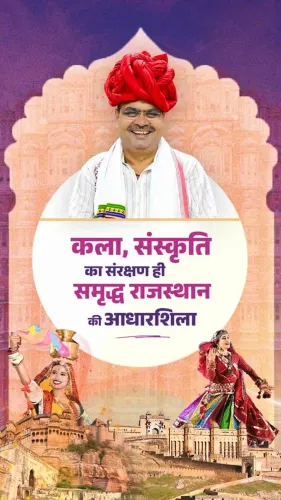
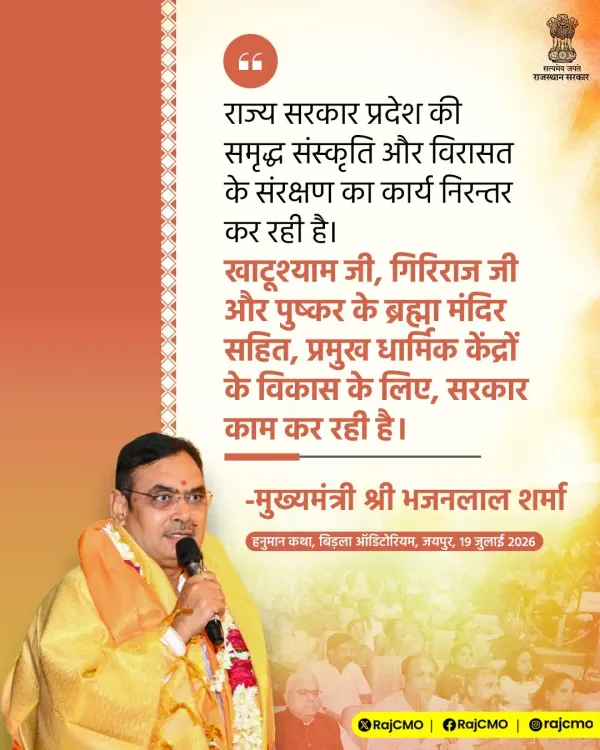
The Rajasthan CMO on 19 July 2026 posted that the state government, under CM Bhajan Lal Sharma, is continuously preserving the state's rich culture and heritage, reinforcing cultural conservation as a key policy priority under the current BJP administration.
Key Takeaways
The Chief Minister's Office of Rajasthan posted on 19 July 2026 reaffirming continuous work on cultural and heritage preservation.
The post was tagged to Chief Minister Bhajan Lal Sharma and used the hashtag #आपणो_अग्रणी_राजस्थान ('Our Leading Rajasthan').
Rajasthan's formal heritage protection framework dates to the Rajasthan Monuments, Archaeological Sites and Antiquities Act, 1961 .
Jaipur's walled city was inscribed on the UNESCO World Heritage List in 2019 , a landmark for the state's conservation record.
Central schemes HRIDAY and PRASAD have supplemented state efforts by linking monuments to tourism circuits.
Key stakeholders include heritage professionals, tourism operators, and local artisan communities tied to Rajasthani craft traditions.
The Chief Minister's Office of Rajasthan, on Sunday, 19 July 2026, reaffirmed that the state government is continuously working to preserve Rajasthan's rich culture and heritage, citing the effort as an ongoing priority under Chief Minister Bhajan Lal Sharma.
Context
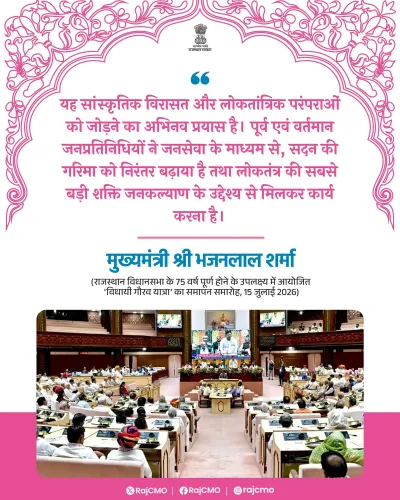
The post, shared on the official CMO handle and tagged to Chief Minister Bhajan Lal Sharma (@BhajanlalBjp), carried the hashtag #आपणो_अग्रणी_राजस्थान — translating broadly to 'Our Leading Rajasthan' — a branding phrase the current administration has used to project state progress. The statement, in Hindi, reads: 'राज्य सरकार प्रदेश की समृद्ध संस्कृति और विरासत के संरक्षण का कार्य निरन्तर कर रही है' — 'The state government is continuously carrying out the work of preserving the state's rich culture and heritage.'
Policy Backdrop
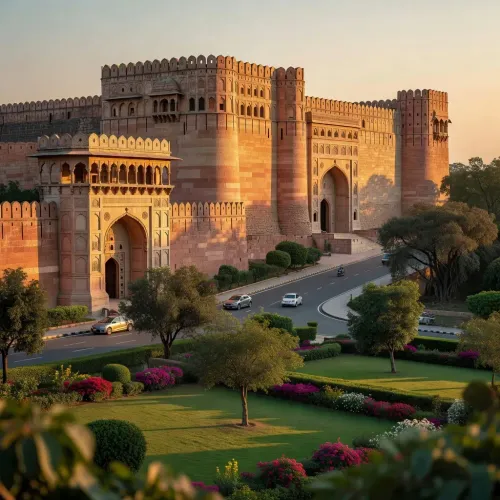
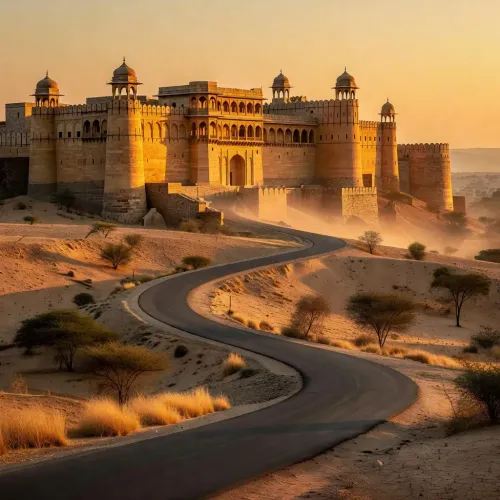
Rajasthan holds one of the densest concentrations of heritage assets in India — forts, palaces, stepwells and living craft traditions that have drawn both domestic and international tourists for decades. The state's formal legal framework for protecting these assets dates to the Rajasthan Monuments, Archaeological Sites and Antiquities Act, 1961, which established the basis for government custodianship over archaeological sites and antiquities.
A landmark in the state's heritage record came in 2019, when Jaipur — the walled city — was inscribed on the UNESCO World Heritage List, a recognition that successive administrations have cited as validation of conservation efforts. At the national level, central schemes such as HRIDAY (Heritage City Development and Augmentation Yojana) and PRASAD (Pilgrimage Rejuvenation and Spiritual Augmentation Drive) have provided additional funding channels that Rajasthan has tapped to link protected monuments with tourism circuits.
Stakeholders and Impact
The beneficiaries of sustained heritage conservation in Rajasthan span several communities. Heritage professionals and archaeologists depend on state budget allocations to the archaeology department for survey, restoration and documentation work. Tourism operators — from large hotel chains occupying converted havelis to small-scale guides — rely on the upkeep of monuments as the foundation of the state's tourism economy.
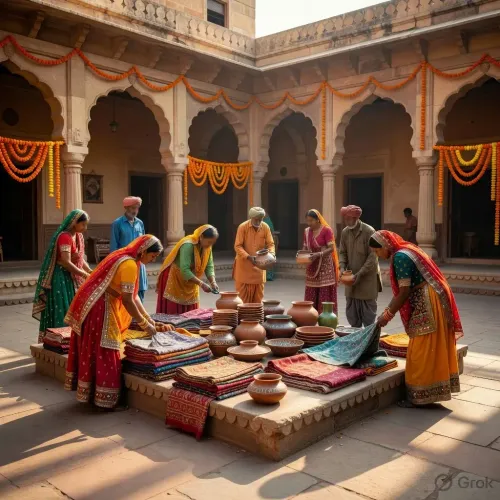
Local artisan communities, whose crafts such as blue pottery, block printing and miniature painting are intertwined with Rajasthan's cultural identity, also stand to gain when the state actively promotes heritage as a living tradition rather than a static museum exhibit. The CMO's post, while brief, signals that the Sharma administration intends to keep cultural preservation visible as a policy theme.
What's Next
Observers will watch the state's upcoming assembly session and annual budget cycle for concrete indicators — specifically, allocations to the Rajasthan archaeology department and any fresh notifications designating new protected monuments. The administration's use of the 'Aapno Agrani Rajasthan' branding suggests cultural heritage will continue to feature in the government's public communication as both an identity marker and an economic asset tied to the state's tourism-led growth narrative.
Point of View
And the Sharma administration is keen to claim ownership of that legacy. By tagging the Chief Minister directly and deploying the 'Aapno Agrani Rajasthan' branding, the BJP government is stitching cultural conservation into its broader narrative of a forward-moving, identity-proud state. The timing, ahead of what could be a budget cycle or assembly session, may be an early signal that heritage allocations will feature in upcoming fiscal announcements. Without specific scheme launches or expenditure figures, however, the post reads more as a positioning statement than a policy announcement.
NationPress
19 Oct 2026
Frequently Asked Questions
What is the Rajasthan government doing for cultural heritage preservation?
The Chief Minister's Office of Rajasthan stated on 19 July 2026 that the state government is continuously working to preserve the state's rich culture and heritage, a priority the Sharma administration has linked to both identity and tourism-led economic growth.
What is the meaning of Aapno Agrani Rajasthan?
'Aapno Agrani Rajasthan' is a Hindi-Rajasthani phrase meaning 'Our Leading Rajasthan,' used as a branding hashtag by the current BJP state government to project progress and state pride across policy themes including culture.
Which heritage sites in Rajasthan have UNESCO recognition?
The walled city of Jaipur was inscribed on the UNESCO World Heritage List in 2019, making it one of Rajasthan's most prominent internationally recognised heritage assets.
Who is the Chief Minister of Rajasthan in 2026?
Bhajan Lal Sharma of the Bharatiya Janata Party has been Chief Minister of Rajasthan since December 2023 and continues in that role as of July 2026.
What central government schemes support heritage conservation in Rajasthan?
The central schemes HRIDAY (Heritage City Development and Augmentation Yojana) and PRASAD (Pilgrimage Rejuvenation and Spiritual Augmentation Drive) have provided funding that Rajasthan has used to integrate protected monuments with tourism circuits.