Rajasthan Now a Power-Surplus Provider State, Says CMO
Synopsis
The Rajasthan CMO announced on 18 October 2026 that the state has become a net electricity provider, moving beyond self-reliance. Chief Minister Bhajanlal Sharma's renewable energy push — anchored by vast solar and wind capacity including the Bhadla Solar Park — is credited with achieving the milestone.
Key Takeaways
The Chief Minister's Office of Rajasthan declared on 18 October 2026 that Rajasthan is now a power-provider state , not merely self-sufficient.
Chief Minister Bhajanlal Sharma , in office since December 2023 , is credited with driving the state's electricity surplus.
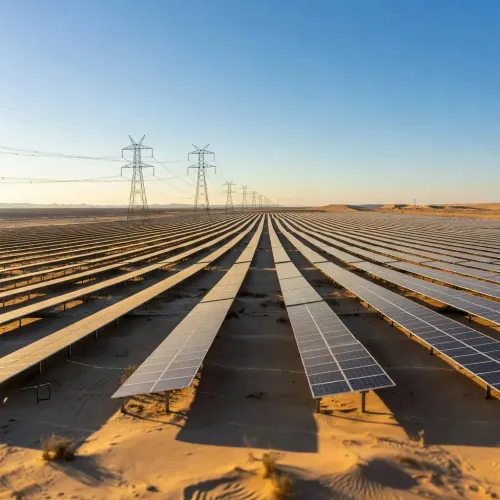
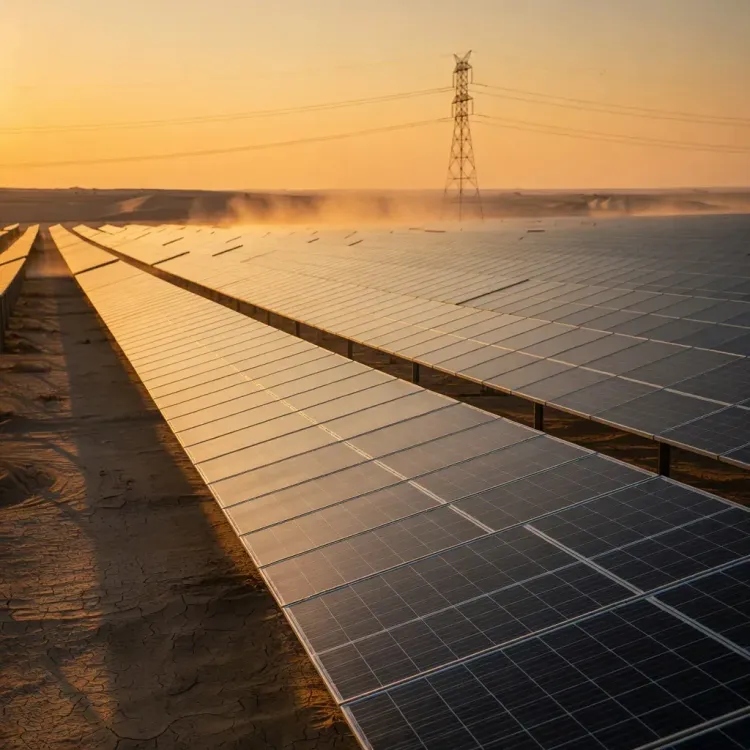
Rajasthan hosts the Bhadla Solar Park in Jodhpur district, one of the world's largest solar installations, underpinning its renewable capacity.
The state's journey mirrors a broader Indian trend of large-scale solar and wind additions flipping deficit states into surplus producers.
Interstate transmission infrastructure and formal power-export agreements remain the key watchpoints for converting surplus into sustained revenue.
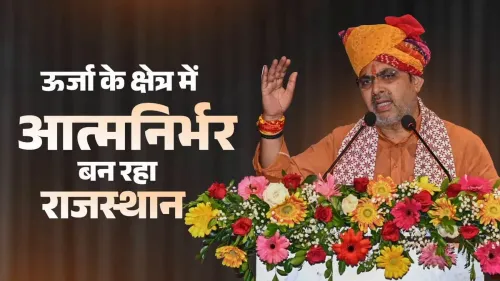
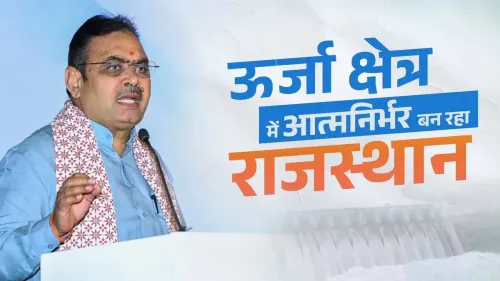
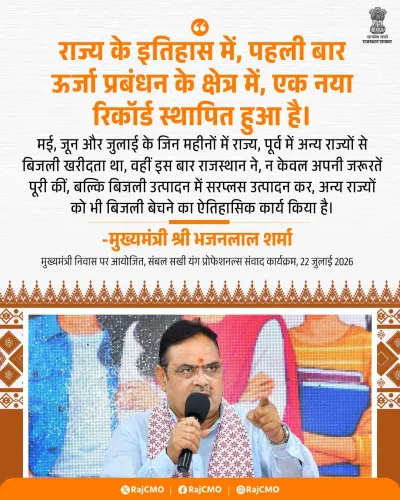
Rajasthan has crossed a threshold that energy planners have long chased: the desert state is no longer just self-sufficient in electricity — it now supplies power to others. The Chief Minister's Office of Rajasthan made the announcement on Sunday, 18 October 2026, crediting Chief Minister Bhajanlal Sharma with steering the state from energy dependency to net provider status.
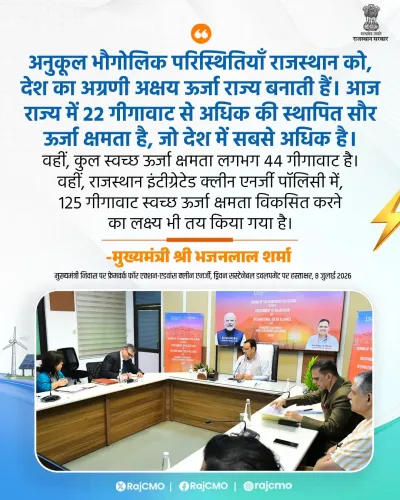
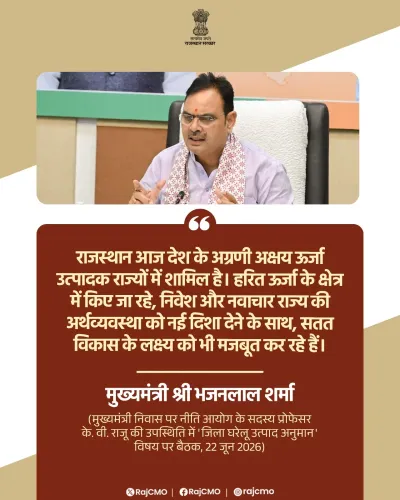
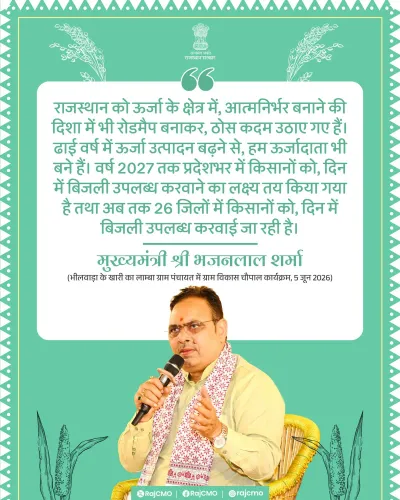
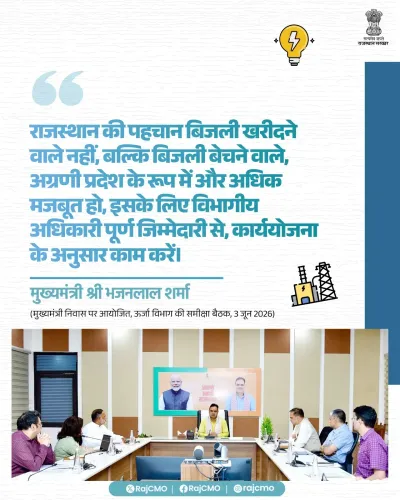
The post, shared under the campaign tag #आपणो_अग्रणी_राजस्थान ('Our Foremost Rajasthan'), declared: 'बिजली में आत्मनिर्भरता से आगे बढ़ते हुए, अब राजस्थान विद्युत प्रदाता राज्य बन गया है' — 'Moving beyond self-reliance in electricity, Rajasthan has now become a power-provider state.'From desert sun to grid surplus
Rajasthan's geography has always made this moment feel inevitable. The state sits atop some of India's richest solar irradiance zones, anchored by the Bhadla Solar Park in Jodhpur district — one of the largest solar installations on the planet. Decades of underinvestment once made Rajasthan a chronic power-deficit state; sustained capacity addition under successive solar and wind expansion programmes has flipped that equation.
The shift aligns with a national pattern: several Indian states have migrated from deficit to surplus as large-scale renewable projects commissioned through the 2010s and 2020s began delivering consistent generation. What distinguishes a 'provider' tag is the ability to export that surplus reliably to neighbouring grids — a step beyond mere self-sufficiency.
Bhajanlal Sharma's energy push since December 2023
Bhajanlal Sharma, who took charge as Chief Minister in December 2023 on a BJP ticket, has positioned renewable energy expansion as a flagship administrative priority. The CMO's framing today — 'moving beyond self-reliance' — signals that the government views power export as an economic asset, not merely an infrastructure milestone. Surplus electricity can translate into interstate revenue streams and stronger bargaining leverage in national power exchanges.
The next test is infrastructure: interstate transmission corridors and formalised power-purchase agreements with buying states will determine whether today's surplus becomes a durable revenue line or a seasonal headline. Analysts tracking the sector have flagged transmission capacity as the critical bottleneck in converting generation surplus into actual export earnings.
For now, Rajasthan's grid has answered a question the state's power planners have carried for two decades. The desert, it turns out, generates far more than heat.
Point of View
Converting an infrastructure target into a tangible governance narrative. The milestone fits neatly into the Centre's broader push for state-level renewable self-reliance under the National Solar Mission framework. However, the durability of the claim will hinge on whether interstate transmission capacity and formal purchase agreements can absorb the surplus consistently — without those, 'provider state' risks remaining a seasonal or peak-hour reality rather than a structural one. If Rajasthan can lock in long-term export contracts, it would mark a genuine shift in the state's fiscal relationship with its energy assets.
NationPress
18 Oct 2026
Frequently Asked Questions
What does it mean that Rajasthan is now a 'power-provider state'?
It means Rajasthan generates more electricity than it consumes and can supply the surplus to other states via the national grid, going a step beyond mere self-sufficiency.
Who is Bhajanlal Sharma and what is his role in Rajasthan's energy achievement?
Bhajanlal Sharma is the BJP Chief Minister of Rajasthan who took office in December 2023 . The CMO has attributed the power-surplus milestone to his administration's renewable energy expansion drive.
What is the Bhadla Solar Park and why does it matter for Rajasthan?
The Bhadla Solar Park in Jodhpur district is one of the largest solar installations in the world and is a central pillar of Rajasthan's renewable generation capacity, helping drive the state to surplus.
Which other Indian states have achieved power-surplus status through renewables?
Multiple states including Gujarat and Karnataka have transitioned from deficit to surplus positions in recent years through large-scale solar and wind capacity additions, a trend Rajasthan has now joined.
What challenges remain for Rajasthan to sustain its power-provider status?
Progress on interstate transmission lines and formal power-purchase agreements with buying states are the key hurdles. Without adequate transmission infrastructure, surplus generation cannot reliably reach other grids.