CM Mamata mourns Jogen Chowdhury, calls loss irreparable
Synopsis
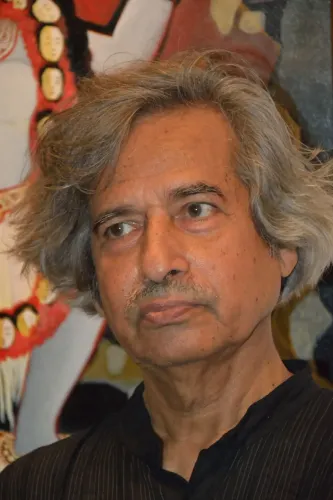
West Bengal Chief Minister Mamata Banerjee mourned the passing of renowned painter Jogen Chowdhury on 25 October 2026, remembering him as a personal inspiration, a Banga Bibhushan awardee, and a former AITC Rajya Sabha MP who represented civil society from 2014 to 2020.
Key Takeaways
Jogen Chowdhury , celebrated modernist painter from Bengal, has passed away.
West Bengal CM Mamata Banerjee described him as 'the pride of Bengal and India' and a personal inspiration.
Chowdhury was awarded the Banga Bibhushan — West Bengal's highest civilian honour — in 2012 .
He served as an AITC Rajya Sabha MP representing civil society from 2014 to 2020 .
Banerjee called his passing 'an irreparable void in the world of art and culture.' State-level memorials or cultural tributes are likely to follow in the coming weeks.
Bengal and India lost one of their most distinctive artistic voices, and West Bengal Chief Minister Mamata Banerjee was among the first to mark that loss — with words that carried the weight of both personal grief and public tribute. On Sunday, 25 October 2026, she paid homage to Jogen Chowdhury, the celebrated Indian painter, calling him 'the pride of Bengal and India' and 'a great inspiration to artists worldwide, and me personally.'
A painter who crossed into Parliament
Jogen Chowdhury was not a figure who stayed within any single lane. Widely regarded as one of independent India's foremost modernist painters, he brought a visceral, often distorted visual vocabulary to his canvases — work that earned him recognition far beyond Bengal's borders. But his public life was not confined to the studio. In 2014, the All India Trinamool Congress nominated him to the Rajya Sabha as a civil society representative, a seat he held until 2020. That nomination was characteristic of AITC's deliberate strategy: placing artists and intellectuals within legislative spaces to signal the party's identification with Bengal's cultural heritage.
Two years before that, in 2012, the West Bengal government had conferred on him the Banga Bibhushan — the state's highest civilian honour for distinguished service in arts, culture, and public life. The double recognition, first by the state and then by the Parliament, underscored how thoroughly Chowdhury had come to embody the intersection of art and civic identity in contemporary Bengal.
Mamata's tribute and the AITC's cultural language
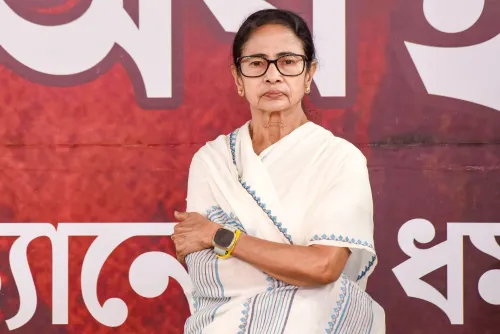
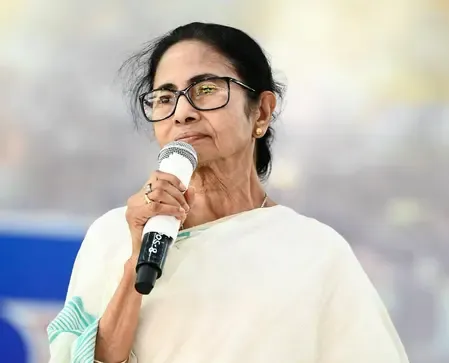
Chief Minister Banerjee's post extended condolences to Chowdhury's 'family, friends, and admirers all over the world' — a deliberately wide frame that acknowledged the global reach of his artistic legacy. 'His passing away will create an irreparable void in the world of art and culture,' she wrote, resisting any understatement.
The tribute fits a well-established pattern. Mamata Banerjee has consistently used public mourning and recognition of Bengali cultural figures as a way of articulating what AITC stands for beyond electoral politics: a claim to custodianship of Bengal's intellectual and artistic identity. By personally anchoring her condolence in her own relationship with Chowdhury — 'a great inspiration to me personally' — she moved the statement from the ceremonial into the intimate.
What the art world loses
Jogen Chowdhury's passing removes from the canvas a sensibility that was irreducibly his own. His work, often featuring elongated, contorted human figures rendered in ink and pastel, was simultaneously rooted in Bengali folk traditions and in dialogue with global modernism. That combination made him a bridge — between the vernacular and the cosmopolitan, between the political and the aesthetic. His brief but meaningful parliamentary tenure suggested he understood that art's responsibilities do not end at the gallery door.
In the coming weeks, state-level tributes, retrospective exhibitions, and discussions around naming cultural institutions in his honour may follow — a familiar arc when West Bengal loses one of its towering creative figures.
Point of View
The party has systematically woven Bengali intellectual identity into its electoral and legislative brand. The Chief Minister's use of a personal register — 'a great inspiration to me personally' — sharpens that identification beyond the ceremonial. With state assembly politics always in motion, such tributes also serve as quiet reaffirmations of the party's claim to speak for Bengal's cultural soul.
NationPress
25 Oct 2026
Frequently Asked Questions
Who was Jogen Chowdhury?
Jogen Chowdhury was a renowned Indian modernist painter from Bengal, celebrated for his distinctive ink-and-pastel works featuring distorted human figures rooted in Bengali folk traditions. He was also a former Rajya Sabha MP and recipient of the Banga Bibhushan award.
What did Mamata Banerjee say about Jogen Chowdhury's death?
West Bengal Chief Minister Mamata Banerjee called Jogen Chowdhury 'the pride of Bengal and India' and 'a great inspiration to artists worldwide, and me personally,' adding that his passing would create 'an irreparable void in the world of art and culture.'
Was Jogen Chowdhury a politician?
Jogen Chowdhury was primarily an artist, but he was elected to the Rajya Sabha on an All India Trinamool Congress ticket as a civil society representative, serving from 2014 to 2020.
What is the Banga Bibhushan award?
The Banga Bibhushan is the highest civilian honour awarded by the West Bengal government for distinguished service in fields such as arts, culture, and public life. Jogen Chowdhury received it in 2012.
Why did AITC nominate artists like Jogen Chowdhury to the Rajya Sabha?
The All India Trinamool Congress has a consistent practice of nominating artists and intellectuals to legislative positions as civil society representatives, reflecting the party's emphasis on Bengali cultural identity and outreach to non-political constituencies.