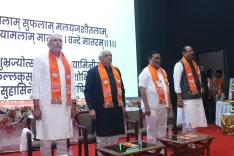
Shekhawat Highlights PM Modi's Mann Ki Baat Nod to Punjab's Natural Cotton Drive
Synopsis
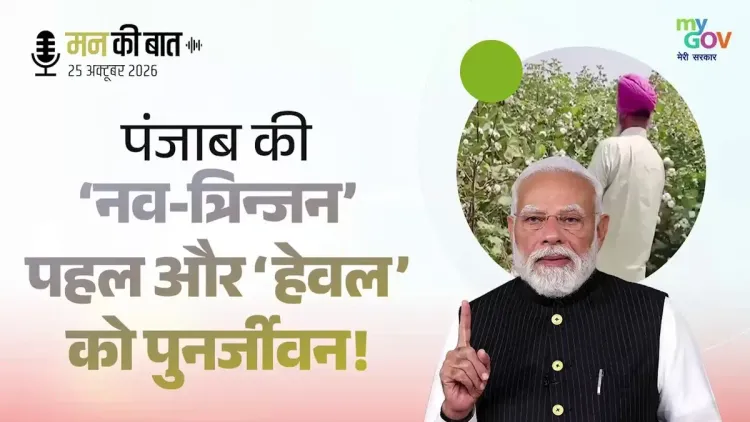
Union Minister Gajendra Singh Shekhawat highlighted Punjab's Nav-Trinjan initiative by Kheti Virasat Mission, which grows naturally coloured cotton without chemicals. PM Modi cited it in the 139th Mann Ki Baat episode, spotlighting a Malwa-based effort that revives traditional farming and weaving heritage.
Key Takeaways
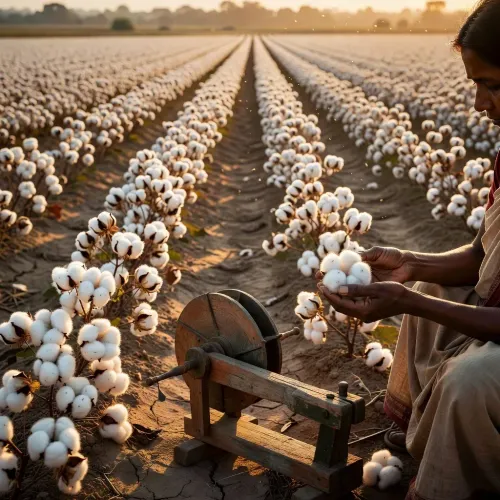
Nav-Trinjan is an initiative under the Kheti Virasat Mission in Punjab's Malwa region that cultivates naturally coloured, chemical-free cotton.
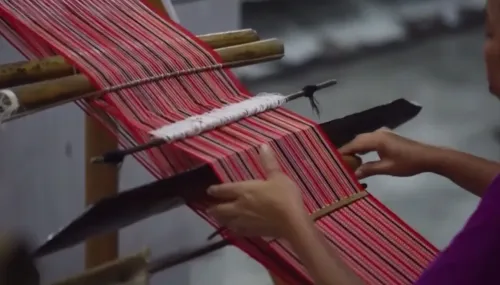
Because the cotton carries its own colour, threads and fabrics made from it require no synthetic dyeing .
PM Narendra Modi mentioned the initiative in the 139th episode of Mann Ki Baat , giving it national visibility.
The initiative revives the trinjan tradition of communal spinning and weaving, linking cultural heritage with sustainable agriculture.
The Paramparagat Krishi Vikas Yojana (2015) provides the broader policy framework supporting such natural farming clusters across India.
Malwa has faced long-standing soil and health pressures from chemical-intensive farming, making the shift to natural methods both an environmental and economic priority.
A cotton crop that needs no synthetic dye, grown in soil untouched by chemicals — Union Culture and Tourism Minister Gajendra Singh Shekhawat amplified exactly that story on Sunday, 25 October 2026, drawing attention to Punjab's quiet agricultural revival happening in the Malwa region.
Shekhawat shared that Prime Minister Narendra Modi, in the 139th episode of Mann Ki Baat, had specifically cited the 'Nav-Trinjan' (Nav-Trinjan) initiative — a programme run by the Kheti Virasat Mission that encourages farmers to grow naturally coloured cotton without any chemical inputs. Because the cotton itself carries colour, threads and fabrics woven from it require no separate chemical dyeing process.
What the Nav-Trinjan Initiative Actually Does
Operating in the Malwa belt of southern Punjab — one of India's most intensively farmed cotton-growing zones — the Kheti Virasat Mission has built Nav-Trinjan around a simple but radical premise: revive heritage seed varieties that produce cotton in natural hues of brown, rust, and green, eliminating synthetic dye at the source. The word 'trinjan' refers to the traditional gathering of women who spin and weave together, a cultural touchstone the initiative deliberately invokes to reconnect textile craftsmanship with its agrarian roots.
Malwa's soil has paid a steep price for decades of chemical-heavy farming. The region sits at the heart of Punjab's well-documented struggles with pesticide overuse, making a shift to natural methods both an ecological and economic imperative for smallholder cotton farmers there.
Mann Ki Baat as a Policy Amplifier
This is not the first time the Prime Minister's monthly radio address has served as a launchpad for grassroots agricultural innovation. Since its debut in 2014, Mann Ki Baat has consistently spotlighted local heroes and micro-initiatives that align with central government priorities — effectively giving state-level experiments national visibility. The Paramparagat Krishi Vikas Yojana, launched in 2015, laid the policy foundation for exactly this kind of organic and natural farming cluster approach nationwide.
By mentioning Nav-Trinjan in the 139th episode, PM Modi signalled that naturally coloured cotton from Punjab fits squarely within the broader push to reduce chemical dependency in agriculture — a goal the Centre has embedded across multiple ministries, from agriculture to textiles.
Why a Culture Minister Is Amplifying a Farming Story
Shekhawat's decision to share this agricultural update carries its own logic. The Nav-Trinjan initiative is as much a cultural project as an agronomic one — it explicitly revives the trinjan tradition of communal spinning and weaving, linking living heritage practices to a sustainable economic model for rural women in Punjab. That intersection of cultural preservation and natural farming makes it directly relevant to a minister whose portfolio spans both heritage and the artisan economy.
If naturally coloured cotton scales beyond Malwa, the ripple effect reaches weavers, handloom clusters, and craft exporters who currently depend on chemical dyes — sectors that sit firmly within the culture and tourism ministry's sphere of interest.
Point of View
Making it harder for critics to dismiss natural farming promotion as purely agrarian policy. PM Modi's use of Mann Ki Baat as a 'discovery engine' for grassroots experiments like Nav-Trinjan gives state-level NGO efforts an unusually powerful national megaphone, often translating radio mentions into policy interest and funding attention. Punjab, where chemical farming's human cost has been a politically charged issue for years, is a strategically significant backdrop for this messaging. If Nav-Trinjan scales, it offers a rare model where ecological, cultural, and economic goals reinforce each other — the kind of convergence the Centre increasingly needs to show in a state it has struggled to win politically.
NationPress
25 Oct 2026
Frequently Asked Questions
What is the Nav-Trinjan initiative in Punjab?
Nav-Trinjan is a programme run by the Kheti Virasat Mission in Punjab's Malwa region that promotes the cultivation of naturally coloured cotton without chemical inputs or synthetic dyes, while also reviving the traditional 'trinjan' practice of communal women's spinning and weaving.
What did PM Modi say about Nav-Trinjan in Mann Ki Baat?
In the 139th episode of Mann Ki Baat, PM Modi mentioned the Nav-Trinjan initiative as an example of how traditional agricultural practices are being adopted to promote natural farming and reduce chemical dependency in cotton cultivation.
What is Kheti Virasat Mission?
Kheti Virasat Mission is a Punjab-based organisation that promotes heritage and natural farming methods, particularly chemical-free cotton cultivation in the Malwa belt, working to revive traditional crops and practices.
Why does naturally coloured cotton not need chemical dyes?
Certain heritage cotton seed varieties produce fibres that naturally carry shades of brown, rust, or green. Because the colour is inherent to the fibre, threads and textiles made from this cotton can be used directly without any synthetic dyeing process.
What is the Paramparagat Krishi Vikas Yojana?
Paramparagat Krishi Vikas Yojana is a central government scheme launched in 2015 to promote organic and natural farming clusters across India, forming the broader policy foundation for initiatives like Nav-Trinjan.