Rijiju invokes Somnath's 1,000-year resilience in Mann Ki Baat tribute
Synopsis
Union Minister Kiren Rijiju invoked the 1,000th anniversary of Mahmud of Ghazni's 1026 sack of Somnath to celebrate 'Somnath Swabhiman Parv', tying the temple's enduring grandeur to PM Modi's Mann Ki Baat and the BJP's civilizational-pride narrative.
Key Takeaways
Kiren Rijiju posted on September 27, 2026 , marking the approximate 1,000th anniversary of Mahmud of Ghazni's raid on Somnath temple in 1026 CE .
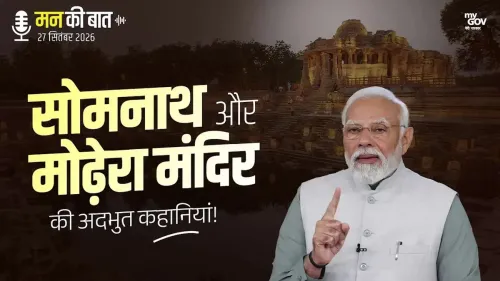
He described the 'Somnath Swabhiman Parv' as a festival of self-respect celebrated at the start of this year, linked to PM Modi's Mann Ki Baat .
Rijiju argued that the raiders who tried to erase India's identity 'have no existence today,' while Somnath stands in full grandeur on the Gujarat coast.
The present Somnath temple was reconstructed under Sardar Vallabhbhai Patel's initiative and inaugurated in May 1951 .
The post is part of a wider BJP pattern of amplifying heritage-linked themes from Mann Ki Baat across ministerial social media.
A thousand years after Mahmud of Ghazni sacked the Somnath temple in 1026 CE, Union Parliamentary Affairs Minister Kiren Rijiju used a reference to Prime Minister Narendra Modi's Mann Ki Baat on Sunday, September 27, 2026 to declare that the invaders have vanished from history while the shrine stands in full grandeur on Gujarat's Saurashtra coast.
Rijiju shared the reflection in Hindi, writing: 'इस साल की शुरुआत हमने स्वाभिमान के एक महापर्व के साथ की थी' — 'We began this year with a great festival of self-respect.' He described the 'Somnath Swabhiman Parv' as a proud civilizational reckoning: the temple that foreign raiders once tried to erase as a way of erasing India's identity now blesses the nation with a sense of immortality from the edge of a vast ocean. 'Those who came to destroy Somnath and erase India's identity,' he wrote, 'have no existence today.'
The raid of 1026 and the temple that refused to disappear
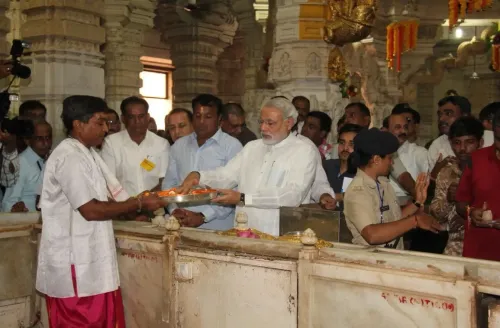
Mahmud of Ghazni's assault on Somnath in 1026 CE is one of the most cited episodes in medieval Indian history. The Somnath Jyotirlinga — one of the twelve sacred Shiva shrines in Hindu tradition — was located at Prabhas Patan on the Gujarat coastline. Historical chronicles record the raid as a defining moment of destruction, yet the site was rebuilt multiple times across successive centuries, each reconstruction framed as an act of devotion and defiance.
The most consequential modern reconstruction was led by Sardar Vallabhbhai Patel, who championed the temple's revival as a statement of the newly independent nation's cultural confidence. The rebuilt structure was inaugurated in May 1951, with President Rajendra Prasad presiding over the ceremony — a moment the BJP and allied cultural organisations have long cited as proof that civilizational memory outlasts conquest.
Mann Ki Baat as the platform for civilizational messaging
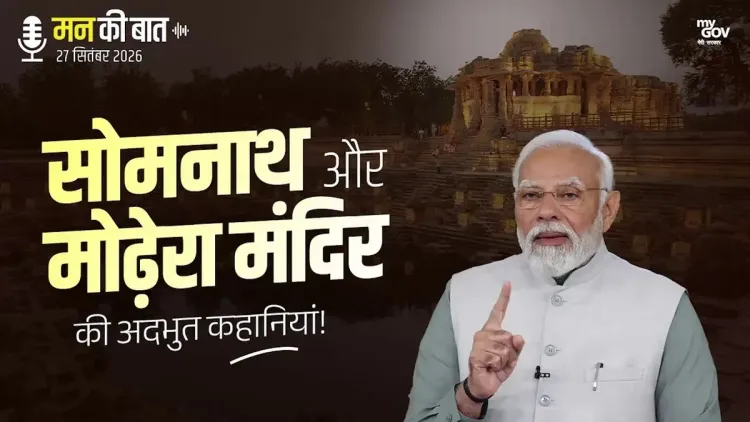
Prime Minister Modi's monthly radio programme, Mann Ki Baat, has become a consistent vehicle for weaving together heritage, cultural pride, and national identity. Rijiju's post explicitly tags the Prime Minister and the programme's hashtag, situating the 'Somnath Swabhiman Parv' squarely within that broader communication arc.
The pattern is deliberate and recurring: ministers amplify heritage-linked themes from Mann Ki Baat across social media, extending the reach of the Prime Minister's message to partisan as well as general audiences. Somnath, with its layered history of destruction and revival, fits that template almost perfectly — a single site that carries a millennium of contested memory.
The temple today draws millions of pilgrims annually and sits within a trust structure that has historically had close government involvement. Its symbolic weight in the BJP's cultural vocabulary is hard to overstate.
One thousand years on, the stone at Prabhas Patan is not just a place of worship — it is a political argument made in sandstone and sea-spray, and ministers like Rijiju are making sure the argument is heard.
Point of View
The party creates a two-tier communication loop: the Prime Minister sets the cultural theme, and ministers amplify it on social platforms to reach partisan and swing audiences alike. The Somnath site is especially potent in this regard because it carries both religious and nationalist valence, making it uniquely effective for a party that has deliberately blurred the two. As the 2027 state election cycle approaches, heritage mobilisation of this kind is likely to intensify.
NationPress
27 Sept 2026
Frequently Asked Questions
Why is Somnath temple historically significant?
The Somnath Jyotirlinga in Prabhas Patan, Gujarat, is one of the twelve sacred Shiva shrines in Hinduism and was repeatedly destroyed and rebuilt across centuries, most notably raided by Mahmud of Ghazni in 1026 CE. Its reconstruction after Indian independence — spearheaded by Sardar Vallabhbhai Patel and inaugurated in May 1951 — is seen as a symbol of national and cultural revival.
What is 'Somnath Swabhiman Parv'?
'Somnath Swabhiman Parv' translates to 'Somnath Festival of Self-Respect.' According to Kiren Rijiju's post, it was celebrated at the start of 2026 to mark approximately 1,000 years since Mahmud of Ghazni's 1026 raid on the Somnath temple, framing the temple's survival as proof of India's civilizational resilience.
Who destroyed the Somnath temple in 1026?
Mahmud of Ghazni, the 11th-century ruler of the Ghaznavid empire, raided and destroyed the Somnath temple in 1026 CE. The event is recorded in historical chronicles and is widely cited as one of the most significant invasion episodes in medieval Indian history.
What is Mann Ki Baat and why is Rijiju referencing it?
Mann Ki Baat is Prime Minister Narendra Modi's monthly radio address in which he discusses national issues, cultural heritage, and citizen achievements. Rijiju tagged the programme and the PM in his post, situating the 'Somnath Swabhiman Parv' as a theme drawn from or aligned with the Prime Minister's messaging on civilizational pride.
When was the present Somnath temple built?
The current Somnath temple structure was reconstructed with strong backing from Sardar Vallabhbhai Patel and was inaugurated in May 1951, making it the most prominent modern reconstruction of the ancient shrine.