Kishan Reddy Echoes Modi on Somnath, Modhera Solar Legacy

Synopsis
Union Minister G. Kishan Reddy shared PM Modi's Mann Ki Baat remarks drawing a direct line from Mahmud of Ghazni's 1026 AD destruction of the Somnath and Modhera temples to Modhera's modern identity as India's first Surya Gram, weaving civilisational continuity with renewable energy.
Key Takeaways
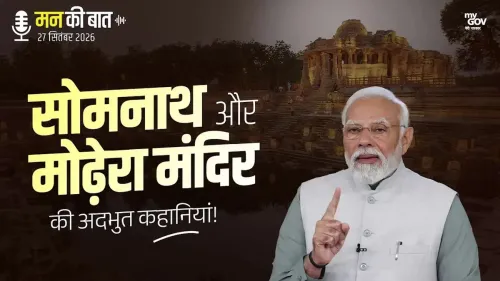
Kishan Reddy , Union Coal and Mines Minister and BJP Telangana president, shared PM Modi's remarks from Mann Ki Baat episode 138 on September 27, 2026 .
PM Modi referenced the 1026 AD destruction of the Somnath Temple and the Modhera Sun Temple by Mahmud of Ghazni during the Somnath Swabhiman Parv.
The modern Somnath Temple was reconstructed and inaugurated in May 1951 under the initiative of Sardar Vallabhbhai Patel .
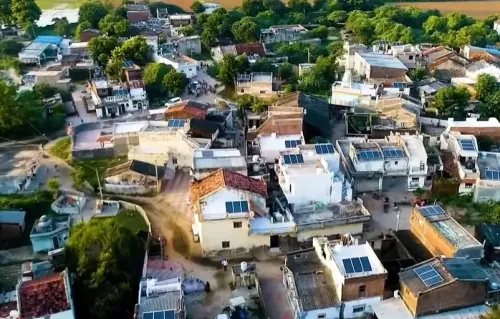
Modhera in Gujarat's Mehsana district has been promoted as India's first Surya Gram , integrating solar power infrastructure with the heritage Sun Temple site.
Mann Ki Baat has aired monthly since October 2014 and reached its 138th episode , serving as a platform for cultural and governance messaging.
The post reflects a broader BJP messaging pattern linking historical civilisational resilience to contemporary infrastructure and renewable energy milestones.
A millennium of resilience compressed into a single radio address — that is the thread Union Coal and Mines Minister G. Kishan Reddy pulled into public view on Sunday, September 27, 2026, when he quoted Prime Minister Narendra Modi from the 138th episode of Mann Ki Baat, connecting the 1026 AD destruction of the Somnath Temple by Mahmud of Ghazni to a present-day solar village rising on the same soil.
What PM Modi said in Mann Ki Baat Episode 138
Reddy shared the Prime Minister's remarks verbatim: 'We began this year with the grand celebration of national pride, the Somnath Swabhiman Parv.' Modi's words recalled that in 1026 AD, Mahmud of Ghazni demolished the Somnath Temple and also attacked the Modhera Sun Temple — two of Gujarat's most storied religious sites. The Prime Minister then delivered the pivot: 'Those who came to destroy Somnath and erase India's identity have no existence today, while Somnath stands in all its grandeur.'
The closing note tied past to present. Modi described Modhera — a village in Gujarat's Mehsana district — as India's first Surya Gram (Solar Village), a designation that positions the site's ancient solar heritage under the Modhera Sun Temple alongside a modern solar-power grid serving its residents.
Somnath and Modhera: A Shared History of Destruction and Renewal
The Somnath Temple, a revered Shiva shrine on Gujarat's Saurashtra coast, has been destroyed and rebuilt multiple times across centuries. Its most cited sacking came in 1026 AD under Mahmud of Ghazni, ruler of the Ghaznavid Empire, who raided the subcontinent at least seventeen times. The temple's modern reconstruction was inaugurated in May 1951, driven by Sardar Vallabhbhai Patel — a moment that cemented it as a symbol of post-Independence cultural revival.
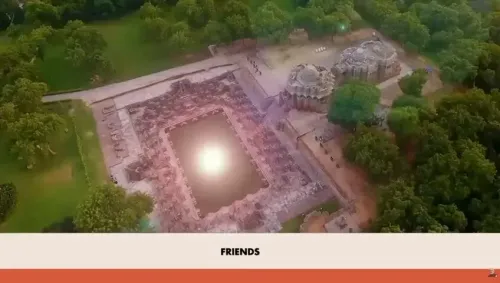
The Modhera Sun Temple, built in the early 11th century and dedicated to the Sun God Surya, sits roughly 100 kilometres north of Ahmedabad. Its architectural precision — designed so sunrise light falls directly on the deity during equinoxes — makes the solar energy pivot more than metaphor. It is a literal continuity of the site's solar identity, now expressed through photovoltaic panels rather than sandstone geometry.
Mann Ki Baat as a Platform for Civilisational Messaging
Mann Ki Baat, the Prime Minister's monthly radio programme, has run since October 2014. By its 138th episode it has become a reliable venue for blending governance updates with cultural and historical narrative — reaching audiences across FM, All India Radio, and digital platforms simultaneously. The combination of heritage pride and infrastructure achievement has been a recurring formula, particularly when projects in Gujarat are highlighted.
Kishan Reddy's decision to amplify this specific passage underlines his dual role: BJP Telangana state president and Union minister, both positions that benefit from associating themselves with the Prime Minister's broader civilisational framing ahead of any future electoral cycles in the south.
Solar Villages and the Surya Gram Ambition
The Surya Gram concept — villages powered entirely or substantially by solar energy — draws from central and state-level renewable energy programmes, including the framework established by India's national solar missions. Modhera's promotion as the country's first such village brought it international attention as a case study in decentralised solar adoption. The convergence of a heritage-tourism anchor and a clean-energy showpiece in one location is a model Indian policymakers have pointed to when making the case that modernisation and cultural continuity are not in competition.
Whether additional Surya Grams follow Modhera's template across Gujarat and other states is the next question policymakers and renewable energy advocates are watching closely.
A temple that outlasted every attempt to erase it, now powering homes on sunlight — Modi framed it as resilience. Kishan Reddy made sure the rest of India heard it.
Point of View
The pairing of 'civilisational survival' with 'energy self-reliance' is a potent, media-ready message. It also insulates the renewable energy programme from being read as purely technocratic, giving it an emotional and historical anchor that resonates far beyond policy circles.
NationPress
27 Sept 2026
Frequently Asked Questions
What is the Somnath Swabhiman Parv?
The Somnath Swabhiman Parv is a celebration of national pride centred on the Somnath Temple in Gujarat, commemorating the temple's history of destruction and resilient reconstruction, which PM Modi referenced in Mann Ki Baat episode 138.
When did Mahmud of Ghazni attack the Somnath Temple?
Mahmud of Ghazni demolished the Somnath Temple in 1026 AD . He also attacked the Modhera Sun Temple around the same period during his raids into the Indian subcontinent.
What is Modhera Surya Gram?
Modhera , a village in Gujarat's Mehsana district home to the ancient Modhera Sun Temple , has been promoted as India's first Surya Gram or Solar Village, where solar power infrastructure has been integrated into the local community.
Who rebuilt the Somnath Temple after independence?
The modern Somnath Temple was reconstructed under the initiative of Sardar Vallabhbhai Patel and inaugurated in May 1951 , becoming a powerful symbol of post-Independence cultural revival.
What is Mann Ki Baat and which episode did PM Modi speak about Somnath?
Mann Ki Baat is a monthly radio programme hosted by Prime Minister Narendra Modi since October 2014 . His remarks about Somnath and Modhera were made during the 138th episode of the programme.