Shekhawat shares PM Modi's Mann Ki Baat on Somnath legacy
Synopsis
Union Culture Minister Gajendra Singh Shekhawat amplified PM Modi's Mann Ki Baat address marking the 1,000th anniversary of Mahmud of Ghazni's 1026 sack of Somnath Temple, framing the shrine's survival as proof of India's civilisational permanence.
Key Takeaways
Somnath Swabhiman Parv was observed to mark 1,000 years since Mahmud of Ghazni 's first recorded destruction of the temple in 1026 CE .
PM Narendra Modi referenced the festival in his Mann Ki Baat address, calling Somnath a symbol of India's immortality.
Union Culture and Tourism Minister Gajendra Singh Shekhawat shared the excerpt on 27 September 2026 , amplifying the message.
The Somnath Temple 's modern reconstruction was championed by Sardar Patel and inaugurated in May 1951 .
The government has used major temple heritage sites as cultural-identity platforms consistently since 2014 .
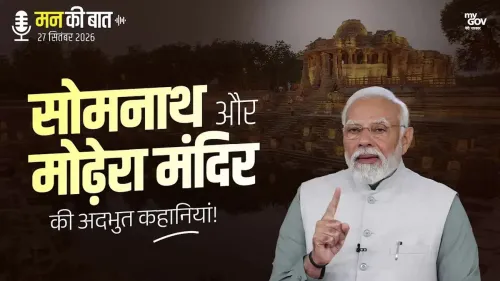
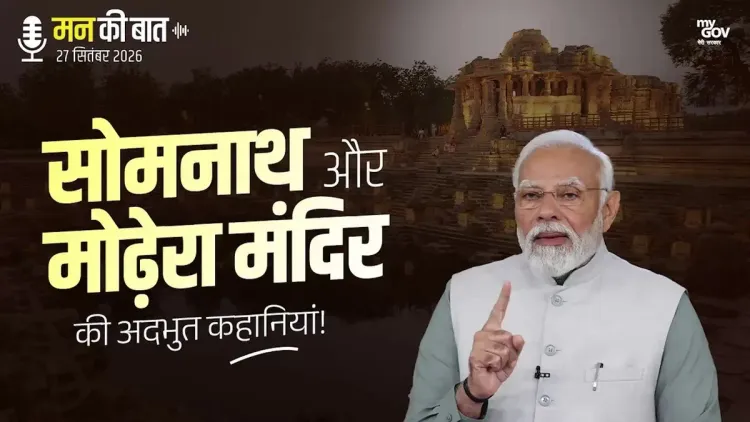
A thousand years after Mahmud of Ghazni first sacked the Somnath Temple in 1026 CE, Union Culture and Tourism Minister Gajendra Singh Shekhawat amplified Prime Minister Narendra Modi's Mann Ki Baat address on Sunday, 27 September 2026, sharing a message that frames the ancient shrine's survival as proof of India's civilisational permanence.
What PM Modi said — and why the millennium mark matters
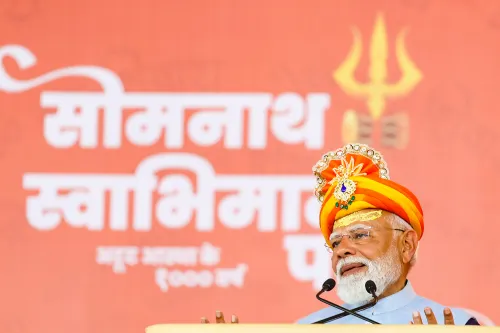
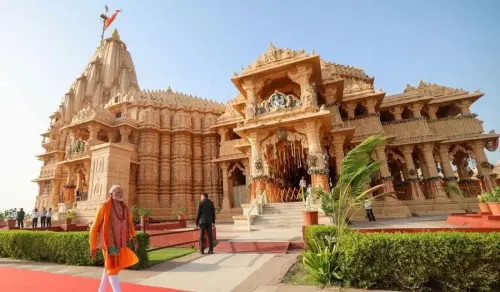
In the excerpted Mann Ki Baat remarks shared by Minister Shekhawat, PM Modi recalled how the year opened with what he called the 'Somnath Swabhiman Parv' — a commemorative festival marking exactly 1,000 years since the first recorded destruction of the temple. Modi's words were direct: 'Those who came to demolish Somnath and erase India's identity have no existence today, and Somnath Temple, in all its grandeur, stands on the shores of the vast ocean, blessing India with immortality.' The framing is deliberate — not just grief over destruction, but a civilisational counter-argument.
The millennium anniversary carries undeniable historical weight. Medieval chronicles document Mahmud of Ghazni's 1026 raid as one of the most consequential acts of temple desecration in the subcontinent's recorded history. The shrine was rebuilt multiple times over subsequent centuries — a cycle of destruction and restoration that the Somnath Swabhiman Parv holds up as a metaphor for national resilience.
From Sardar Patel's pledge to today's pride
The temple's modern chapter traces directly to Sardar Vallabhbhai Patel, who championed its reconstruction after 1947 as an assertion of sovereign cultural identity. That effort concluded with the shrine's formal inauguration in May 1951, backed by the central government — making Somnath one of independent India's earliest acts of heritage restoration. The present-day commemoration sits on the same ideological foundation, extending a lineage that stretches from post-Partition nation-building to contemporary cultural diplomacy.
Since 2014, the government has consistently deployed major temple heritage sites as platforms for narratives linking medieval endurance to modern national pride. Somnath, located in Prabhas Patan, Gujarat, sits at the intersection of devotion and statecraft — a Jyotirlinga shrine that draws millions of pilgrims and anchors Gujarat's religious tourism circuit simultaneously.
Shekhawat's role: culture ministry meets political messaging
That it is the Culture and Tourism Minister who chose to broadcast this specific passage is not incidental. Shekhawat, the Lok Sabha MP from Jodhpur and a senior BJP voice in Rajasthan, oversees the ministry responsible for heritage site development, ASI monuments, and domestic tourism promotion — all of which intersect directly at a site like Somnath. Amplifying a message about the temple's immortality is, for his portfolio, both cultural stewardship and constituency politics rolled into one post.
The Mann Ki Baat programme, PM Modi's long-running monthly radio address, routinely threads personal storytelling with national themes. Selecting the Somnath millennium for a year-opening segment — and having it echoed by a cabinet minister months later — signals a sustained, coordinated cultural communications effort rather than a one-off tribute.
Somnath stands. The millennium has been marked. The question now is whether the government translates this commemorative energy into durable heritage infrastructure at the site — or whether the symbolism outpaces the stone.
Point of View
PM Modi converts an anniversary into a civilisational argument, and Shekhawat's amplification through the Culture Ministry gives it institutional weight. The move also serves Gujarat's booming religious tourism economy, where Somnath functions as both a pilgrimage anchor and a heritage brand. The real test of this commemorative energy will be whether it is matched by heritage conservation investment and visitor infrastructure at the site itself.
NationPress
27 Sept 2026
Frequently Asked Questions
What is Somnath Swabhiman Parv?
'Somnath Swabhiman Parv' is a commemorative festival observed in 2026 to mark 1,000 years since Mahmud of Ghazni's first documented destruction of the Somnath Temple in 1026 CE, celebrating the shrine's historical resilience and India's cultural continuity.
When did Mahmud of Ghazni destroy Somnath Temple?
Mahmud of Ghazni first sacked the Somnath Temple in 1026 CE , an event documented in medieval chronicles as one of the most significant acts of temple desecration in the subcontinent's recorded history.
Who rebuilt the Somnath Temple after Independence?
Sardar Vallabhbhai Patel championed the reconstruction of the Somnath Temple after 1947 as an assertion of India's sovereign cultural identity; the rebuilt shrine was formally inaugurated in May 1951 with central government support.
What did PM Modi say about Somnath in Mann Ki Baat?
PM Modi stated that those who came to demolish Somnath and erase India's identity 'have no existence today,' while the temple stands in full grandeur on the seashore, blessing India with immortality — framing the shrine's survival as a civilisational counter-argument.
Where is the Somnath Temple located?
The Somnath Temple is located in Prabhas Patan, Veraval, Gujarat , on the Arabian Sea coast. It is one of the twelve Jyotirlinga shrines of Lord Shiva and a major pilgrimage and tourism destination.