CM Bhupendra Patel Hails Somnath's Immortal Legacy

Synopsis
Gujarat CM Bhupendra Patel marked the Somnath Swabhiman Parv on September 27, 2026, citing PM Modi's Mann Ki Baat reference to the ancient Shiva temple's survival through centuries of destruction as a symbol of India's civilisational immortality.
Key Takeaways
Gujarat CM Bhupendra Patel posted on September 27, 2026 invoking the thousand-year survival of Somnath Temple as a mark of national pride.
PM Narendra Modi referenced the 'Somnath Swabhiman Parv' in his Mann Ki Baat radio address, prompting the CM's public response.
The present Somnath Temple structure was rebuilt after independence and inaugurated by President Rajendra Prasad in May 1951 .
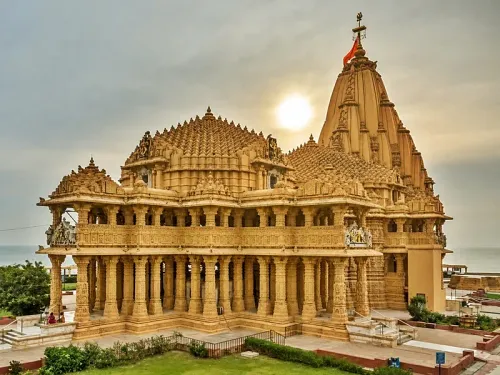
The temple, located in Prabhas Patan, Saurashtra, Gujarat , was famously attacked by Mahmud of Ghazni in 1025 CE and rebuilt multiple times.
BJP messaging frames Somnath as a symbol of civilisational continuity and resistance to historical invasions.
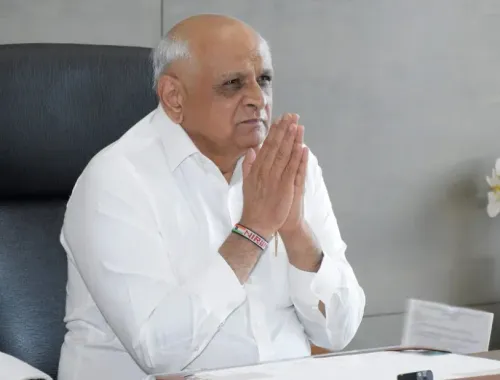
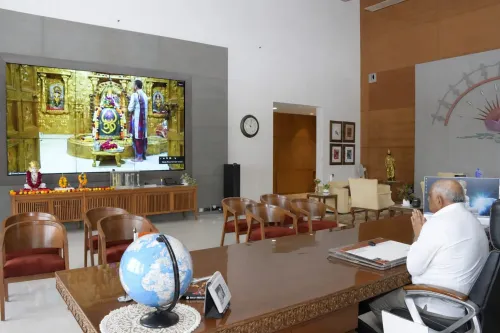
A thousand years of invasions, destruction, and deliberate erasure — and yet, Somnath Temple still stands. Gujarat Chief Minister Bhupendra Patel on Sunday, September 27, 2026, echoed a pointed reminder: those who once tried to wipe out India's identity through the temple's demolition have no trace left in history, while Somnath endures in full splendour.
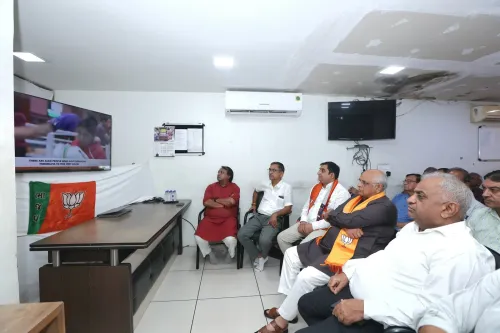
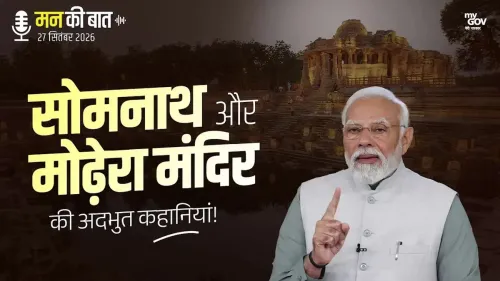
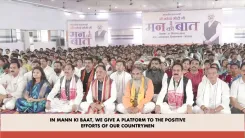
The Chief Minister's post was sparked by Prime Minister Narendra Modi's reference to the 'Somnath Swabhiman Parv' during his monthly radio address, Mann Ki Baat — a programme that regularly uses cultural and historical milestones to connect with a mass audience across India. Patel called the temple's survival 'swabhiman ka vishay' — a matter of great self-pride — for every Indian.
A Temple Rebuilt From the Ashes of Partition-Era India
The Somnath Temple's modern chapter is inseparable from independent India's founding impulse. The present structure, located in Prabhas Patan, Saurashtra, Gujarat, was reconstructed after independence and inaugurated by President Rajendra Prasad in May 1951 — a deliberate act of civilisational restoration by the new republic. The rebuild was championed by Sardar Vallabhbhai Patel and home minister K. M. Munshi, who saw the project as a statement of national renewal, not just religious sentiment.
The temple had been attacked and looted multiple times over centuries, most famously by Mahmud of Ghazni in 1025 CE, stripping it of legendary wealth and destroying its idol. Each time, devotees and local rulers rebuilt. That cycle of destruction and reconstruction is precisely what figures like CM Patel and PM Modi invoke as proof of civilisational resilience.
Somnath in BJP's Cultural Messaging
References to Somnath in official BJP communication have consistently carried a dual register: devotional pride and political identity. The temple functions as shorthand for a broader civilisational argument — that India's ancient heritage survived systematic erasure, and its revival is ongoing state policy. The Swabhiman Parv framing anchors this in a festive, affirmative register rather than a combative one.
Mann Ki Baat has previously spotlighted heritage sites, tribal traditions, and cultural anniversaries as soft-power talking points. Choosing Somnath on this date amplifies the temple's symbolic weight at a national scale, with Gujarat's Chief Minister amplifying the signal to his own constituency — a state where the temple holds deep religious and political resonance.
Somnath has stood for a thousand years of tests. The message from Gandhinagar today is simple: it is not done standing yet.
Point of View
Not just devotional landmarks. By framing the temple's survival as proof that aggressors are erased while India endures, the messaging converts a religious anniversary into a civilisational argument. Gujarat, where Somnath sits, is also the party's ideological heartland, making such communication doubly efficient — nationally resonant and locally grounding. The pattern suggests Somnath will remain a recurring anchor in BJP's cultural calendar well beyond any single broadcast.
NationPress
27 Sept 2026
Frequently Asked Questions
What is the Somnath Swabhiman Parv?
The Somnath Swabhiman Parv is a commemorative observance that celebrates the Somnath Temple's centuries-long survival and reconstruction, highlighting it as a symbol of India's civilisational pride and self-respect.
When was the present Somnath Temple inaugurated?
The present Somnath Temple structure was rebuilt after Indian independence and inaugurated by President Rajendra Prasad in May 1951, championed by Sardar Vallabhbhai Patel and K. M. Munshi.
What did PM Modi say about Somnath in Mann Ki Baat?
According to Gujarat CM Bhupendra Patel's post, PM Modi referenced the Somnath Swabhiman Parv in his Mann Ki Baat address, highlighting the temple's enduring legacy and its significance as a symbol of India's immortality.
Who attacked Somnath Temple historically?
Mahmud of Ghazni famously attacked and looted the Somnath Temple in 1025 CE. The temple was destroyed and rebuilt multiple times over the centuries before its current structure was inaugurated in 1951.
Where is Somnath Temple located?
Somnath Temple is located in Prabhas Patan, Saurashtra, Gujarat, and is one of the twelve Jyotirlinga shrines dedicated to Lord Shiva.