Pradhan: Congress spreading anti-democracy propaganda after repeated poll defeats
Synopsis
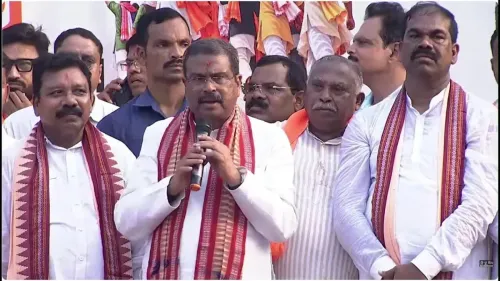
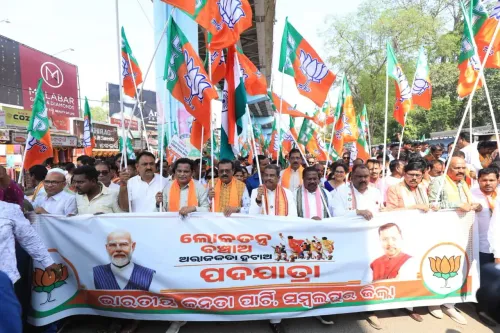
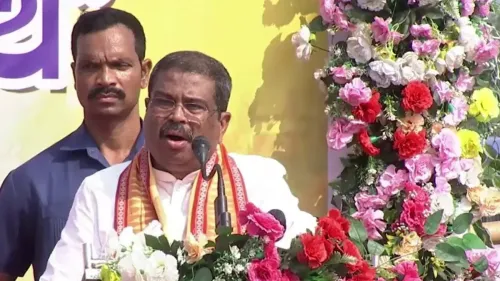
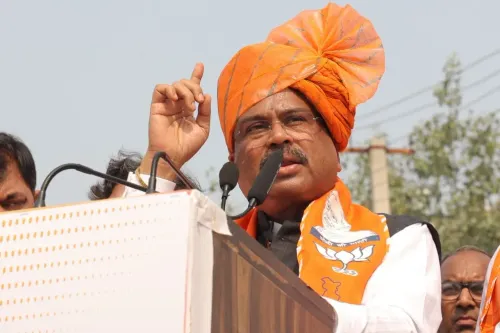
Union Education Minister Dharmendra Pradhan accused Congress of running propaganda against democracy after suffering repeated electoral defeats since 2014, posting in Odia with the hashtag #LoktantraBachaoArajaktaHatao on 11 November 2026.
Key Takeaways
Dharmendra Pradhan posted in Odia on 11 November 2026 accusing Congress of spreading anti-democracy propaganda.
He argued the party turned to such rhetoric after being 'completely rejected' by voters in repeated elections.
The hashtag #LoktantraBachaoArajaktaHatao ('Save democracy, remove anarchy') anchored the message.
BJP has cited back-to-back Lok Sabha wins in 2014 and 2019 to rebut Congress's institutional-integrity concerns.
The post follows an established BJP pattern of framing Congress criticism as post-defeat obstructionism.
Congress and the INDIA alliance are expected to respond through Parliament and state campaign platforms.
Lose enough elections and the temptation, apparently, is to stop trusting the system that keeps delivering the verdict. Union Education Minister Dharmendra Pradhan made that charge bluntly on Wednesday, 11 November 2026, posting in Odia that the Indian public has 'completely rejected' Congress, and that the party now resorts to propaganda against democracy to explain away a string of electoral defeats.
Translated from Odia, the post reads: 'Deshara janasadharan Congressku sampurna pratyakhyana karisnti; barambar nirbachanare haribha pare emane aaji ganatantra biruddhare appaprachar karuchhanti.' — 'The people of the country have completely rejected Congress; having lost elections repeatedly, they are today spreading propaganda against democracy.' The post carried the hashtag #LoktantraBachaoArajaktaHatao — roughly, 'Save democracy, remove anarchy.'
A BJP counter-narrative rooted in 2014
Pradhan's broadside is not an isolated remark — it is the latest iteration of a well-worn BJP framing that has hardened into party doctrine since 2014. That year, the BJP-led NDA ended a decade of Congress-led UPA rule with an outright Lok Sabha majority; in 2019 the margin grew wider. Senior BJP leaders have consistently responded to Congress criticism of democratic institutions by pointing to those back-to-back mandates, arguing that a party repeatedly ratified by voters cannot be accused of subverting the system it won through.
Pradhan, who represents Odisha and previously held the Petroleum portfolio before moving to Education, deployed that logic here with added sharpness — tying Congress's democratic-erosion rhetoric directly to electoral frustration rather than principled opposition.
What 'propaganda against democracy' actually means in this fight
The specific trigger for the 11 November post is not independently verified. But the pattern is clear: whenever Congress or the broader INDIA alliance raises alarms about institutional integrity — courts, election commissions, media freedom — the BJP's standard counter is to reframe the criticism as sore-loser obstructionism. Pradhan's post channels exactly that playbook, using the hashtag to sharpen the contrast between 'saving democracy' (BJP's self-assigned role) and 'spreading anarchy' (the charge pinned on Congress).
It is a combative register, but the facts it rests on — successive Congress defeats since 2014 — are not in dispute.
Congress's space to respond
The Indian National Congress and alliance partners are expected to push back through Parliament sessions and state-level campaign messaging. The opposition's core argument — that electoral losses do not invalidate concerns about institutional health — remains the central tension in Indian political discourse heading into the next cycle of assembly elections. How that argument lands with voters who have, at the national level, sided repeatedly with the BJP will define the credibility stakes for both sides.
Pradhan has drawn the line in the sand clearly: in his telling, the ballot box is the only legitimate arbiter, and Congress has already heard its verdict.
Point of View
The party converts a normative debate about institutions into a question of credibility — and Congress, having lost that credibility at the ballot box, is left arguing uphill. The hashtag 'Save democracy, remove anarchy' is particularly pointed: it inverts the opposition's framing and positions the ruling party as democracy's guardian rather than its alleged threat. The durability of this counter-narrative depends entirely on the BJP continuing to win — a vulnerability that makes every upcoming state election a test of the argument itself.
NationPress
11 Nov 2026
Frequently Asked Questions
What did Dharmendra Pradhan say about Congress and democracy?
Pradhan posted in Odia on 11 November 2026 that the Indian public has completely rejected Congress, and that after losing repeatedly, the party is now spreading propaganda against democracy.
What does the hashtag LoktantraBachaoArajaktaHatao mean?
The hashtag translates from Hindi as 'Save democracy, remove anarchy.' BJP leaders use it to contrast their electoral mandate with what they characterise as destabilising opposition rhetoric.
How many times has Congress lost to BJP at the national level?
Congress lost the Lok Sabha elections in both 2014 and 2019 to the BJP-led NDA, ending a decade of Congress-led UPA government and remaining in opposition at the national level.
Why does BJP say Congress is spreading propaganda against democracy?
BJP leaders, including Pradhan, argue that Congress's criticism of democratic institutions is not principled dissent but a reaction to electoral defeat — framing it as an attempt to delegitimise results the party lost.
What is the Congress response to BJP's democracy claims?
Congress and the INDIA alliance typically counter that electoral losses do not invalidate concerns about institutional integrity, and they are expected to push back through Parliament and state-level campaigns.