Cabinet Clears Rs 5,000 Cr Corpus to Back Rs 12.6 Lakh Cr Mudra Loans

Synopsis
The Union Cabinet has approved continuation of the Credit Guarantee Fund for Micro Units with a Rs 5,000 crore corpus, aiming to facilitate Rs 12.6 lakh crore in collateral-free Mudra loans to small and micro entrepreneurs across India.
Key Takeaways
The Union Cabinet approved continuation of the Credit Guarantee Fund for Micro Units (CGFMU) under the Pradhan Mantri Mudra Yojana .
A fresh corpus of Rs 5,000 crore has been earmarked to provide loan guarantees to lending institutions.
The guarantee backstop is designed to facilitate Rs 12.6 lakh crore in Mudra loans to micro and small entrepreneurs.
PMMY was launched in April 2015 to channel collateral-free formal credit to non-corporate small businesses in manufacturing, trading, and services.
The CGFMU reduces default risk for banks and microfinance institutions, enabling lending without collateral — the key barrier for informal-sector borrowers.
Disbursement trends against the Rs 12.6 lakh crore target and any Budget-time corpus top-ups are the key indicators to watch.
A Rs 5,000 crore credit guarantee corpus — and the promise of Rs 12.6 lakh crore in loans reaching India's smallest entrepreneurs. The Union Cabinet, under Prime Minister Narendra Modi, has approved the continuation of the Credit Guarantee Fund for Micro Units (CGFMU), the risk-shield that makes collateral-free lending under the Pradhan Mantri Mudra Yojana (PMMY) possible. Union Education Minister Dharmendra Pradhan announced the decision on Wednesday, November 11, 2026, calling it new muscle for the 'Aatmanirbhar Bharat' (self-reliant India) resolve.
What the Cabinet greenlit — and why the guarantee fund matters
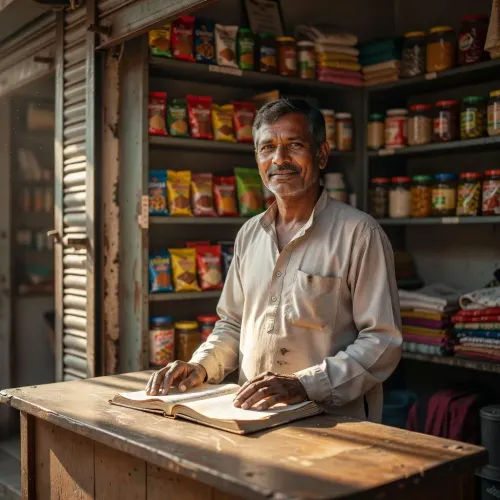
The CGFMU does the heavy lifting that collateral cannot. When a small entrepreneur — a street-food vendor, a tailor, a micro-manufacturer — walks into a bank with no land or gold to pledge, the guarantee fund steps in as the implicit co-signer, absorbing the lender's default risk. Without it, formal credit simply does not flow to the informal sector at scale. The Rs 5,000 crore corpus approved by the cabinet is designed to backstop precisely that pipeline, enabling lending institutions to disburse with confidence rather than caution.
Pradhan framed the move in terms of three interlocking goals: economic support for small entrepreneurs ('chote udyamiyon ko arthik sambal'), a push for self-employment ('swarozgar ko protsahan'), and a fresh jolt of momentum for the government's self-reliance agenda. The scale is not modest — Rs 12.6 lakh crore in Mudra loans is the aggregate disbursement target the guarantee architecture is now expected to facilitate.
PMMY's eleven-year arc — from April 2015 to today
Pradhan Mantri Mudra Yojana was launched in April 2015 to channel formal credit to non-corporate small businesses in manufacturing, trading, and services — the sprawling informal economy that employs hundreds of millions of Indians but has historically been shut out of bank balance sheets. The scheme operates across three loan tiers: Shishu (up to Rs 50,000), Kishore (Rs 50,001–Rs 5 lakh), and Tarun (Rs 5 lakh–Rs 10 lakh), with a fourth Tarun Plus category introduced more recently for established borrowers scaling up.
The CGFMU was built as the guarantee backbone of the scheme from the start, allowing banks and microfinance institutions to lend without demanding collateral — the structural barrier that previously kept micro-enterprises in the grip of informal moneylenders. Wednesday's cabinet decision continues that architecture rather than reinventing it, underscoring the government's view that sustained lending volumes require a continuously funded guarantee pool, not a one-time push.
What Rs 12.6 lakh crore means on the ground
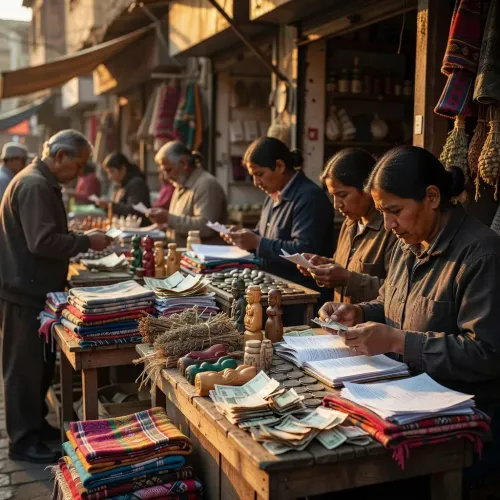
The figure is a macro number with intensely micro consequences. Each rupee of guarantee corpus, through leverage, unlocks a multiple in actual loans disbursed — it is the difference between a small entrepreneur getting working capital to buy raw material or stock, and going without. The government's bet is that by keeping the guarantee fund capitalised, the formal credit system will keep reaching deeper into India's self-employment economy: home-based garment units, roadside repair shops, small food processors, and first-generation business owners who have never held a loan account.
The watch item now is execution — specifically, how quickly disbursements track against that Rs 12.6 lakh crore target, and whether the next Union Budget carries a further top-up of the guarantee corpus to sustain momentum. The cabinet decision sets the ceiling; lender behaviour and credit offtake will determine how much of that ceiling is actually reached.
India's smallest businesses just got a formal guarantee backing them. The question is whether the pipeline built over eleven years finally delivers at the scale the numbers promise.
Point of View
The BJP frames Mudra not as a welfare measure but as an economic-output engine, reinforcing its 'self-reliant India' narrative ahead of potential budget season messaging. The critical test, however, is whether lender appetite and borrower demand actually convert the guarantee headroom into real disbursements — past cycles have shown that corpus availability alone does not guarantee offtake. The next Union Budget's treatment of the CGFMU will reveal how central this credit-guarantee architecture remains to the government's growth strategy.
NationPress
11 Nov 2026
Frequently Asked Questions
What is the Credit Guarantee Fund for Micro Units (CGFMU)?
The CGFMU is a government-backed fund that provides guarantee cover to banks and microfinance institutions lending under the Pradhan Mantri Mudra Yojana, allowing them to extend collateral-free loans to small and micro entrepreneurs without bearing the full default risk themselves.
What did the Union Cabinet approve for PMMY in November 2026?
The Union Cabinet approved the continuation of the Credit Guarantee Fund for Micro Units with a Rs 5,000 crore corpus, intended to facilitate up to Rs 12.6 lakh crore in Mudra loans to small and micro enterprises.
What is Pradhan Mantri Mudra Yojana (PMMY)?
PMMY is a central government scheme launched in April 2015 to provide collateral-free loans of up to Rs 10 lakh to non-corporate small businesses in manufacturing, trading, and services, targeting entrepreneurs who lack access to formal credit.
How does the Rs 5,000 crore corpus help small entrepreneurs?
The corpus acts as a guarantee pool: it absorbs lending risk for banks and microfinance institutions, making them willing to lend to micro-entrepreneurs who have no collateral to pledge, thereby expanding access to formal credit in the informal economy.
What are the loan categories under Mudra Yojana?
PMMY offers loans under three main tiers — Shishu (up to Rs 50,000), Kishore (Rs 50,001 to Rs 5 lakh), and Tarun (Rs 5 lakh to Rs 10 lakh) — with a Tarun Plus category for established borrowers looking to scale their businesses further.