CM Yogi backs Cabinet's ₹12.6 lakh crore Mudra credit push

Synopsis
The Union Cabinet, chaired by PM Modi, has extended the Credit Guarantee Fund for Micro Units under Pradhan Mantri Mudra Yojana to 31 March 2031, targeting ₹12.6 lakh crore in loans. UP CM Yogi Adityanath hailed the move as vital to self-employment and the Atmanirbhar Bharat vision.
Key Takeaways
The Union Cabinet extended the CGFMU under Pradhan Mantri Mudra Yojana for five years, until 31 March 2031 .
The extension is projected to facilitate ₹12.6 lakh crore in loans to micro entrepreneurs over the next five years.
CM Yogi Adityanath publicly lauded the decision, linking it to Atmanirbhar Bharat and self-employment promotion.
The CGFMU provides guarantee cover on collateral-free loans, reducing lender risk for the micro-enterprise segment.
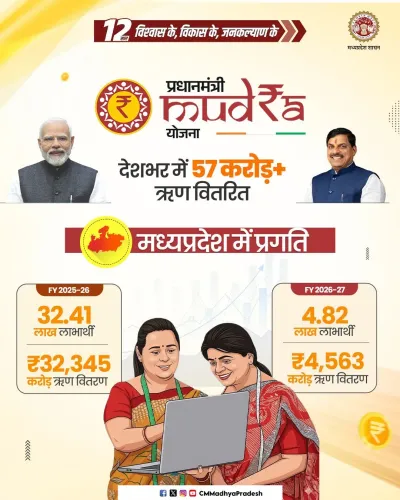
Pradhan Mantri Mudra Yojana was originally launched on 8 April 2015 to serve non-farm, non-corporate micro businesses.
Uttar Pradesh is among the top states in Mudra loan disbursements, giving CM Yogi a direct stake in the scheme's expansion.
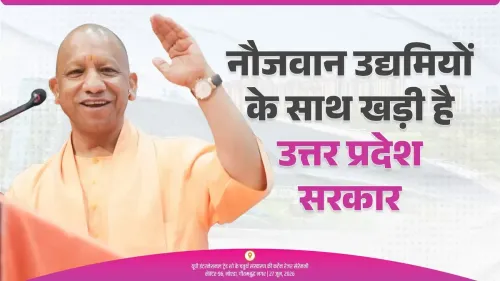
A single cabinet decision just unlocked the runway for India's smallest entrepreneurs to access ₹12.6 lakh crore in loans over the next five years — and Uttar Pradesh Chief Minister Yogi Adityanath wants the country to notice. On Wednesday, 11 November 2026, CM Yogi took to X to praise the Union Cabinet's decision, chaired by Prime Minister Narendra Modi, to extend the Credit Guarantee Fund for Micro Units (CGFMU) under the Pradhan Mantri Mudra Yojana until 31 March 2031.
Welcoming the move in Hindi, CM Yogi wrote that the extension is 'atyanт abhinandaniya' — 'most commendable' — and would prove decisive in building an 'Atmanirbhar Bharat' (self-reliant India), promoting self-employment, and infusing fresh energy into the micro-enterprise sector. He closed with a direct expression of gratitude to the Prime Minister for what he called a 'visionary decision.'
What CGFMU does — and why its renewal matters
The Pradhan Mantri Mudra Yojana, launched on 8 April 2015, was designed with one core insight: millions of micro-entrepreneurs in non-farm, non-corporate businesses could not access formal credit because they had no collateral to pledge. The CGFMU was set up alongside the scheme specifically to shoulder that risk — guaranteeing loans so that lenders would not turn away a street vendor, a weaver, or a small repair-shop owner empty-handed.
Without the guarantee fund operating in the background, the entire architecture of collateral-free Mudra lending loses its foundation. Extending its mandate to 2031 means lenders retain the assurance needed to keep credit flowing to the bottom of the enterprise pyramid for another half-decade.
₹12.6 lakh crore — the number that frames the ambition
The figure cited in the post is striking in scale. ₹12.6 lakh crore in projected loan availability over five years averages to roughly ₹2.52 lakh crore annually — a substantial commitment to the micro-enterprise segment that employs a disproportionately large share of India's non-agricultural workforce. Successive Union Budgets and the Atmanirbhar Bharat stimulus package of May 2020 had already layered additional credit-guarantee support onto the MSME sector; this extension continues that arc rather than breaking from it.
The practical chain of effect is direct: a larger, longer-running guarantee fund reduces lender risk, widens the pool of eligible borrowers, and in theory pushes credit deeper into underserved geographies — including, critically, the dense micro-enterprise clusters spread across Uttar Pradesh, India's most populous state and CM Yogi's political home ground.
UP's stake in the Mudra story
Uttar Pradesh consistently ranks among the highest states in Mudra loan disbursements since the scheme's inception. For CM Yogi, endorsing this extension is not simply a matter of party solidarity — it aligns directly with the state government's own push to formalise and finance its vast unorganised-sector workforce. Self-employment and micro-entrepreneurship are central planks of UP's economic messaging, and an extended federal guarantee backstop strengthens that pitch considerably.
The watch item now is execution: whether the projected ₹12.6 lakh crore in loans actually reaches borrowers, and whether periodic performance reports on the extended CGFMU cover will confirm that the guarantee is translating into real credit at the ground level — not just headline numbers on a government dashboard.
Point of View
Endorsing the move publicly is as much about state-level optics as national policy: UP's dense self-employment base makes Mudra's pipeline politically salient ahead of any future electoral cycle. The ₹12.6 lakh crore projection is bold; the credibility question is whether disbursement quality and borrower outcomes match the headline ambition. If the extended CGFMU drives measurable job and income gains at the bottom of the enterprise ladder, it strengthens the ruling coalition's core 'economic empowerment' narrative heading into the late 2020s.
NationPress
11 Nov 2026
Frequently Asked Questions
What is the CGFMU and what does its extension mean?
The Credit Guarantee Fund for Micro Units (CGFMU) provides guarantee cover on collateral-free loans sanctioned under Pradhan Mantri Mudra Yojana. Its extension to 31 March 2031 ensures lenders can continue offering unsecured credit to micro entrepreneurs for five more years, with a projected loan availability of ₹12.6 lakh crore.
What is Pradhan Mantri Mudra Yojana?
Pradhan Mantri Mudra Yojana (PMMY) is a central government scheme launched on 8 April 2015 to provide collateral-free loans up to ₹10 lakh to non-corporate, non-farm micro and small enterprises, targeting self-employed individuals and small business owners.
Why did CM Yogi Adityanath comment on the CGFMU extension?
CM Yogi Adityanath praised the Union Cabinet's decision as it supports micro-entrepreneurship and self-employment — priorities closely tied to Uttar Pradesh's economic agenda. UP is among the leading states in Mudra loan disbursements, making the scheme's expansion directly relevant to the state's large unorganised-sector workforce.
How much loan money will be available under the extended Mudra scheme?
According to CM Yogi's post and the cabinet decision, the extension of CGFMU is expected to help make ₹12.6 lakh crore in loans available to micro entrepreneurs over the next five years ending 31 March 2031.
What is Atmanirbhar Bharat and how does Mudra relate to it?
Atmanirbhar Bharat, or 'Self-Reliant India,' is a central government initiative announced in May 2020 that prioritised economic self-sufficiency, with specific credit guarantee and collateral-free loan measures for MSMEs. The Mudra Yojana and CGFMU extension continue that policy direction by strengthening formal credit access for the smallest business units.