CM Himanta Hails GMCH's 100 HPB Procedures Milestone
Synopsis
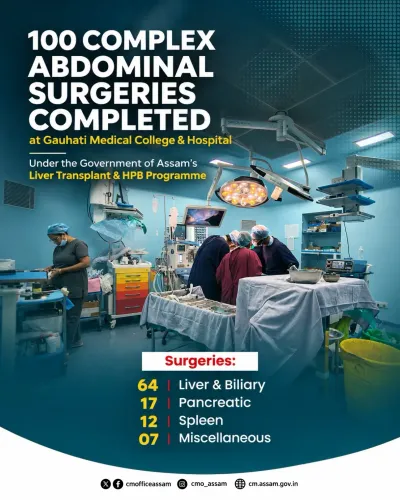
Gauhati Medical College and Hospital has completed 100 complex Hepato-Pancreato-Biliary procedures — including 64 liver/biliary, 17 pancreatic, and 12 spleen surgeries — weeks after performing the Northeast's first liver transplant in a government hospital, Assam CM Himanta Biswa Sarma announced.
Key Takeaways
GMCH has completed 100 complex HPB procedures under its Liver Transplant and HPB Programme in Guwahati, Assam.
The breakdown: 64 liver and biliary , 17 pancreatic , 12 spleen , and 7 other procedures.
The milestone follows the Northeast's first-ever liver transplant performed inside a government hospital , also at GMCH.
Cases included rare conditions handled under tight timelines, signalling genuine high-complexity clinical work.
The programme is part of a broader pattern of Assam building super-specialty tertiary capacity in public hospitals to reduce outbound medical travel from the Northeast.
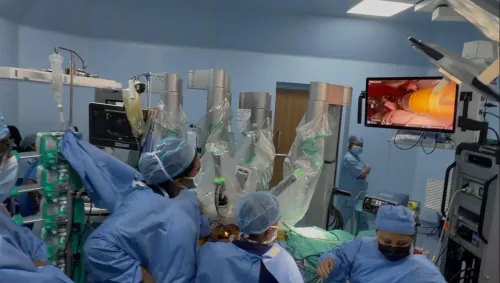
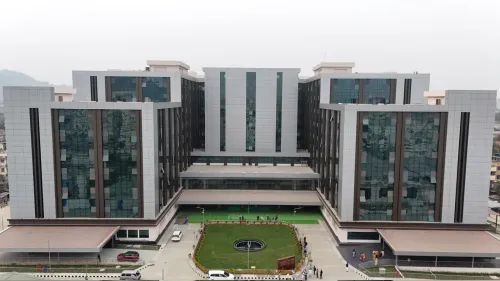
A government hospital in Guwahati is quietly rewriting what public healthcare looks like in Northeast India. Assam Chief Minister Himanta Biswa Sarma on Wednesday, November 11, 2026 announced that Gauhati Medical College and Hospital (GMCH) has completed 100 complex Hepato-Pancreato-Biliary (HPB) procedures under its Liver Transplant and HPB Programme — just weeks after the institution performed the Northeast's first-ever liver transplant in a government hospital setting.
What 100 Procedures Actually Looks Like
The milestone is not a round number dressed up for a press release. The 100 cases break down into four distinct surgical categories: 64 liver and biliary procedures, 17 pancreatic operations, 12 spleen surgeries, and 7 others. Chief Minister Sarma emphasised that these were 'high-complexity cases, including rare conditions' executed 'against tight timelines' — the kind of language that signals genuine clinical difficulty, not routine throughput.
HPB surgery sits at the sharp end of abdominal surgery, demanding specialised teams, intensive-care backup, and infrastructure that most government hospitals in the region have historically lacked. Doing it at scale, in a public setting, is the operative point.
Why Northeast Patients Could Not Get This at Home
For decades, patients from Assam and neighbouring states needing complex liver, pancreatic, or biliary interventions faced a punishing reality: pack up and travel to Chennai, Mumbai, or Delhi — often at ruinous cost, and sometimes too late. The Northeast's geography and the region's thin network of tertiary public facilities made outbound medical migration the default, not the exception.
The pattern began shifting as state governments, working within the National Health Mission framework, invested in specialist capacity at flagship medical colleges. GMCH had already expanded in oncology and cardiology; the HPB programme represents the next tier — arguably the hardest tier — of that build-out.
GMCH's Liver Transplant Programme and the Northeast-First Landmark
The HPB century lands weeks after GMCH completed the Northeast's first liver transplant performed inside a government hospital. That single procedure mattered symbolically and structurally: it signalled that the institution had assembled the multi-disciplinary team — transplant surgeons, hepatologists, anaesthesiologists, perfusionists, and post-op intensivists — that complex HPB work demands as a baseline. The 100-procedure count confirms that capacity is not a one-off but a functioning programme.
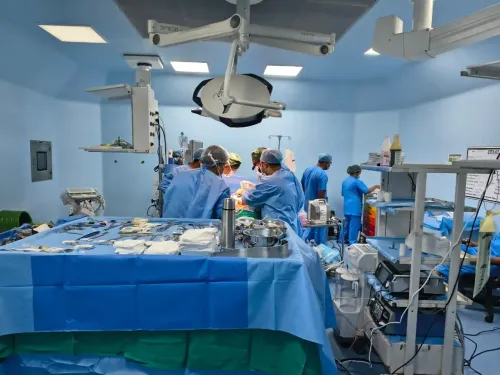
Sarma's post on X — accompanied by 8 images from the GMCH surgical programme — closed with a direct 'Compliments to the team,' a rare, unvarnished line of credit from a Chief Minister to frontline clinicians rather than to a scheme or a government initiative.
What Comes Next for Public Tertiary Care in the Northeast
The immediate watch-point is replication. If GMCH can run a viable HPB programme, the question for health planners across the eight-state region is which institution goes next — and how quickly trained teams can be seeded at other government medical colleges. Patient outcome data and wait-list trends from the programme will be the real audit of whether this milestone translates into durable, accessible care.
One government hospital, one hundred hard cases, one region that no longer has to look away for answers. That is the benchmark set today.
Point of View
If sustained, could structurally reduce the Northeast's dependence on out-of-region care. Chief Minister Sarma's choice to amplify this achievement reflects a deliberate political narrative: that state-driven investment in government medical infrastructure, rather than privatisation, is the credible answer to the region's healthcare deficit. The watch now is whether this model prompts replication at peer institutions across the eight-state region, or remains a single flagship showcase.
NationPress
11 Nov 2026
Frequently Asked Questions
What is the GMCH Liver Transplant and HPB Programme in Assam?
It is a specialised surgical initiative at Gauhati Medical College and Hospital (GMCH) in Guwahati that handles complex liver, biliary, pancreatic, and spleen procedures — including liver transplants — within a government hospital setting.
What was the Northeast India first liver transplant in a government hospital?
GMCH performed the first liver transplant conducted inside a government hospital in Northeast India , a landmark achieved weeks before the programme's 100-procedure milestone announced in November 2026.
What does HPB surgery mean?
Hepato-Pancreato-Biliary (HPB) surgery refers to complex abdominal operations involving the liver, pancreas, bile ducts, gallbladder, and spleen — procedures requiring highly specialised surgical teams and intensive post-operative care.
Why is it significant that GMCH completed these procedures in a government hospital?
Government hospitals in Northeast India have historically lacked the infrastructure for high-end HPB work, forcing patients to travel to metros like Chennai or Mumbai at great expense. GMCH building this capacity publicly means these surgeries are now accessible without leaving the region.
What did Assam CM Himanta Biswa Sarma say about the GMCH HPB milestone?
Chief Minister Himanta Biswa Sarma announced on November 11, 2026 that GMCH completed 100 complex HPB procedures — covering 64 liver/biliary, 17 pancreatic, 12 spleen, and 7 other cases — describing them as high-complexity operations done under tight timelines, and extended compliments to the surgical team.