CM Yogi Backs Stand-Up India Extension to 2031
Synopsis
The Union Cabinet, chaired by PM Modi, has extended the Stand-Up India scheme to 31 March 2031, targeting 2.5 lakh additional SC/ST and women entrepreneurs. CM Yogi Adityanath welcomed the decision as a landmark step for social inclusion and Atmanirbhar Bharat.
Key Takeaways
The Union Cabinet approved extending the Stand-Up India scheme to 31 March 2031 , adding five years to its operational life.
The extension sets a target of 2.5 lakh additional beneficiaries — women, SC, and ST entrepreneurs — over the next five years.
Stand-Up India, launched on 5 April 2016 , provides bank loans of ₹10 lakh to ₹1 crore for greenfield enterprises by SC/ST and women borrowers.
CM Yogi Adityanath publicly welcomed the decision, framing it as central to women's empowerment and the Atmanirbhar Bharat mission.
The scheme's design mandates at least one SC/ST and one woman borrower per scheduled commercial bank branch nationwide.
Disbursement progress will be tracked by the Department of Financial Services under the extended timeline.
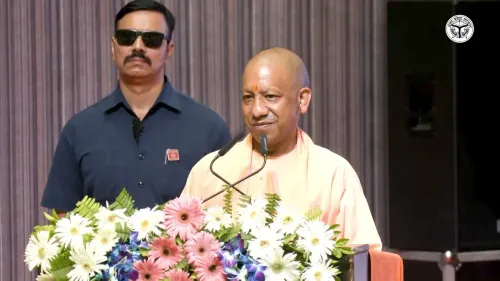
A decade after it first opened bank doors for India's most excluded entrepreneurs, the Stand-Up India scheme is getting five more years — and Uttar Pradesh Chief Minister Yogi Adityanath wants the country to notice. On Wednesday, 11 November 2026, CM Yogi took to X to welcome the Union Cabinet's decision, chaired by Prime Minister Narendra Modi, to extend the scheme through 31 March 2031, with a fresh target of reaching 2.5 lakh additional beneficiaries from women, Scheduled Castes, and Scheduled Tribes.
Posting in Hindi, CM Yogi called the Cabinet's move 'mahila sashaktikaran evam samajik samaveshan ki disha mein ek mahatvapurna kadam' — 'an important step towards women's empowerment and social inclusion.' He framed the extension as fuel for the government's broader Atmanirbhar Bharat vision, arguing it would convert the aspirations of marginalised communities into real economic opportunity through self-employment and enterprise.
What Stand-Up India actually does — and has done since 2016
Launched on 5 April 2016 by the Government of India, Stand-Up India was designed with a deliberately narrow mandate: get credit — specifically, bank loans between ₹10 lakh and ₹1 crore — into the hands of SC/ST entrepreneurs and women starting greenfield enterprises. The scheme channels support through scheduled commercial banks, requiring at least one SC or ST borrower and one woman borrower per bank branch across the country. That architecture matters: it doesn't rely on intermediaries or discretionary selection; it bakes inclusion into the banking infrastructure itself.
The logic is straightforward — and the gap it targets is real. Access to formal credit has historically been one of the steepest barriers for first-generation entrepreneurs from disadvantaged communities, where collateral is scarce and banking relationships are thin. Stand-Up India was the central government's direct answer to that structural bottleneck.
The 2.5 lakh target: scale and what it signals
The new 2.5 lakh additional entrepreneur target over five years sets a concrete benchmark for the extension's ambition. At its core, it means the scheme's administrators are committing to roughly 50,000 new loans per year to women, SC, and ST borrowers — a number that the Department of Financial Services will be expected to track and report through periodic disbursement updates.
CM Yogi's post explicitly links the extension to 'swavalamban' — self-reliance — tying individual entrepreneurship to the larger national project of economic self-sufficiency. It is a framing the BJP has consistently deployed, threading scheme-level credit access into the ideological fabric of Atmanirbhar Bharat. Whether the numbers ultimately bear out that ambition is a question the disbursement data will answer.
UP's stake in an inclusion-first credit push
Uttar Pradesh, with its vast SC and ST population and large unbanked rural stretches, has always been among the states with the most to gain — and the most to lose — from how effectively schemes like Stand-Up India are implemented on the ground. CM Yogi's public endorsement of the Cabinet decision is as much a signal to UP's entrepreneurial class as it is an expression of federal solidarity with the Modi government's policy direction.
The road from a Cabinet approval to a loan in a first-generation entrepreneur's hands is never automatic. But extending a scheme with a decade of institutional learning behind it — rather than starting from scratch — gives the machinery a running start. The 31 March 2031 deadline now becomes the next accountability moment.
Point of View
Using continuity as a signal of political commitment to the SC/ST and women voter blocs. CM Yogi's swift, effusive endorsement is calibrated — Uttar Pradesh, a state with one of India's largest SC populations, stands to be a primary site of implementation and a primary site of credit. The 2.5 lakh target is ambitious but measurable, which makes it a double-edged instrument: a campaign asset if met, an accountability liability if the disbursement data lags. Watch the annual DFS progress reports — they will tell the real story beneath the Cabinet approval headline.
NationPress
11 Nov 2026
Frequently Asked Questions
What is the Stand-Up India scheme?
Stand-Up India is a Government of India scheme launched on 5 April 2016 that provides bank loans between ₹10 lakh and ₹1 crore to SC/ST and women entrepreneurs for starting greenfield enterprises, channelled through scheduled commercial banks.
How long has the Stand-Up India scheme been extended?
The Union Cabinet has extended the scheme by five years, through 31 March 2031, as announced on 11 November 2026.
How many new beneficiaries will the Stand-Up India extension target?
The extension aims to reach 2.5 lakh additional women, SC, and ST entrepreneurs over the next five years.
Why did CM Yogi Adityanath comment on the Stand-Up India extension?
CM Yogi welcomed the Cabinet decision on X, calling it a significant step for women's empowerment and social inclusion, and linking it to the Atmanirbhar Bharat vision of self-reliance through entrepreneurship.
Who chairs the Union Cabinet that approved the Stand-Up India extension?
Prime Minister Narendra Modi chairs the Union Cabinet, which approved the extension of Stand-Up India to 31 March 2031.