Pradhan Hits Congress Over Dynastic Politics, Murmu Remarks
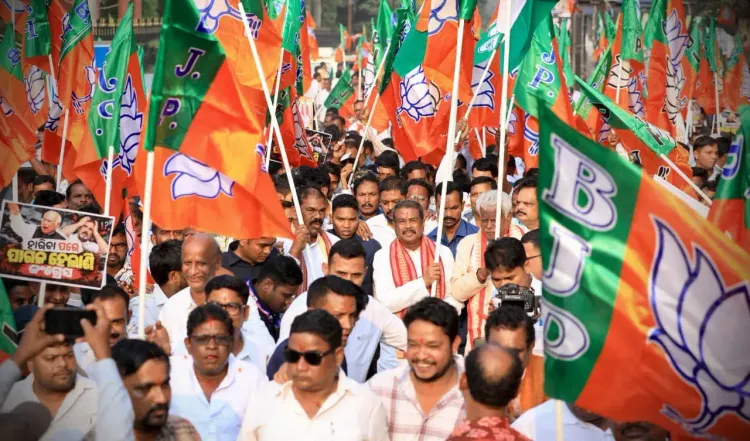
Synopsis
Union Education Minister Dharmendra Pradhan attacked the Gandhi family and Congress leadership in an Odia post on X, saying they cannot accept that a tea-seller's son leads India and a tribal woman is President, and accusing them of an anti-Hindu mindset and questioning the armed forces.
Key Takeaways
Dharmendra Pradhan posted in Odia on November 11, 2026 , directly targeting the Gandhi family and Congress leadership.
He accused the Gandhis of treating India as a personal 'jaagir' (fiefdom) and being unable to accept PM Modi's humble origins.
Pradhan cited President Droupadi Murmu — the first tribal person to hold the office — as a second symbol of democratic social mobility.
He charged Congress leaders, including Sonia Gandhi , with an anti-Hindu, anti-Sanatana mindset and with questioning the valour of the Indian armed forces.
The post was composed in Odia, underscoring the BJP's political outreach in Odisha alongside the national argument.
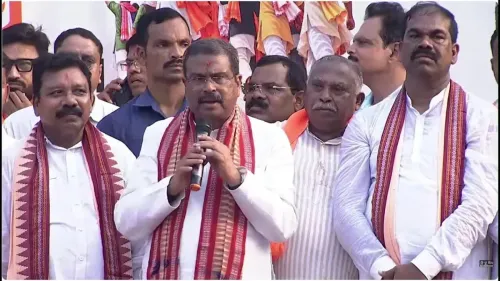
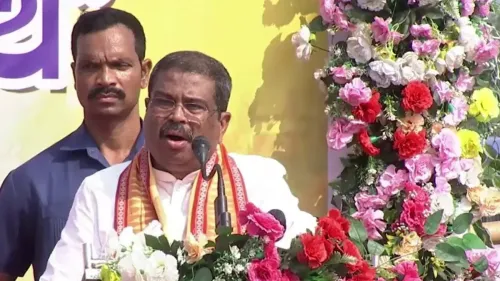
A dynastic entitlement versus democratic mobility — that is the fault line Union Education Minister Dharmendra Pradhan drew on Wednesday, November 11, 2026, firing a sharp salvo at the Gandhi family and the Congress leadership in a reply post on X, written in Odia.
Pradhan's post, translated from Odia, reads: 'The Gandhi family, which believed this country was their personal fiefdom, cannot easily accept that the son of an ordinary tea-seller has become the Prime Minister and a tribal woman has taken her seat as President. From Sonia Gandhi to the broader Congress leadership, their anti-Hindu, anti-Sanatana mindset and their habit of questioning the valour of the country's security forces are clear proof of their frustration.'
Tea-seller's son and a tribal President — the BJP's favourite counter-narrative
Prime Minister Narendra Modi, who famously sold tea as a child in Gujarat, and President Droupadi Murmu, who in July 2022 became the first person from a tribal community to occupy Rashtrapati Bhavan, are the two figures Pradhan deploys as living rebuttals to dynastic politics. The BJP has long framed their rise as proof that Indian democracy rewards merit and social mobility over inherited privilege — and Pradhan sharpened that argument here with pointed directness.
The contrast is deliberate. The Gandhi family's multi-generational grip on the Congress — Nehru, Indira, Rajiv, Sonia, Rahul — is what BJP leaders consistently label a 'jaagir' (ଜାଗିର), a feudal estate. Pradhan deploys the same word in Odia, landing the charge in the language of his home state Odisha, where both Modi's backward-class narrative and Murmu's tribal identity carry particular resonance.
Congress, security forces, and the charge of institutional questioning
Pradhan doesn't stop at dynasty. He attaches a second, weightier allegation: that the Congress leadership has questioned the operational record and valour of India's armed forces. This charge has become a recurring BJP talking point, surfacing whenever opposition leaders raise accountability questions about military operations or casualty figures. The ruling party frames any such scrutiny as an affront to soldiers; the opposition typically counters that parliamentary oversight is a constitutional obligation.
The 'anti-Hindu, anti-Sanatana' framing is equally standard BJP political vocabulary — deployed to paint Congress's secular positioning as hostility toward the majority faith rather than constitutional neutrality. Together, these two threads — questioning the army, questioning Sanatana Dharma — form what Pradhan calls the Congress's 'frustration made visible.'
Odia voice, national fight
Pradhan writing in Odia is not incidental. As a senior BJP leader from Odisha — a state the party now governs — he is simultaneously prosecuting a national political argument and speaking directly to an Odia-speaking audience. The choice of language signals that the Congress-versus-BJP cultural war is being waged at the state level too, not just in Delhi's TV studios.
With Parliament's winter session approaching, expect this rhetoric to migrate from X to the floor of both Houses — where references to the armed forces, dynastic politics, and civilisational identity will almost certainly find louder amplification.
Point of View
He elevates the exchange from cultural sparring into patriotism-versus-elitism territory — a frame the BJP has found electorally potent. Writing in Odia keeps the message anchored in a state the party now governs, reinforcing regional identity politics alongside the national message. As winter session nears, this kind of pre-Parliament escalation typically sets the rhetorical agenda for what will be debated — loudly — on the floor.
NationPress
11 Nov 2026
Frequently Asked Questions
What did Dharmendra Pradhan say about the Gandhi family?
Pradhan accused the Gandhi family of treating India as their personal fiefdom and said they cannot accept that a tea-seller's son (PM Modi) leads the country and a tribal woman (President Murmu) holds the top constitutional office.
Why did Pradhan mention Droupadi Murmu in his post?
Pradhan cited President Droupadi Murmu — the first person from a tribal community to become India's President — as evidence of genuine social mobility and democratic inclusion, contrasting her rise with what he called Congress's dynastic mindset.
What is the 'jaagir' remark about Congress?
BJP leaders use the word 'jaagir' (feudal estate) to argue that the Gandhi family treats the Congress party and India's governance as inherited property, symbolising dynastic rather than democratic politics.
What did Pradhan mean by Congress questioning the armed forces?
Pradhan alleged that Congress leaders, including Sonia Gandhi, have raised doubts about the valour and conduct of India's security forces — a charge the BJP regularly levels when opposition politicians seek accountability on military operations.
Why did Pradhan write his post in Odia?
Pradhan is a senior BJP leader from Odisha and writing in Odia targets his home state's electorate directly, signalling that the BJP's political arguments against Congress are being prosecuted at both national and state levels.