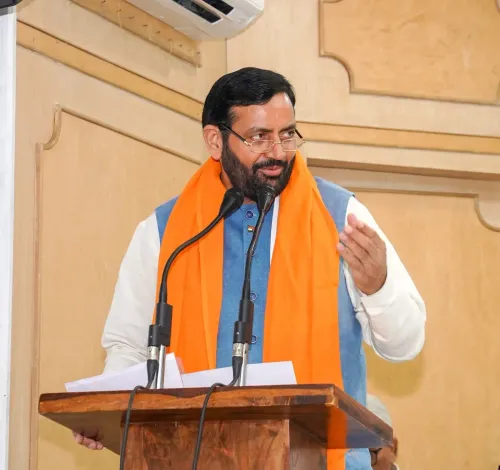
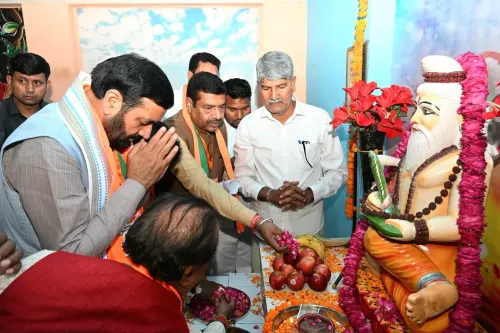
CM Nayab Saini meets Valmiki Samaj from Punjab in Chandigarh
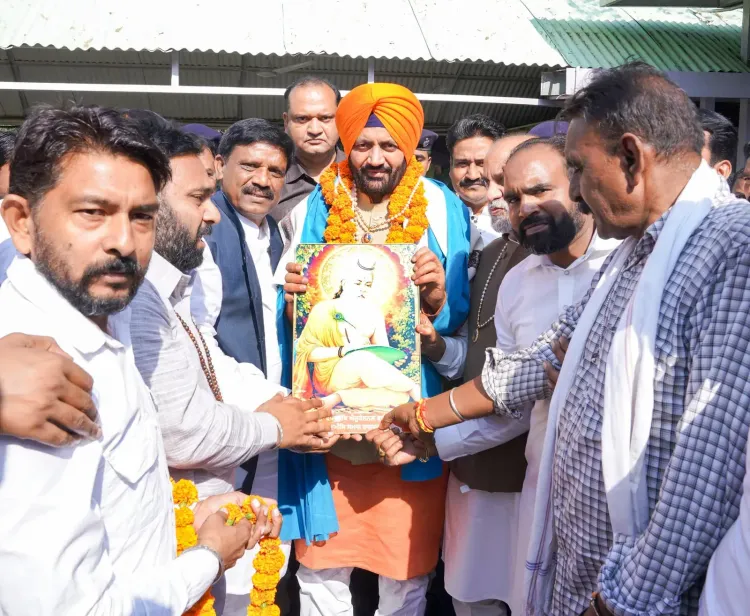
Synopsis
Haryana CM Nayab Singh Saini met Punjab's Valmiki Samaj at Sant Kabir Kutir in Chandigarh on October 25, 2026, invoking Maharishi Valmiki's teachings on equality, humanity, and self-respect to call for a society of equal rights and opportunity.
Key Takeaways
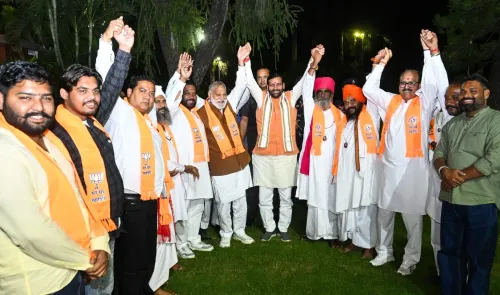
Haryana CM Nayab Singh Saini met members of the Valmiki Samaj from Punjab at Sant Kabir Kutir, Chandigarh on October 25, 2026 .
Saini described the meeting as emotionally moving, expressing both pride and deep feeling.
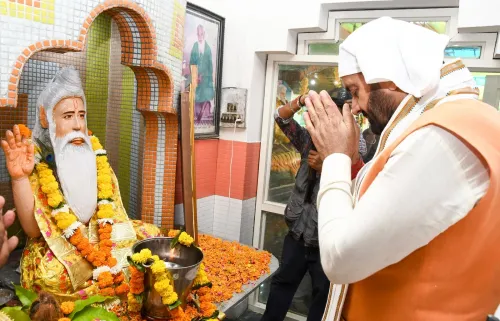
He invoked the teachings of Maharishi Valmiki — equality, knowledge, humanity and self-respect — as a guiding framework for society.
Chandigarh , joint capital of Punjab and Haryana, served as the natural venue for this cross-state community engagement.
No specific new scheme or policy was announced; the outreach was values-led and cultural in register.
The meeting follows a recurring regional pattern of leaders engaging Valmiki and other community organisations around the sage's October Jayanti period.
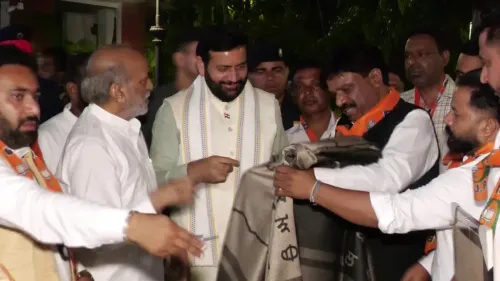
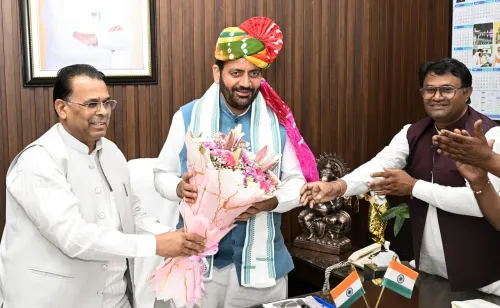
Haryana Chief Minister Nayab Singh Saini met members of the Valmiki Samaj from Punjab at Sant Kabir Kutir, Chandigarh on Sunday, October 25, 2026, describing the encounter as one that filled him with both emotion and pride.
Sharing the moment on X, Saini wrote: 'मन भावुकता और गर्व से भर गया' — 'my heart is filled with emotion and pride' — after meeting the 'esteemed companions of the Valmiki Samaj who had come from Punjab.' He invoked the teachings of Maharishi Valmiki, calling them a guide toward 'knowledge, equality, humanity and self-respect,' and argued that walking the path shown by the sage can build a society where 'every individual receives equal respect, rights and opportunities to progress.'
Who the Valmiki Samaj are and why Chandigarh is the meeting ground
The Valmiki Samaj is a prominent community organisation in northern India, historically rooted in social upliftment and equality movements across Punjab and Haryana. Chandigarh, the Union Territory that serves as the joint capital of both states, naturally becomes the crossroads for political and community dialogue that straddles the two.
Maharishi Valmiki — the ancient sage traditionally credited with authoring the Ramayana — is venerated across these communities not just as a religious figure but as a symbol of personal transformation and moral courage. His Jayanti, which falls in October, makes this period an especially charged moment for outreach by leaders keen to speak to these communities in their own cultural vocabulary.
Outreach that sits at the intersection of culture and politics
Meetings of this kind — a Haryana CM engaging a Punjab-based community delegation at a shared venue in Chandigarh — are part of a recurring pattern in the region's political calendar. Leaders from both states routinely invoke shared cultural icons, particularly figures like Valmiki, to frame messages of social inclusion without necessarily tabling specific new schemes.
Saini's framing was explicitly values-led: equality, dignity, and opportunity, language that resonates with communities historically seeking recognition within mainstream political discourse. No new programme or policy announcement was made in the post.
Whether the CMO follows up with concrete community initiatives will determine how this warm, symbolic moment translates into policy ground.
Point of View
Held in the shared capital of Chandigarh, is a calibrated piece of cross-state community diplomacy during the politically sensitive period around Maharishi Valmiki's Jayanti. For the BJP, which has invested heavily in Dalit and OBC outreach in both Haryana and Punjab, such engagements serve to maintain cultural credibility with communities that have historically demanded more than symbolic acknowledgement. The absence of any policy announcement keeps the moment firmly in the register of identity affirmation rather than programmatic commitment — a useful posture when electoral arithmetic is in play but no immediate election is on the calendar.
NationPress
25 Oct 2026
Frequently Asked Questions
Why did Haryana CM Nayab Saini meet the Valmiki Samaj in Chandigarh?
CM Nayab Singh Saini met members of the Valmiki Samaj from Punjab at Sant Kabir Kutir in Chandigarh on October 25, 2026, to engage with the community around the teachings of Maharishi Valmiki on equality, dignity and self-respect.
What is Sant Kabir Kutir in Chandigarh?
Sant Kabir Kutir is a venue in Chandigarh, the Union Territory that serves as the joint capital of Punjab and Haryana, used for community and cultural gatherings. CM Saini hosted the Punjab Valmiki delegation there.
Who is the Valmiki Samaj?
The Valmiki Samaj is a community organisation in northern India, particularly active in Punjab and Haryana, historically associated with social upliftment, equality movements and the veneration of Maharishi Valmiki.
What did CM Nayab Saini say about Maharishi Valmiki?
Saini said Maharishi Valmiki's teachings guide people toward knowledge, equality, humanity and self-respect, and that following this path can build a society where every individual receives equal respect, rights and opportunities.
Did CM Saini announce any new scheme for the Valmiki community?
No new scheme or policy was announced. The meeting was values-led, focused on invoking Maharishi Valmiki's teachings as a shared cultural framework.