CM Saini Meets Valmiki Sant in Punjab BJP Outreach Drive
Synopsis
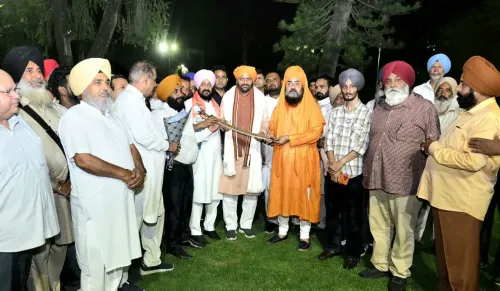
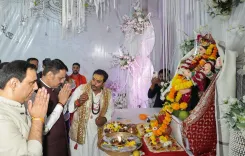
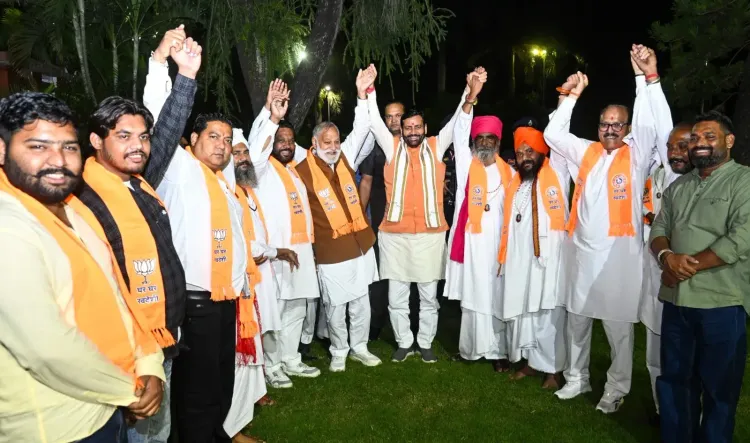
Haryana CM Nayab Singh Saini met a congregation led by Bhagwan Valmiki Tirth's Gaddinashin Sant Malkit Ram Ji at Sant Kabir Kutir. Attendees donned BJP patkas, pledged support for the party's Punjab organisation, as Saini prayed for a BJP government in the state.
Key Takeaways
Haryana CM Nayab Singh Saini held a meeting at Sant Kabir Kutir with the sangat led by Sant Shri Malkit Ram Ji , Gaddinashin of Bhagwan Valmiki Tirth, Amritsar .
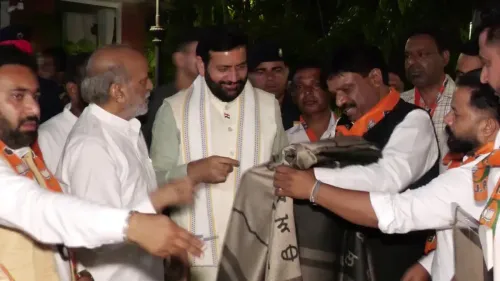
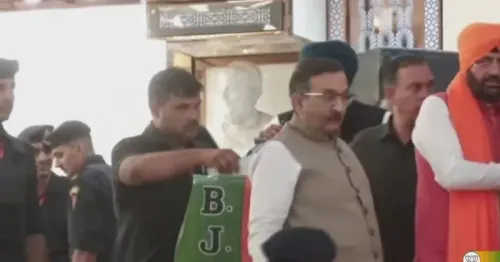
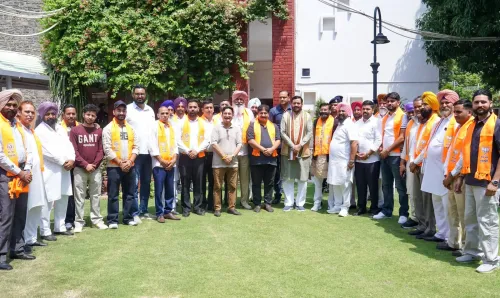
Congregation members wore the BJP patka and pledged dedicated work for the party's organisation in Punjab .
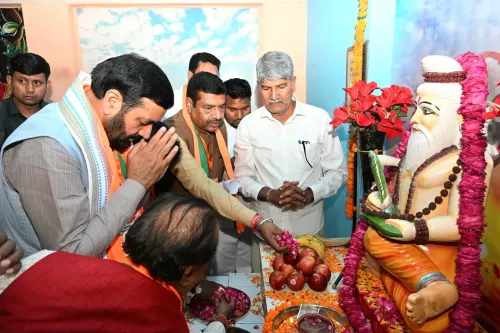
Saini publicly prayed for a BJP government in Punjab and the state's development and prosperity.
The Valmiki community is a significant Scheduled Caste constituency in Punjab with considerable electoral influence.
The outreach forms part of BJP's broader strategy to build a social and organisational base in Punjab , where it currently does not hold power.
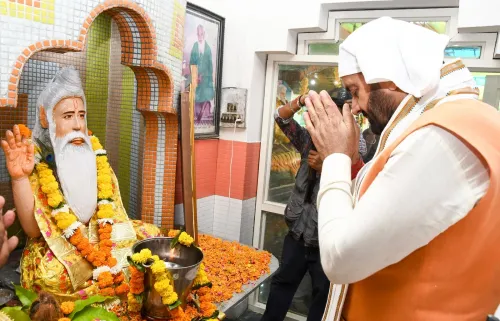
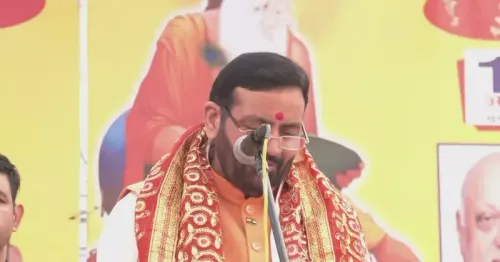
A religious gathering turned into a political moment on Sunday, 18 October 2026, when Haryana Chief Minister Nayab Singh Saini met the sangat (congregation) led by Sant Shri Malkit Ram Ji — the Gaddinashin of Bhagwan Valmiki Tirth, Amritsar — at Sant Kabir Kutir. Attendees donned the BJP's patka (headband) and pledged to work for the party's organisation in Punjab.
Saini wrote that members of the congregation embraced the BJP's patka and 'showed faith in working with dedication for the party's organisation in Punjab.' He ended with a prayer at the feet of Bhagwan Valmiki Ji — 'may a BJP government be formed in Punjab, and may this sacred land continue to move forward on the path of development, prosperity, and growth.'
Who Is Sant Malkit Ram Ji and Why the Valmiki Community Matters
Sant Shri Malkit Ram Ji is the Gaddinashin — the spiritual successor seated on the gaddi — of Bhagwan Valmiki Tirth in Amritsar, one of the most revered shrines for the Valmiki community. The Valmiki community, a Scheduled Caste group with a significant presence across Punjab's urban and semi-urban belts, has historically been a politically sought-after constituency. Their spiritual leadership carries real electoral weight — and a public pledge of affiliation at such a gathering is precisely the kind of grassroots signal BJP's Punjab operation is designed to generate.
BJP's Long Road in Punjab — and Why Haryana's CM Is Leading the Charge
Punjab has remained elusive for the BJP, a state currently without a BJP government and long dominated by regional parties. The party's strategy has increasingly leaned on outreach to religious and community figures — particularly from Scheduled Caste traditions — to build a social base that transcends traditional vote blocs. Haryana CM Saini, himself a prominent OBC face within BJP, brings credibility to such community-level engagements that a purely urban or upper-caste party profile could not.
BJP leaders from Haryana have periodically engaged Punjab's religious community leadership as part of a broader effort to extend the party's organisational footprint across the border. The symbolism of meeting at Sant Kabir Kutir — invoking the legacy of the 15th-century poet-saint revered by oppressed communities — adds another layer of deliberate messaging.
A Pledge, a Prayer, and What It Signals for Punjab Politics
The act of wearing BJP's patka — a saffron headband — in the presence of a religious leader is a visual commitment designed for maximum community resonance. Political analysts watching Punjab will note this as one more brick in the BJP's long-term wall-building exercise in a state where it has struggled to find solid footing since parting ways with the Shiromani Akali Dal.
Whether this grassroots momentum translates into electoral ground when Punjab next goes to the polls will depend on how consistently the party converts such symbolic gatherings into durable organisational structures. For now, CM Saini has planted a flag — and done so with a saint's blessing.
Point of View
The party signals that it is willing to invest senior political capital in a state it has yet to crack. The Valmiki community's size and urban spread across Punjab make their religious leadership a high-value target for any party seeking to disturb existing vote blocs. If the BJP can institutionalise these symbolic gatherings into active booth-level networks, it shifts from being a fringe player in Punjab to a genuine disruptor.
NationPress
19 Oct 2026
Frequently Asked Questions
Who is Sant Malkit Ram Ji?
Sant Shri Malkit Ram Ji is the Gaddinashin — the seated spiritual successor — of Bhagwan Valmiki Tirth in Amritsar , a principal shrine of the Valmiki community in Punjab.
Why did Haryana CM Nayab Singh Saini visit Punjab for a BJP event?
CM Saini met the Valmiki congregation at Sant Kabir Kutir as part of BJP's effort to build an organisational base in Punjab, a state where the party currently does not hold government.
What is the BJP patka and what does wearing it signify?
The BJP patka is a saffron headband associated with the party. Wearing it publicly — especially at a religious gathering — signals a pledge of affiliation and support for the party's cause.
What is the electoral significance of the Valmiki community in Punjab?
The Valmiki community is a Scheduled Caste group with a notable presence in Punjab's urban and semi-urban areas. Their bloc vote and religious leadership carry meaningful influence in the state's electoral arithmetic.
Does BJP currently have a government in Punjab?
No. BJP does not currently hold power in Punjab and is actively working to expand its social base and organisational strength in the state.