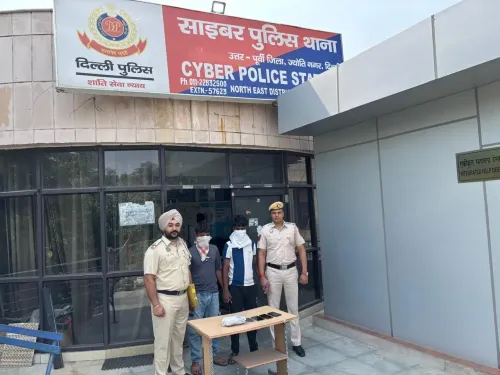
Delhi Police bust interstate cyber fraud racket, 5 arrested from Uttarakhand

Synopsis
Five young accused — including school and college students — were arrested from Uttarakhand's Udham Singh Nagar for running mule bank accounts that funnelled proceeds of online investment scams across India. The Delhi Police bust exposes how cyber fraud networks increasingly recruit financially vulnerable youth as low-level facilitators, making detection harder and accountability diffuse.
Key Takeaways
Delhi Police arrested five individuals from Udham Singh Nagar, Uttarakhand for running an interstate cyber fraud syndicate.
The racket is linked to a fraudulent amount of ₹3,40,877 across multiple complaints on the NCRP .
Complainant Sashi Ranjan Bharti of New Ashok Nagar, Delhi, was cheated of ₹1,01,869 after being added to a WhatsApp group on 6 April 2026 .
The accused — aged 18 to 21 , mostly students — supplied and operated mule bank accounts to route and conceal fraud proceeds.
Five mobile phones were recovered; other syndicate members remain at large and are being traced.
Citizens can report cyber fraud via the NCRP or helpline 1930 .
Delhi Police on Tuesday, 6 May 2025, arrested five individuals and dismantled an interstate cyber fraud syndicate involved in online investment and task-based scams, officials said. The accused were apprehended from Udham Singh Nagar in Uttarakhand following a coordinated operation by the Cyber Police Station, East District, with investigators linking the racket to a fraudulent amount of ₹3,40,877 across multiple complaints on the National Cyber Crime Reporting Portal (NCRP).
How the Case Came to Light
The investigation was triggered by a complaint filed by Sashi Ranjan Bharti, a resident of New Ashok Nagar, Delhi. He reported being added to a WhatsApp group on 6 April 2026, where fraudsters posed as digital marketing professionals and lured him into online task-based schemes and investment platforms, promising high returns. After transferring money across multiple transactions, Bharti was cheated of ₹1,01,869. His complaint on the NCRP led to the registration of e-FIR No. 112/2026 at the Cyber Police Station, East District.
How the Syndicate Operated
Cyber experts conducted a detailed analysis of bank transactions, KYC records, digital footprints, and financial trails. Investigators found that a portion of the defrauded money had been routed into accounts held by individuals in Udham Singh Nagar. ₹50,000 from the cheated amount was traced to an account belonging to accused Raj Bachhar, with funds further layered through an account operated by Sameer Bachhar to obscure the financial trail.
The syndicate's modus operandi involved targeting financially vulnerable individuals, persuading them to open new bank accounts or surrender control of existing ones in exchange for monetary commissions. These mule accounts were then used to receive and route proceeds from online investment scams, task-based frauds, and fake digital trading platforms, complicating detection and tracking by law enforcement.
The Arrest Operation
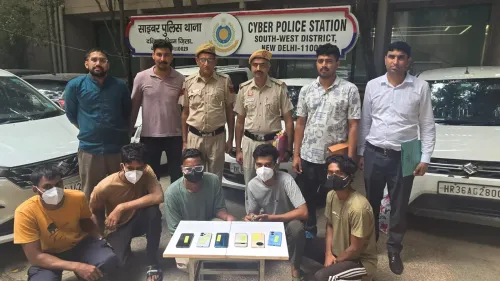
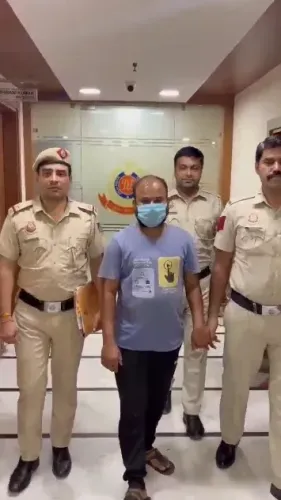
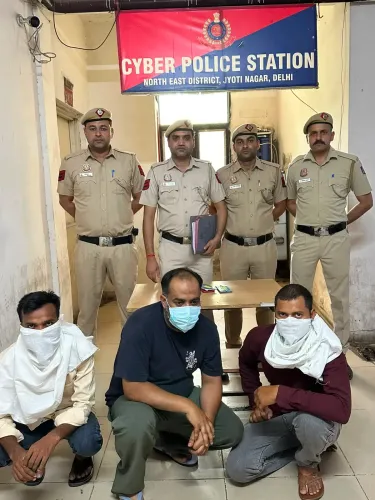
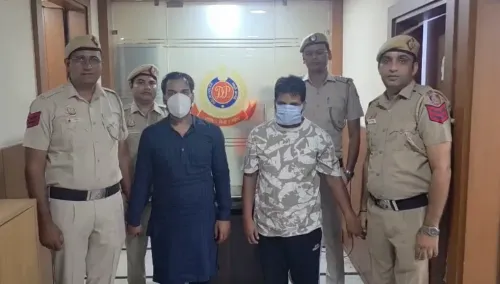
A police team comprising Sub-Inspector Naresh Kumar, Head Constables Vishal Sangwan and Surendra Pal Singh, under the supervision of Inspector Pawan Yadav, SHO of Cyber Police Station East, and the overall guidance of ACP (Operations) Pawan Kumar, was dispatched to Uttarakhand. Through sustained technical surveillance, local intelligence gathering, and coordination with local authorities, the team identified and arrested all five accused. Five mobile phones used in the commission of cyber fraud were recovered during the operation.
Who Was Arrested
All five accused are residents of Udham Singh Nagar, Uttarakhand, and are notably young — several still in school or early college. Raj Bachhar (18), a Class 12 student, and Sameer Bachhar (21), a BBA student, functioned as primary mule account holders. Rohit Ray (18), a BBA student; Rohit Mistri (18), a B.Com student; and Harish Sarkar (18), a Class 11 student, acted as facilitators who arranged and supplied additional bank accounts to cybercriminal networks. The accused reportedly earned commissions for each account supplied and for every transaction processed through them.
What Comes Next
Police officials confirmed that efforts are underway to trace and apprehend other members of the larger syndicate who are currently absconding. The East District Police have urged citizens to verify the authenticity of online investment platforms and avoid transferring money based on claims made through social media or messaging apps. Anyone who encounters cyber fraud is advised to report it immediately via the NCRP or the Cyber Crime Helpline at 1930. The investigation remains ongoing.
Point of View
Some still in Class 11 and 12, recruited as mule account operators for commissions. This reflects a broader and underreported pattern — cybercriminal networks are increasingly outsourcing the riskiest, most traceable layer of their operations to financially vulnerable youth who may not fully grasp their legal exposure. Delhi Police's cross-state operation is operationally commendable, but the arrests of low-level facilitators rarely dismantle the masterminds who design and profit most from these schemes. The ongoing hunt for absconding members will be the real test of how deep this investigation goes.
NationPress
19 Sept 2026
Frequently Asked Questions
What was the cyber fraud syndicate busted by Delhi Police doing?
The syndicate ran online investment and task-based scams, luring victims with promises of high returns and then defrauding them. It also supplied mule bank accounts to cybercriminals to route and conceal fraud proceeds, with investigators linking it to ₹3,40,877 across multiple NCRP complaints.
Who were the five individuals arrested by Delhi Police?
The five arrested are Raj Bachhar (18), Sameer Bachhar (21), Rohit Ray (18), Rohit Mistri (18), and Harish Sarkar (18) — all residents of Udham Singh Nagar, Uttarakhand, and mostly students. Raj and Sameer operated mule accounts, while the others facilitated the supply of additional accounts to criminal networks.
What is a mule bank account and why is it used in cyber fraud?
A mule bank account is a bank account operated by a third party — often recruited for a commission — to receive and transfer proceeds of crime on behalf of fraudsters. Cyber criminals use them to layer transactions and obscure the origin of stolen funds, making it harder for law enforcement to trace money back to the masterminds.
How did the Delhi Police trace the accused to Uttarakhand?
Cyber experts analysed bank transactions, KYC records, and digital footprints, tracing ₹50,000 of the defrauded amount to an account held by Raj Bachhar in Udham Singh Nagar. Further financial trail analysis led to Sameer Bachhar and others, prompting a coordinated team to travel to Uttarakhand for the arrests.
What should citizens do if they encounter online investment fraud?
Citizens should report cyber fraud immediately on the National Cyber Crime Reporting Portal (NCRP) or call the Cyber Crime Helpline at 1930. Authorities advise verifying the authenticity of online platforms and avoiding money transfers based on claims made through social media or messaging apps like WhatsApp.