Delhi Police bust crypto-Telegram fraud ring; 3 arrested from Uttarakhand
Synopsis
Delhi's Cyber South police cracked an interstate Telegram-and-crypto fraud ring, arresting three men from Uttarakhand after tracing ₹7,86,300 in stolen funds through mule bank accounts and USDT transactions — a scheme that mirrors a fast-growing national pattern of tech-enabled financial crime.
Key Takeaways
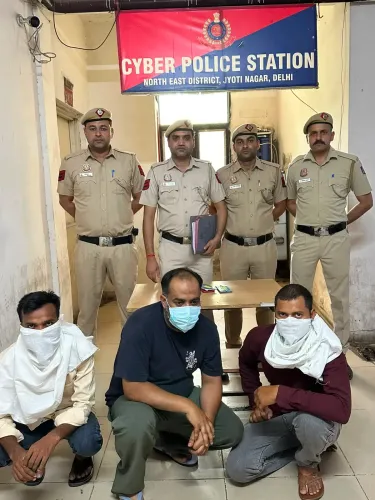
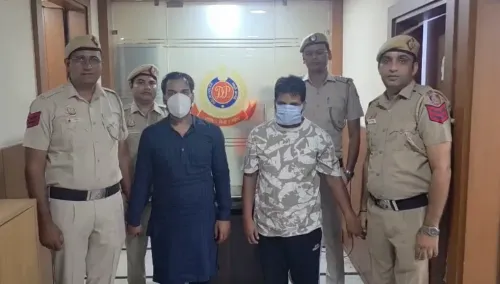
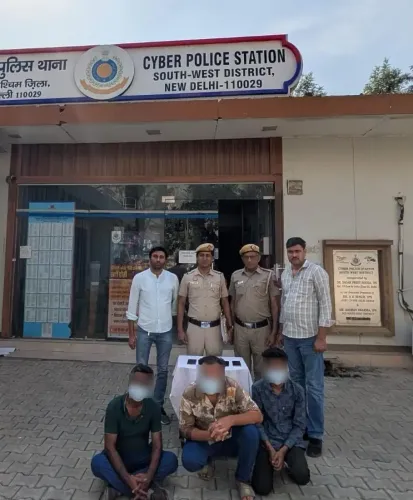
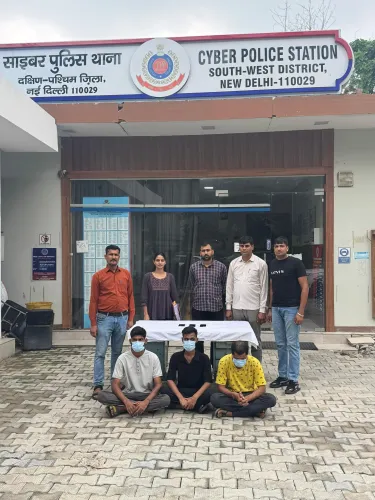
Delhi Cyber Police (South District) arrested three accused — Karan Biswas , Mohit Sarkar alias Monu , and Vinay Mandal — on 1 October 2025 .
A complainant was defrauded of ₹7,86,300 via a Telegram-based task and cryptocurrency investment scheme.
Fraud proceeds were routed through mule bank accounts ; one account received ₹4.66 lakh , another received ₹5.22 lakh .
Funds were allegedly converted using USDT cryptocurrency transactions to obscure the trail.
Vinay Mandal was already in custody in Rohtak, Haryana for a separate cyber-fraud case; he has been remanded for three days in police custody.
Case registered under e-FIR No.
0149/2025 ; further investigation is ongoing.
The Cyber Police Station of Delhi's South District has dismantled an interstate cyber-fraud syndicate running Telegram-based task and cryptocurrency investment scams, arresting three accused persons from Udham Singh Nagar in Uttarakhand, police confirmed on Thursday, 1 October. The bust follows a complaint in which a victim was defrauded of ₹7,86,300 through a scheme that promised high returns on online tasks and crypto investments.
How the Fraud Unfolded
According to police, the complainant was initially lured into a Telegram group where the accused presented lucrative opportunities — completing online tasks and investing in cryptocurrency in exchange for substantial returns. Trusting these assurances, the victim transferred ₹7,86,300 across two instalments of ₹4,66,300 and ₹3,20,000 as instructed. The accused subsequently stopped responding and neither delivered the promised returns nor refunded the principal amount.
Following the complaint, e-FIR No. 0149/2025 was registered at Police Station Cyber South under Sections 318(4), 319, and 340 of the Bharatiya Nyaya Sanhita (BNS), and a formal investigation was launched.
The Investigation and Arrests
The investigation was led by Inspector Hansraj Swami, SHO, PS Cyber South, under the supervision of ACP/Operations Balram Singh Beniwal. The field team comprised Sub-Inspector Raj Kumar Singh, Head Constable Sunil Kumar Bairwa, and HC Rajkumar Bairwa.
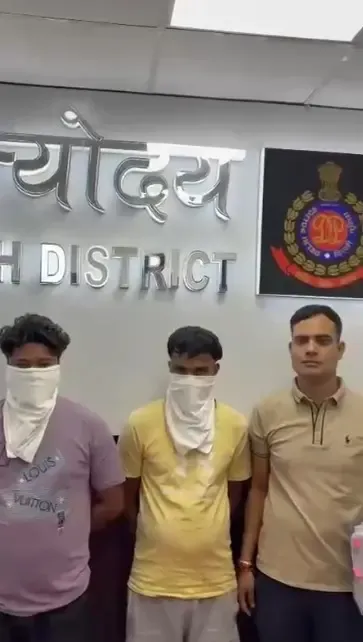
Technical and financial analysis traced the flow of fraudulent funds through multiple mule bank accounts allegedly used to receive, route, and withdraw money. One mule account had received ₹4.66 lakh, while another had received ₹5.22 lakh, according to police. Accused Karan Biswas and Mohit Sarkar alias Monu were subsequently traced and arrested in Udham Singh Nagar. A third accused, Vinay Mandal — already in custody in connection with a separate cyber-fraud case registered at the Cyber Crime Police Station in Rohtak, Haryana — was formally arrested and taken on a three-day police custody remand.
Modus Operandi and Evidence Recovered
Police said the syndicate operated by setting up Telegram-based task and crypto investment schemes to lure victims. Mule bank accounts were allegedly sourced through intermediaries working on commission, with proceeds also reportedly channelled into cryptocurrency transactions, including through USDT — a widely-used stablecoin that enables near-anonymous cross-border transfers.
Investigators recovered two mobile phones, one Canara Bank passbook, and other digital and financial evidence from the accused. This pattern — Telegram recruitment, mule accounts, and USDT conversion — is consistent with a broader surge in tech-enabled financial fraud that has drawn warnings from law enforcement agencies across India.
Accused Background and Next Steps
Police noted that Karan Biswas and Mohit Sarkar have no prior criminal record, while Vinay Mandal was previously implicated in FIR No. 148/25 at the Rohtak Cyber Crime Police Station, suggesting an individual with a pattern of involvement in cyber-fraud networks. Further investigation into the broader syndicate and additional beneficiaries of the fraudulent proceeds remains ongoing, police said.
Point of View
Banking, and crypto oversight. The use of USDT for fund conversion is a red flag that points beyond three individuals to a larger ecosystem of crypto off-ramp facilitators that police are still working to map. The mule account network — sourced through intermediaries on commission — also signals organised recruitment infrastructure, not opportunistic crime. Until enforcement agencies can systematically dismantle the mule-account supply chain and coordinate with crypto exchanges on USDT trails, arrests like these will remain downstream fixes to an upstream problem.
NationPress
1 Oct 2026
Frequently Asked Questions
What was the Telegram-based cryptocurrency fraud busted by Delhi Police?
It was a scheme where fraudsters used a Telegram group to recruit victims, promising returns on online tasks and cryptocurrency investments. A victim transferred ₹7,86,300 in two instalments before the accused stopped responding and vanished with the money.
Who were the three people arrested in this cyber-fraud case?
The three accused are Karan Biswas, Mohit Sarkar alias Monu — both arrested from Udham Singh Nagar in Uttarakhand — and Vinay Mandal, who was already in custody in Rohtak, Haryana for a separate cyber-fraud case and was brought on a three-day remand.
How did police trace the fraudulent funds?
Investigators conducted technical and financial analysis that identified mule bank accounts used to receive and route the stolen money. One account had received ₹4.66 lakh and another ₹5.22 lakh; funds were also reportedly converted via USDT cryptocurrency transactions.
What is a mule bank account and why is it used in cyber fraud?
A mule bank account is a legitimate bank account — often belonging to an unwitting or complicit third party — that is used to receive and forward illegally obtained funds, creating distance between the crime and the perpetrator. In this case, the accounts were allegedly arranged through intermediaries paid on commission.
What legal sections were applied in this case?
The case was registered under Sections 318(4), 319, and 340 of the Bharatiya Nyaya Sanhita (BNS) via e-FIR No. 0149/2025 at Police Station Cyber South, New Delhi. Investigation is ongoing.