CM Sai Marks Janjatiya Gaurav Diwas, Vows Tribal Empowerment
Synopsis
On Janjatiya Gaurav Diwas, Chhattisgarh CM Vishnu Deo Sai invoked Birsa Munda's legacy and pledged to build a developed, self-reliant tribal society through expanded education, health, employment and economic opportunities — setting a measurable bar for the next budget.
Key Takeaways
Janjatiya Gaurav Diwas is observed on 15 November every year to mark Birsa Munda's birth anniversary; the Union Government instituted the national observance in 2021 .
CM Vishnu Deo Sai declared that honouring tribal pride and building a developed Chhattisgarh are the government's core mission.
The four pillars highlighted are education, health, employment, and self-reliance ( atmanirbharta ) for tribal communities.
Chhattisgarh has over 30 percent Scheduled Tribe population, among the highest of any Indian state, concentrated in Bastar and Surguja divisions.
Sai, who took office in December 2023 , is Chhattisgarh's first tribal Chief Minister from the BJP, lending additional symbolic weight to the pledge.
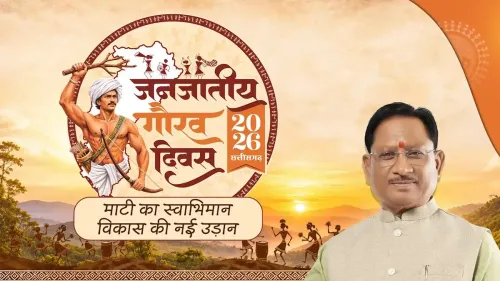
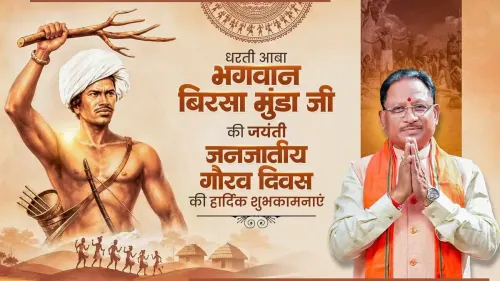
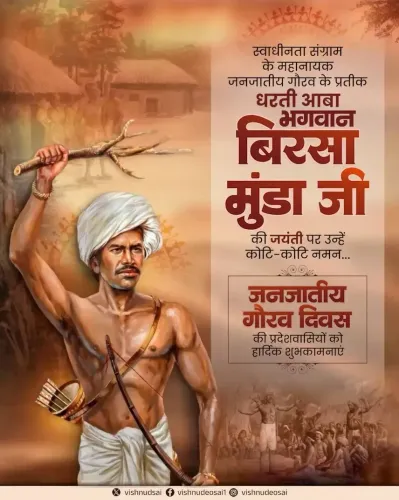
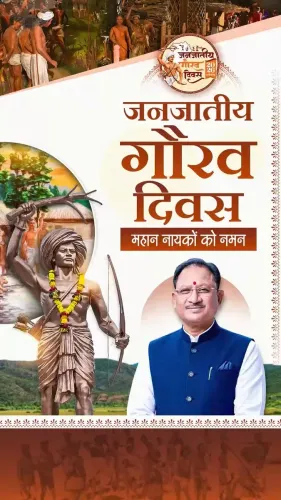
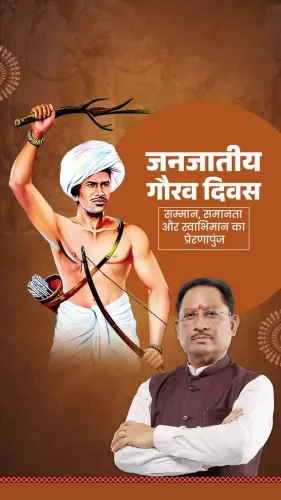
On the birth anniversary of Birsa Munda — the Ulgulan leader who defied an empire — Chief Minister Vishnu Deo Sai and the Chief Minister's Office of Chhattisgarh marked Janjatiya Gaurav Diwas on 15 November 2026 with a clear declaration: honouring tribal pride is inseparable from delivering education, health, jobs, and self-reliance to the communities that have waited longest for them.
The post, shared in Hindi, quoted Chief Minister Sai's guiding thought for the occasion: 'जनजातीय गौरव का सम्मान, उनके सपनों को साकार करने का संकल्प और विकसित छत्तीसगढ़ का निर्माण हमारा ध्येय है' — 'Honouring tribal pride, the resolve to realise their dreams, and building a developed Chhattisgarh is our mission.' The statement frames cultural remembrance and socio-economic delivery as a single, inseparable agenda.
Who Was Birsa Munda, and Why Does 15 November Matter
Birsa Munda, born 15 November 1875 in the Chota Nagpur plateau, led the Ulgulan ('the great tumult') — an armed uprising against British colonial dispossession of tribal land and forests. He died in British custody in 1900, aged just 25, but his memory anchored generations of tribal assertion. The Union Government instituted Janjatiya Gaurav Diwas in 2021 to anchor that memory in national consciousness, recognising tribal martyrs and their role in India's freedom struggle.
Chhattisgarh, carved out as a separate state in 2000, carries particular weight on this day. More than 30 percent of its population belongs to Scheduled Tribes — Gonds, Oraons, Halbas among them — concentrated in the state's southern Bastar and northern Surguja belts, regions historically underserved by mainstream infrastructure.
Sai's Pledge: Education, Health, Employment, Self-Reliance
Chief Minister Vishnu Deo Sai, who took office in December 2023 as Chhattisgarh's first tribal Chief Minister from the BJP, used the occasion to articulate four pillars — education, health, employment, and atmanirbharta (self-reliance) — as the operational translation of tribal pride. The framing is deliberate: commemoration without delivery, the message implies, is hollow.
Chhattisgarh's approach mirrors the broader national framework that pairs constitutional protections under the Fifth Schedule with targeted programme spending in tribal belts. The state has historically been a testing ground for these models, given the density and diversity of its tribal population and the governance challenges posed by remote, forested terrain.
What the declaration sets up is a yardstick. The next Chhattisgarh budget session will be watched for concrete scheme announcements and allocations — the moment when aspirations meet line items, and the promise of a 'strong and prosperous tribal society' either finds funding or stalls in rhetoric.
Point of View
Begun with the institution of the observance in 2021. By anchoring commemoration to deliverables — education, health, jobs — the messaging converts a cultural moment into a governance accountability frame, useful ahead of budget season. For a state where tribal constituencies are both numerically decisive and historically underserved, the gap between this rhetoric and verifiable budget allocations will determine whether the pledge lands as policy or remains ceremony.
NationPress
15 Nov 2026
Frequently Asked Questions
What is Janjatiya Gaurav Diwas and why is it celebrated on 15 November?
Janjatiya Gaurav Diwas is a national observance held every year on 15 November to mark the birth anniversary of tribal leader Birsa Munda, who led the Ulgulan uprising against British colonial rule. The Union Government instituted it in 2021 to honour tribal martyrs and their contributions to India's freedom struggle.
Who is Vishnu Deo Sai and what is his significance for tribal communities?
Vishnu Deo Sai is a BJP leader who became Chief Minister of Chhattisgarh in December 2023. He is Chhattisgarh's first tribal Chief Minister from the BJP, making his statements on tribal welfare carry particular symbolic and political weight.
What percentage of Chhattisgarh's population belongs to Scheduled Tribes?
Over 30 percent of Chhattisgarh's population belongs to Scheduled Tribes, including Gonds, Oraons and Halbas, primarily concentrated in the southern Bastar and northern Surguja regions.
Who was Birsa Munda and what did he fight for?
Birsa Munda was a Munda tribal leader born on 15 November 1875 in the Chota Nagpur plateau who led the Ulgulan movement against British dispossession of tribal land and forests. He died in British custody in 1900 at age 25 and remains a defining symbol of tribal resistance in India.
What are CM Sai's key pledges for tribal welfare in Chhattisgarh?
On Janjatiya Gaurav Diwas 2026, CM Sai pledged to expand opportunities in education, health, employment and self-reliance for tribal communities, framing these as the operational pillars of building a 'strong and prosperous tribal society' in Chhattisgarh.