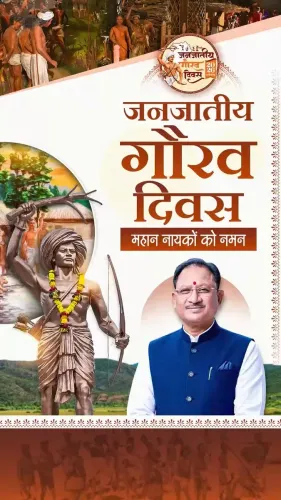
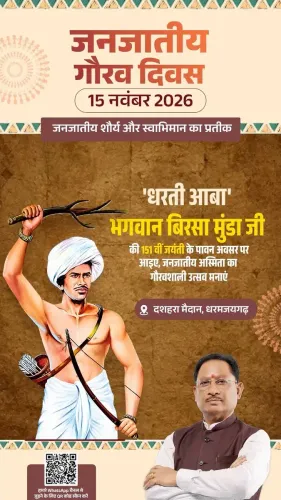
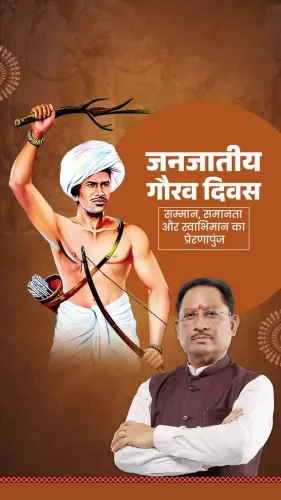
CM Sai greets Jharkhand on statehood day and Janjatiya Gaurav Diwas
Synopsis
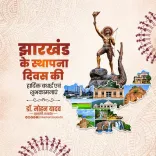
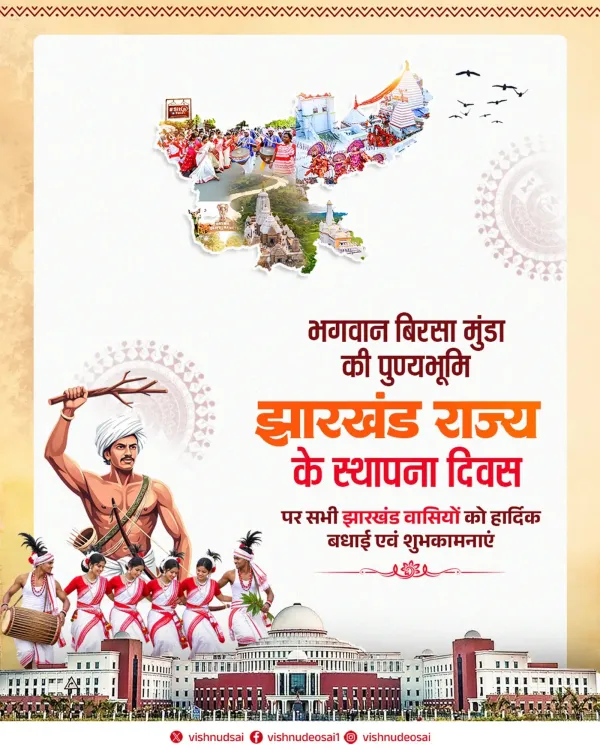
Chhattisgarh CM Vishnu Deo Sai marked Jharkhand's 26th statehood anniversary and Janjatiya Gaurav Diwas on 15 November 2026, invoking Birsa Munda's legacy and the blessings of Baba Baidyanath for the neighbouring state's continued prosperity.
Key Takeaways
Chhattisgarh CM Vishnu Deo Sai extended greetings to Jharkhand residents on 15 November 2026 .
The date marks both Jharkhand's 26th statehood anniversary (formed 15 November 2000 ) and Janjatiya Gaurav Diwas .
Janjatiya Gaurav Diwas was instituted nationally in 2021 to honour tribal freedom fighter Birsa Munda on his birth anniversary.
CM Sai described Jharkhand as the 'sacred land of Birsa Munda' and invoked the blessings of Baba Baidyanath , the Jyotirlinga at Deoghar .
Both Chhattisgarh and Jharkhand share significant Scheduled Tribe populations and a common border, making inter-state tribal solidarity a recurring political theme.
On the day that braids together two powerful commemorations — Jharkhand's 26th statehood anniversary and the nationally observed Janjatiya Gaurav Diwas — Chhattisgarh Chief Minister Vishnu Deo Sai extended warm wishes to the people of the neighbouring state, invoking the legacy of tribal icon Birsa Munda and the blessings of the sacred Baba Baidyanath shrine.
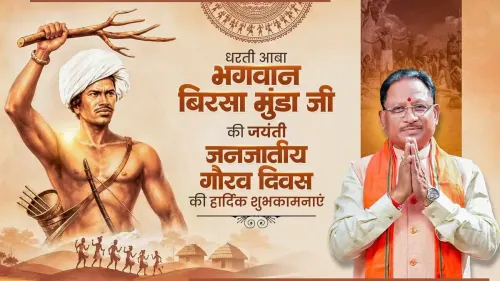
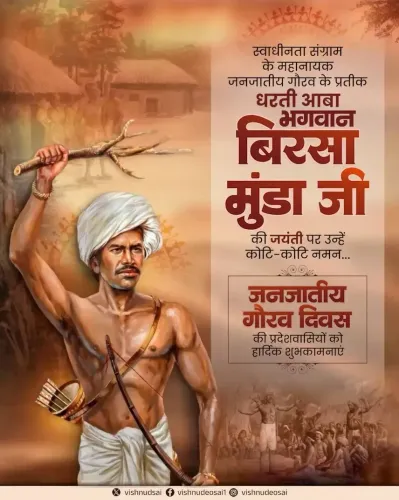
Posting in Hindi on Sunday, 15 November 2026, CM Sai described Jharkhand as 'bhagwan Birsa Munda ki punyabhoomi' — the sacred land of Birsa Munda — and prayed that the state continue to advance along the path of development and prosperity through the grace of Baba Baidyanath, the revered Jyotirlinga enshrined at Deoghar.
Two anniversaries, one moment
Jharkhand was carved out of Bihar on 15 November 2000, a date chosen deliberately to coincide with the birth anniversary of Birsa Munda — the Chotanagpur tribal leader whose 19th-century resistance against colonial land seizures turned him into an enduring symbol of indigenous assertion. The alignment was not accidental; it embedded tribal pride into the very DNA of the new state.
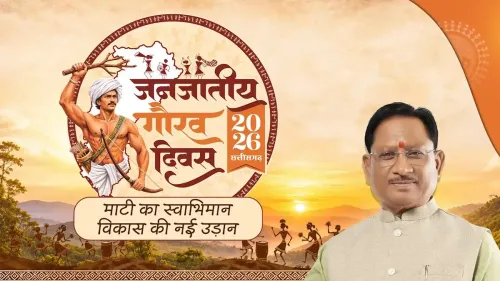
The Government of India formalised that symbolism further in 2021, instituting Janjatiya Gaurav Diwas as a national observance on 15 November each year — honouring tribal freedom fighters and their contributions to India's civilisational and independence narrative. CM Sai tagged both #JanjatiyaGauravDiwas and #JanjatiyaGauravDiwasCG, signalling Chhattisgarh's own parallel observances on the day.
Shared tribal heritage across a shared border
The message carries more than ceremonial weight. Chhattisgarh and Jharkhand share both a border and a demographic reality — both states count among India's highest proportions of Scheduled Tribe populations, and both anchor major tribal welfare programmes under the central government's expanded agenda since 2021. For a BJP chief minister leading a state that itself observes Janjatiya Gaurav Diwas, the outreach to Jharkhand residents is a natural expression of that shared identity.
The invocation of Baba Baidyanath — one of the twelve Jyotirlingas, seated at Deoghar in Jharkhand's Santhal Pargana — adds a layer of spiritual kinship, reminding audiences in both states of the cultural and religious ties that predate the political boundaries drawn in 2000.
Birsa Munda was born in 1875 and died in 1900, barely 25 years old, in British custody — but his Ulgulan ('the great tumult') revolt left a legacy that now anchors a national holiday. That a Chief Minister from a neighbouring state pauses to honour that legacy on this date is, in its own quiet way, a measure of how far the tribal pride movement has travelled into mainstream political culture.
Point of View
Tribal identity has become a structurally significant plank in BJP's electoral and governance messaging across central and eastern India. For Sai — himself a member of the Scheduled Tribe community — the outreach reinforces an authentic personal and political alignment with the tribal welfare narrative. The dual-hashtag strategy (national day plus a CG-specific tag) also signals that Chhattisgarh is running its own parallel programmes, building the state's own equity in the tribal pride calendar.
NationPress
15 Nov 2026
Frequently Asked Questions
Why is 15 November celebrated as Jharkhand's statehood day?
Jharkhand was formed on 15 November 2000 , carved out of Bihar. The date was chosen to coincide with the birth anniversary of tribal leader Birsa Munda , embedding tribal pride into the state's founding identity.
What is Janjatiya Gaurav Diwas and when did it start?
Janjatiya Gaurav Diwas is a national observance held every 15 November to honour the contributions of tribal communities and freedom fighters, instituted by the Government of India in 2021 . It is anchored around Birsa Munda's birth anniversary.
Who was Birsa Munda?
Birsa Munda was a tribal leader and freedom fighter born in 1875 in the Chotanagpur region. His Ulgulan uprising challenged British land policies; he died in custody in 1900 at age 25 and is revered as a symbol of indigenous resistance across central India.
What is Baba Baidyanath and where is it located?
Baba Baidyanath is one of the twelve Jyotirlinga shrines of Lord Shiva, located at Deoghar in Jharkhand's Santhal Pargana region. It is among the most visited pilgrimage sites in eastern India.
Why did Chhattisgarh CM Vishnu Deo Sai post greetings for Jharkhand?
CM Sai's message reflects both inter-state goodwill and a shared political-cultural identity — both states have large tribal populations and border each other. As a Scheduled Tribe leader and BJP chief minister, Sai regularly participates in Janjatiya Gaurav Diwas observances.