CM Assam's CMAAA Backs Nakul Deka's Agro Business
Synopsis
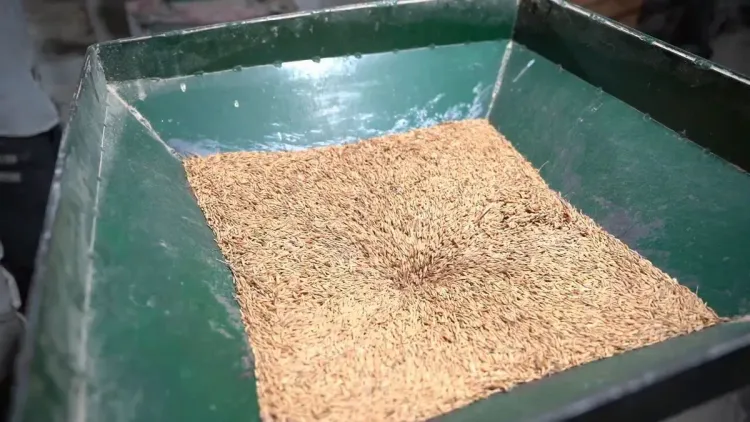
The Assam CMO has showcased entrepreneur Nakul Deka as a beneficiary of the Chief Minister's Atmanirbhar Assam Abhiyan, which backed his rice milling and mustard oil business to add value to local agricultural produce and advance rural self-reliance.
Key Takeaways
CMAAA (Chief Minister's Atmanirbhar Assam Abhiyan) is a state scheme supporting local agro-processing and small entrepreneurship.
Shri Nakul Deka from Assam received support to strengthen his rice milling and mustard oil business under the scheme.
The scheme targets value addition to local agricultural produce, keeping processing income within the state.
CMAAA aligns with the national Atmanirbhar Bharat initiative launched in 2020 to boost self-reliant MSME ecosystems.
The CMO published a video beneficiary profile to amplify awareness of the scheme among prospective applicants.
A rice miller and mustard oil processor from Assam is the latest face of a state scheme designed to keep agricultural value — and agricultural income — inside the state. The Chief Minister's Office of Assam on Sunday, 25 October 2026 spotlighted Shri Nakul Deka, an entrepreneur whose rice milling and mustard oil business has been strengthened through the Chief Minister's Atmanirbhar Assam Abhiyan (CMAAA).
What CMAAA does — and why Deka's story matters
The Chief Minister's Atmanirbhar Assam Abhiyan is a state-level scheme aimed at converting local agricultural produce into finished or semi-finished goods within Assam itself, rather than shipping raw crops out for processing elsewhere. By supporting small-scale agro-processors like Nakul Deka, the scheme seeks to retain more economic value in the state's rural and semi-urban pockets.
Deka's dual operation — rice milling and mustard oil extraction — sits at the heart of Assam's farm economy. Rice is the state's dominant staple crop, and mustard is a major oilseed cultivated across the Brahmaputra valley. Capturing the processing margin locally, even at a small scale, represents exactly the kind of grassroots industrialisation CMAAA was designed to trigger.
Assam's agro-processing push and the national self-reliance thread
The scheme draws its ideological lineage from the national Atmanirbhar Bharat initiative announced in 2020, which pushed states to build homegrown MSME ecosystems. Assam's version sharpens that mandate toward agriculture-linked micro and small enterprises — sectors where the gap between farm-gate price and consumer price is widest, and where local processing can make the biggest difference to a grower's income.
The CMO's decision to publish a video beneficiary profile — rather than a press release — signals a deliberate storytelling strategy: humanising a government scheme through a single concrete example is one of the most effective ways to communicate eligibility and possibility to other would-be applicants across the state.
What Deka's case tells other entrepreneurs in Assam
For tens of thousands of small-scale agro-processors scattered across Assam's districts, a beneficiary case study like this functions as both proof-of-concept and indirect outreach. The scheme's stated goal of 'value addition to local agricultural produce' maps directly onto the state government's broader rural industrialisation agenda — one that aims to reduce Assam's dependence on external markets for processing its own harvests.
Whether CMAAA scales its coverage further — or receives a budget boost in the next state financial cycle — will determine how many more Nakul Dekas emerge from Assam's agro-processing belt.
Point of View
Two crops deeply embedded in Assam's agrarian identity, is politically and economically deliberate. If CMAAA can demonstrate replicable models at scale, it positions Assam as a template for other northeastern states navigating the tension between raw commodity export and value-chain retention. The real test will come when scheme eligibility criteria and disbursement figures enter the public domain.
NationPress
25 Oct 2026
Frequently Asked Questions
What is CMAAA in Assam?
CMAAA stands for Chief Minister's Atmanirbhar Assam Abhiyan, a state government scheme that supports local entrepreneurs — especially in agriculture and allied sectors — to set up or strengthen small processing and manufacturing businesses within Assam.
Who is Nakul Deka and how did he benefit from CMAAA?
Shri Nakul Deka is an Assam-based entrepreneur whose rice milling and mustard oil business received support under the CMAAA scheme, helping him add value to locally grown agricultural produce.
How does CMAAA relate to Atmanirbhar Bharat?
CMAAA is Assam's state-level adaptation of the national Atmanirbhar Bharat initiative announced in 2020, which encouraged states to build self-reliant MSME ecosystems by promoting local manufacturing and agro-processing.
What types of businesses does CMAAA support?
The scheme focuses on small-scale agro-processing and value-addition enterprises — such as rice milling, oilseed processing, and allied rural industries — that use locally grown crops as their raw material.
How can Assam entrepreneurs apply for CMAAA?
Specific eligibility criteria and application details for CMAAA are administered by the Assam state government; prospective applicants should consult the official Chief Minister's Office or relevant state department for current guidelines.