CM Himanta Pushes Agri Value Addition via Utkarsh Yojana
Synopsis
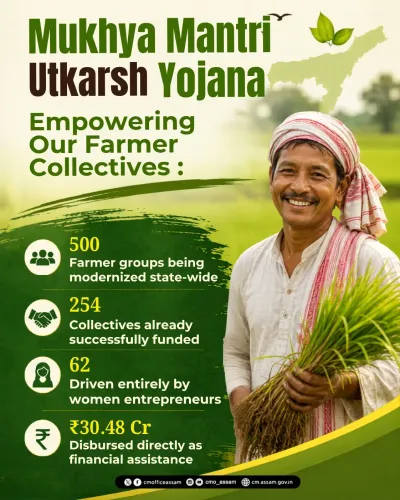
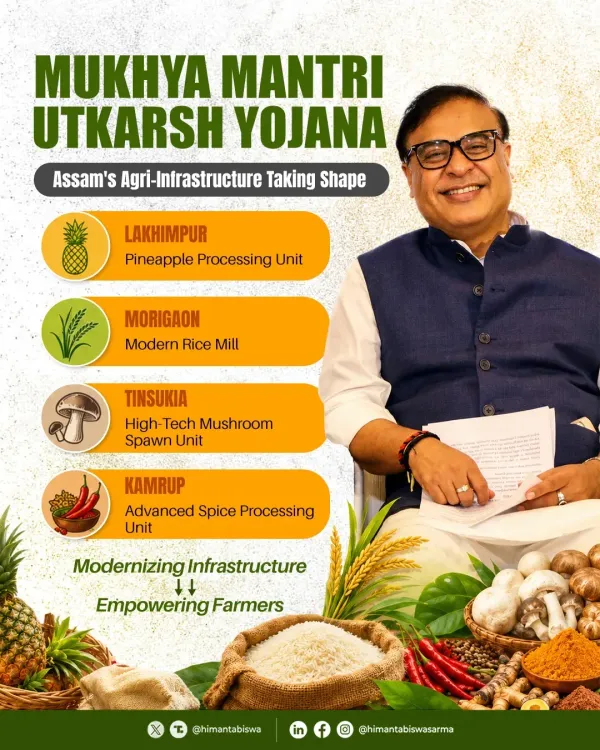
Assam Chief Minister Himanta Biswa Sarma on June 11, 2026 spotlighted the Mukhya Mantri Utkarsh Yojana, saying modern agri-processing and infrastructure projects under the scheme are creating new opportunities for farmers, rural entrepreneurs, and communities across Assam.
Key Takeaways
CM Himanta Biswa Sarma declared on June 11, 2026 that Assam's agricultural future depends on value creation, not just raw produce.
The Mukhya Mantri Utkarsh Yojana is the state's primary vehicle for building modern agri-processing and rural infrastructure.
Farmers, rural entrepreneurs, and rural communities are the three stakeholder groups explicitly identified as beneficiaries.
The scheme aligns with the central government's Agricultural Infrastructure Fund launched in 2020 to support post-harvest and processing capacity.
Assam 's approach mirrors a broader Northeast India trend of integrating local agricultural produce with wider markets to support rural employment.
Rollout milestones and state budget allocations will be key indicators of on-ground progress under the scheme.
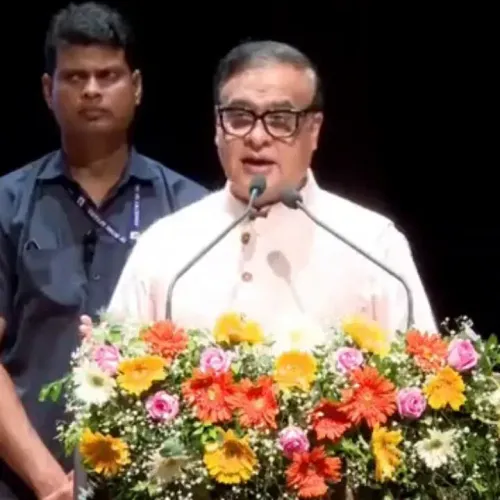
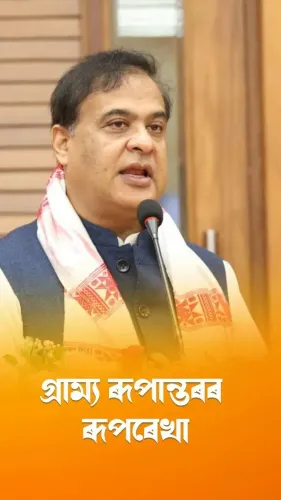
Assam Chief Minister Himanta Biswa Sarma on Thursday, June 11, 2026, highlighted the state government's push to transform agriculture through modern processing and infrastructure, pointing to the Mukhya Mantri Utkarsh Yojana as the vehicle driving this shift across Assam.
Context
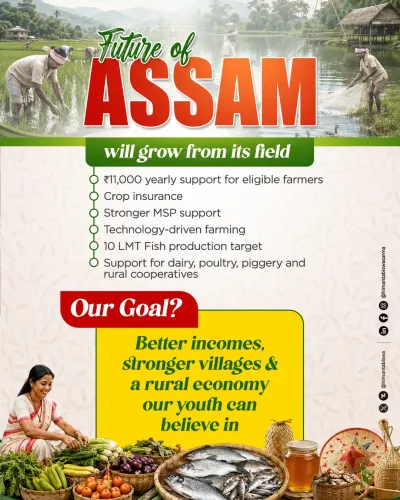
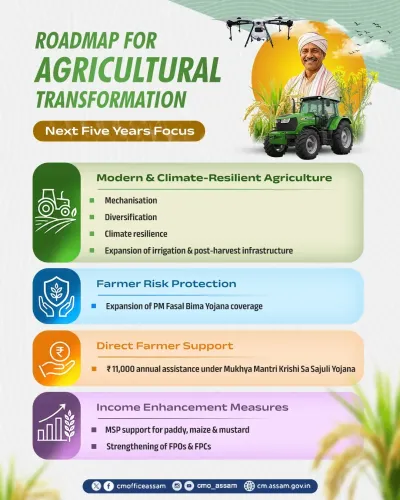
In his post, CM Sarma stated: 'The future of Assam's agriculture lies in creating more value.' He noted that under the Mukhya Mantri Utkarsh Yojana, modern processing and agri-infrastructure projects are taking shape across the state, 'opening new avenues for farmers, entrepreneurs and rural communities.' The statement signals a deliberate policy orientation away from raw-produce dependence toward value-added agriculture.
Assam's farm economy is anchored in tea, rice, and horticultural crops — sectors where post-harvest losses and low farm-gate prices have historically constrained rural incomes. The Chief Minister's emphasis on 'creating more value' directly addresses this structural challenge.
Policy Backdrop
The Mukhya Mantri Utkarsh Yojana is the state-level framework under which Assam is channelling investment into agri-processing units and rural infrastructure. The scheme aligns with the central government's Agricultural Infrastructure Fund, launched in 2020, which was designed to support post-harvest facilities and processing capacity in states including Assam.
Across Northeast India, state governments have increasingly prioritised similar initiatives to link local agricultural produce with wider domestic and export markets. Assam's approach mirrors this broader regional pattern, with an added emphasis on generating rural employment alongside income growth for farmers.
CM Sarma, who has held office since May 2021, has positioned infrastructure-led rural development as a cornerstone of the BJP-led state government's economic agenda. The North-East Democratic Alliance (NEDA), which he convenes, has similarly advocated investment-driven growth models across member states.
Stakeholders and Impact
Assam's farming community — the primary beneficiary identified in the Chief Minister's post — stands to gain through better price realisation if processing infrastructure reduces dependence on intermediaries and raw-commodity markets. Rural entrepreneurs are also cited as direct stakeholders, suggesting the scheme is designed to seed agri-business activity beyond the farm gate.
Rural communities more broadly could benefit from employment generated at processing facilities and ancillary supply chains. For a state where agriculture supports a significant share of the rural workforce, scaling up such infrastructure carries meaningful economic weight.
What's Next
Attention will now turn to rollout milestones for projects approved under the Mukhya Mantri Utkarsh Yojana and any related budget allocations or progress reviews in the next Assam state budget cycle. The pace of on-ground implementation — processing units commissioned, infrastructure completed, and farmer linkages established — will determine whether the scheme delivers on its stated promise of value addition at scale.
If the programme gains measurable traction, it could serve as a template for other Northeast states looking to modernise agriculture and integrate rural producers into higher-margin supply chains.
Point of View
The BJP-led government is staking ownership of the development story in a sector that still defines livelihoods for a large share of Assam's population. The alignment with the central Agricultural Infrastructure Fund also reflects a pattern of state governments layering their own branding onto centrally-seeded capital, amplifying political visibility. The real test will be whether processing infrastructure translates into measurable income gains for farmers, or remains at the announcement stage.
NationPress
26 Oct 2026
Frequently Asked Questions
What is the Mukhya Mantri Utkarsh Yojana in Assam?
The Mukhya Mantri Utkarsh Yojana is an Assam state government scheme focused on building modern agri-processing units and rural agricultural infrastructure to raise farmer incomes and support rural entrepreneurs.
What did Assam CM Himanta Biswa Sarma say about agriculture on June 11 2026?
CM Himanta Biswa Sarma said the future of Assam's agriculture lies in creating more value, and highlighted that the Mukhya Mantri Utkarsh Yojana is driving modern processing and infrastructure projects across the state.
How does the Mukhya Mantri Utkarsh Yojana relate to the central Agricultural Infrastructure Fund?
The state scheme aligns with the central government's Agricultural Infrastructure Fund, launched in 2020, which supports post-harvest facilities and processing capacity in states including Assam.
Who benefits from Assam's agri-infrastructure push under Utkarsh Yojana?
The scheme targets farmers, rural entrepreneurs, and rural communities broadly, aiming to open new income avenues through modern processing and supply-chain infrastructure.
How does Assam's agri-processing push compare to other Northeast states?
Assam's focus on value addition and processing mirrors a broader Northeast India trend, where states have prioritised agri-infrastructure to link local produce with wider markets and generate rural employment.