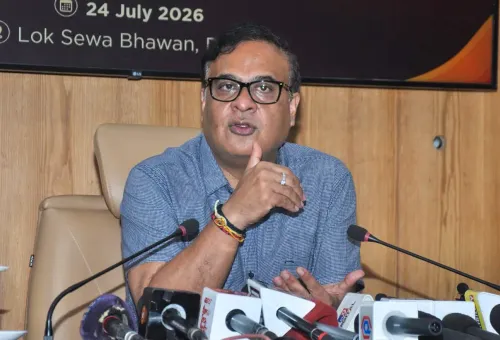
CM Himanta Extends State Support Under Agriculture Infrastructure Fund
Synopsis
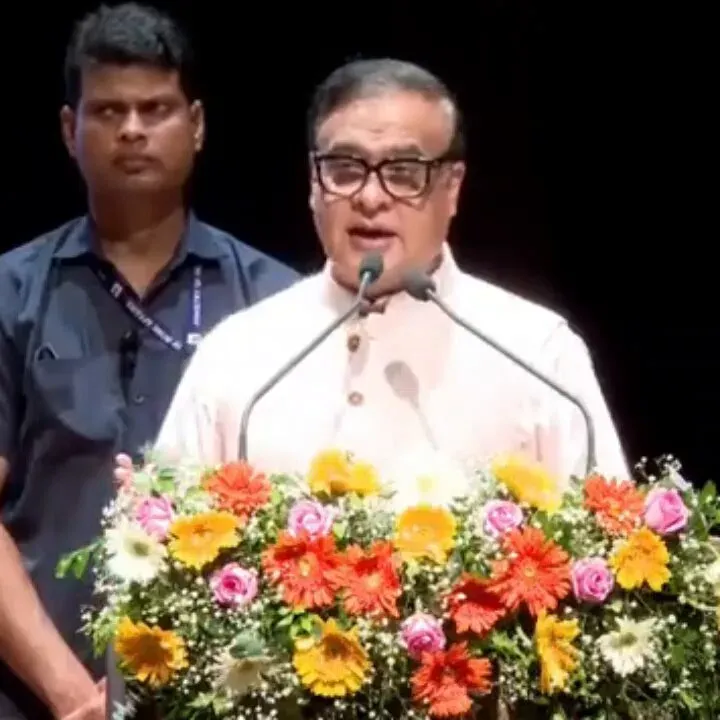
Assam Chief Minister Dr. Himanta Biswa Sarma has announced the State will bear 5 per cent of the mandatory 10 per cent equity contribution for AIF beneficiaries, halving the upfront cost burden for farmers, FPOs and agri-entrepreneurs to accelerate modern agricultural infrastructure development across the state.
Key Takeaways
The Chief Minister's Office of Assam announced on 25 July 2026 that the State will extend support to AIF beneficiaries beyond Central assistance.
Assam will cover 5 per cent of the mandatory 10 per cent equity requirement for individual AIF beneficiaries.
The Agriculture Infrastructure Fund , launched in 2020 under Atmanirbhar Bharat, has a corpus of Rs.
1 lakh crore for post-harvest agri-infrastructure financing.
Farmers, FPOs and agri-entrepreneurs in Assam are the primary target beneficiaries of the initiative.
The move aims to accelerate modern agri-infrastructure, value addition and agri-entrepreneurship across the state.
Implementation uptake and follow-up budget provisions will determine the policy's real-world impact.
The Chief Minister's Office of Assam announced on Saturday, 25 July 2026 that Chief Minister Dr. Himanta Biswa Sarma has extended State support for farmers, Farmer Producer Organisations (FPOs) and beneficiaries under the Agriculture Infrastructure Fund (AIF), supplementing Central government assistance with a targeted equity intervention.
Under the initiative, the Assam government will bear 5 per cent of the mandatory 10 per cent equity requirement for individual beneficiaries, effectively halving the upfront financial burden on those seeking AIF-linked financing. The move is designed to accelerate uptake of modern agri-infrastructure, value addition and agri-entrepreneurship across the state.
Context
The Agriculture Infrastructure Fund was launched by the Government of India in 2020 as part of the Atmanirbhar Bharat package, with a corpus of Rs. 1 lakh crore to provide medium- and long-term debt financing for post-harvest management infrastructure and community farming assets. The scheme targets cold storage chains, processing units, warehouses and logistics hubs that reduce post-harvest losses and improve farmer incomes. For eligible beneficiaries, the AIF mandates a minimum equity contribution of 10 per cent of project cost before debt financing is released. For small and marginal farmers, and newly formed FPOs, this upfront requirement has historically been a barrier to participation.Policy Backdrop
Assam's agrarian economy is centred on rice, tea and horticulture, with a large share of the rural population dependent on farming. The northeastern state has been working to increase institutional credit access and infrastructure investment in agriculture as part of broader economic development priorities under CM Dr. Himanta Biswa Sarma, who has led the state government since 2021. Indian states frequently supplement Central agricultural schemes with additional fiscal incentives to lower beneficiary costs and speed up project implementation. By absorbing half the mandatory equity requirement, the Assam government is following a pattern seen in other agrarian states seeking to maximise AIF disbursements within their territories. Farmer Producer Organisations are a key target of this intervention. FPOs, promoted under Central schemes to improve collective bargaining power and market access, often lack the capital reserves needed to meet equity thresholds — making State co-contribution particularly significant for this group.Stakeholders and Impact
The primary beneficiaries are individual farmers, FPOs and agri-entrepreneurs in Assam who are eligible under AIF but have been deterred by the equity requirement. With the State now covering half that threshold, more applicants are expected to qualify and proceed with infrastructure projects such as cold storage units, primary processing facilities and grading and sorting centres. Value addition and agri-entrepreneurship are explicitly cited as goals of the initiative, signalling that the State is looking beyond primary production toward building a more integrated agricultural value chain within Assam.What's Next
Attention will now turn to implementation: how quickly the State's equity support mechanism is operationalised, which categories of beneficiaries are prioritised, and whether uptake of AIF projects in Assam accelerates measurably in the months ahead. Any follow-up state budget provisions or monitoring reports on beneficiary participation will be closely watched as indicators of the policy's on-ground impact. If successful, the model could inform how other northeastern states approach Central scheme supplementation.Point of View
The Assam government is making a targeted fiscal intervention to convert a well-funded Central scheme into on-ground infrastructure — a gap that has persistently plagued AIF rollout nationally. The move reflects a broader pattern of northeastern states using State co-financing to overcome structural barriers that prevent small farmers and nascent FPOs from accessing institutional debt. For CM Himanta Biswa Sarma, it also signals an intent to position Assam's agrarian economy further up the value chain, beyond primary crop production. Whether the equity support translates into a measurable surge in AIF project completions will be the real test of this policy design.
NationPress
24 Oct 2026
Frequently Asked Questions
What is the Agriculture Infrastructure Fund and how does it work?
The Agriculture Infrastructure Fund is a Central government scheme launched in 2020 with a corpus of Rs. 1 lakh crore to provide medium- and long-term debt financing for post-harvest management infrastructure such as cold storage, warehouses and processing units. Eligible beneficiaries must contribute a minimum 10 per cent equity before accessing the loan.
What has the Assam government announced for AIF beneficiaries?
The Assam government, under CM Dr. Himanta Biswa Sarma, has announced it will bear 5 per cent of the mandatory 10 per cent equity contribution required from individual AIF beneficiaries, effectively halving the upfront cost they must arrange themselves.
Who benefits from Assam's AIF equity support scheme?
Individual farmers, Farmer Producer Organisations (FPOs) and agri-entrepreneurs in Assam who are eligible under the Agriculture Infrastructure Fund are the primary beneficiaries of this State equity support initiative.
Why is the equity requirement a barrier for farmers under AIF?
The mandatory 10 per cent equity contribution can be a significant upfront financial burden for small and marginal farmers and newly formed FPOs that lack capital reserves, often preventing them from qualifying for AIF-linked debt financing despite the scheme's large corpus.
How does Assam's move fit into India's broader agricultural policy?
Indian states frequently supplement Central agricultural schemes with additional fiscal incentives to lower beneficiary costs and accelerate implementation. Assam's equity co-contribution follows this pattern and aligns with the national objective of modernising post-harvest infrastructure and promoting agri-entrepreneurship, particularly in northeastern states with large rural economies.