CM Himanta's Assam Eyes Organic Farming Future by 2030

Synopsis
The Chief Minister's Office of Assam has unveiled the #OrganicAssam2030 vision under CM Dr. Himanta Biswa Sarma, targeting a shift to certified organic farming, stronger market linkages, and expanded export opportunities for the state's smallholder farmers by 2030.
Key Takeaways
The Chief Minister's Office of Assam announced the #OrganicAssam2030 initiative on June 16, 2026 .
Himanta Biswa Sarma is leading the vision to transition Assam toward certified organic farming.
The initiative targets organic farming, market linkages, and export opportunities as pillars of rural growth.
Assam's smallholder farms have historically used low levels of synthetic fertilisers, easing the organic transition.
The state's vision builds on the central government's MOVCDNER programme launched in 2015 for Northeast India.
Budget allocations for 2026-27 and agriculture department data releases will be key indicators of implementation progress.
The Chief Minister's Office of Assam on Tuesday, June 16, 2026, outlined a vision for transforming the state's agricultural economy through organic farming, stronger market linkages, and expanded export opportunities under the #OrganicAssam2030 initiative led by Chief Minister Dr. Himanta Biswa Sarma.
The post stated that Assam is 'envisioning a future driven by organic farming, stronger market linkages and export opportunities, creating sustainable growth and greater prosperity for farmers.' The announcement signals a state-level commitment to repositioning Assam's smallholder agricultural base toward certified organic production and premium market access.
Context
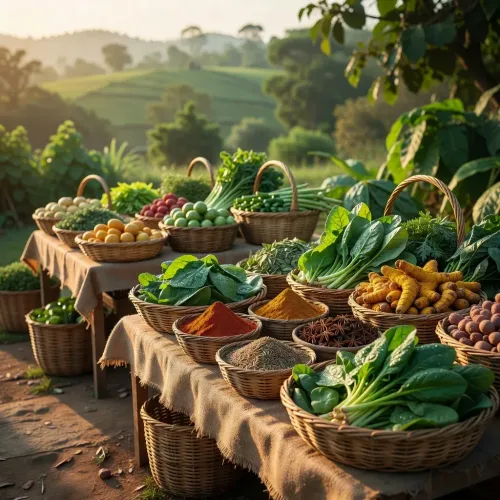
Assam has long held natural advantages for organic cultivation. A large share of its smallholder farms — spanning tea, rice, fruits, and spices — have historically used low levels of synthetic fertilisers, making the transition to certified organic production less disruptive than in heavily chemicalised farming belts. The state's agro-climatic diversity across its river valleys and hill districts further supports a range of organic crops suited to both domestic and international demand. The #OrganicAssam2030 hashtag positions the initiative as a decade-long structural shift rather than a short-term scheme, with the target year of 2030 anchoring medium-term planning for farmers, exporters, and policymakers alike.Policy Backdrop
The announcement builds on a foundation laid by the central government's Mission Organic Value Chain Development for North Eastern Region (MOVCDNER), launched in 2015. That programme established organic clusters, third-party certification pipelines, and market linkage support specifically for Assam and other northeastern states, recognising the region's agro-climatic suitability and lower baseline chemical use. State-level visions such as Organic Assam 2030 extend this national framework by placing greater emphasis on export-oriented value chains — moving beyond raw or semi-processed organic produce toward finished goods that can command premium prices in global markets. Chief Minister Dr. Himanta Biswa Sarma, who has prioritised infrastructure and rural economy modernisation since taking office in May 2021, has framed organic agriculture as a pillar of sustainable rural growth. Across Northeast India, governments have progressively expanded certified organic area through cluster-based programmes designed to lower input costs, improve soil health, and connect producers to buyers willing to pay above-market rates. Assam's initiative fits squarely within this regional pattern while adding a sharper export orientation.Stakeholders and Impact
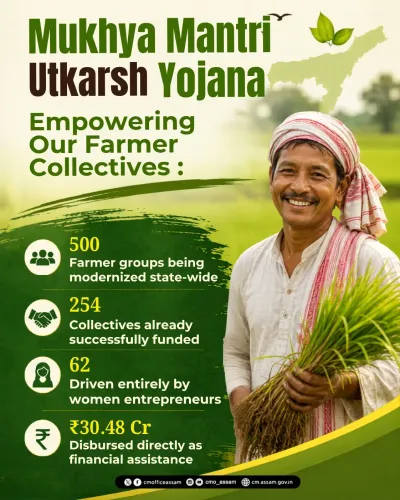
The primary beneficiaries of Organic Assam 2030 are the state's small and marginal farmers, who stand to gain from reduced input costs once chemical fertiliser dependency is reduced, alongside access to premium organic price premiums. Organic exporters and agri-business intermediaries are equally central stakeholders, as the value chain vision requires collection centres, processing facilities, and export facilitation infrastructure. For farmers already operating with low chemical inputs, formal certification could unlock significant income gains without requiring wholesale changes to existing practices. The emphasis on 'market linkages' in the official communication suggests the government is aware that certification alone is insufficient — guaranteed offtake and transparent pricing are critical to sustaining farmer participation.What's Next
The credibility of Organic Assam 2030 will be tested in forthcoming state budget allocations for 2026-27, where funding for organic certification infrastructure, collection centres, and export facilitation will indicate the seriousness of the commitment. Release of baseline production and export data by the Assam Agriculture Department will also be closely watched by farmers' groups and agri-business investors. As Assam moves toward formalising its organic economy, the state's ability to build robust market linkages — both domestically and with international buyers — will determine whether the 2030 vision translates into measurable prosperity for the farming communities it targets.Point of View
Rather than treating it as a developmental deficit. For CM Himanta Biswa Sarma, anchoring an agricultural vision to a named target year and a memorable hashtag serves both policy signalling and political branding purposes ahead of future electoral cycles. The real test will lie in whether the state can operationalise the 'market linkages' component — historically the weakest link in India's organic cluster programmes — by ensuring farmers receive premium prices rather than bearing certification costs without commensurate income gains. Observers will track whether Assam's 2026-27 budget translates this vision into concrete infrastructure spending.
NationPress
15 Sept 2026
Frequently Asked Questions
What is Organic Assam 2030?
Organic Assam 2030 is a state government vision announced by the Chief Minister's Office of Assam to shift the state's agricultural economy toward certified organic farming, stronger market linkages, and expanded export opportunities by the year 2030, under the leadership of CM Dr. Himanta Biswa Sarma.
Who is leading the Organic Assam 2030 initiative?
Chief Minister Dr. Himanta Biswa Sarma is leading the Organic Assam 2030 initiative. He has served as Assam's Chief Minister since May 2021 and has prioritised agriculture modernisation and rural economy development.
How does Organic Assam 2030 relate to the central government's MOVCDNER scheme?
Organic Assam 2030 builds on the central government's Mission Organic Value Chain Development for North Eastern Region (MOVCDNER), launched in 2015, which established organic clusters and certification support for Assam and other northeastern states. The state vision adds a sharper focus on export-oriented value chains.
Which farmers will benefit from Organic Assam 2030?
Small and marginal farmers across Assam — particularly those growing tea, rice, fruits, and spices — are the primary intended beneficiaries, as many already use low levels of synthetic fertilisers, making the transition to certified organic production more accessible.
What should we watch to assess progress on Organic Assam 2030?
Key indicators will include state budget allocations for organic certification infrastructure and export facilitation in 2026-27, as well as production and export data released by the Assam Agriculture Department.