CM Himanta Reviews Agriculture Infrastructure Fund in Assam
Synopsis
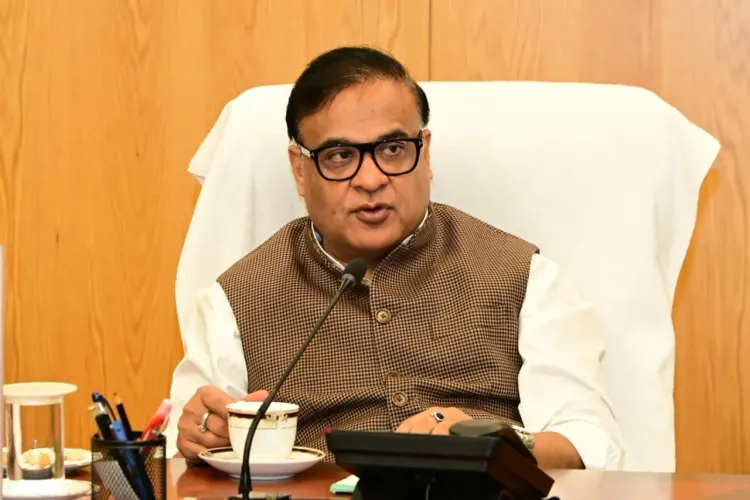
Chief Minister Himanta Biswa Sarma chaired an Agriculture Infrastructure Fund review at Lok Sewa Bhawan on 8 June 2026, directing Assam's Agriculture Department to hold a mega stakeholder workshop in August–September, pursue GI tags for indigenous produce, and roll out Organic Certification statewide.
Key Takeaways
CM Himanta Biswa Sarma chaired an Agriculture Infrastructure Fund review meeting at Lok Sewa Bhawan on 8 June 2026 .
The Agriculture Department has been directed to organise a mega stakeholder workshop during August–September 2026 .
The CM called for steps to secure GI tags for Assam's indigenous agricultural produce.
Implementation of Organic Certification across the state has been directed.
The Agriculture Infrastructure Fund is a central scheme with a Rs 1 lakh crore outlay launched in July 2020 to support post-harvest and farm-gate infrastructure.
The Chief Minister's Office of Assam announced on Monday, 8 June 2026 that Chief Minister Dr Himanta Biswa Sarma chaired a review meeting on the Agriculture Infrastructure Fund (AIF) at Lok Sewa Bhawan, directing the state Agriculture Department to accelerate key initiatives including a mega stakeholder workshop, GI tag applications for indigenous produce, and statewide Organic Certification.
Context
At the meeting, CM Himanta directed the Agriculture Department to organise a mega stakeholder workshop during August–September 2026. He also called for concrete steps to secure Geographical Indication (GI) tags for Assam's indigenous agricultural produce, and instructed the department to implement Organic Certification across the state.
The directives signal a push to move beyond infrastructure creation toward value-addition, intellectual property protection, and premium market access for Assam's farmers and local producers.
Policy Backdrop
The Agriculture Infrastructure Fund was launched by the Government of India in July 2020 with an outlay of Rs 1 lakh crore to finance post-harvest infrastructure, cold storage, and processing units at the farm gate. States are expected to leverage the fund by identifying viable projects and mobilising eligible beneficiaries.
Assam has progressively aligned its state agriculture policy with central funding windows such as AIF to address persistent gaps in storage and value-addition infrastructure. The parallel focus on GI tags and organic certification reflects a broader state strategy to improve farmer incomes and strengthen export potential for crops unique to the region.
Stakeholders and Impact
The planned August–September stakeholder workshop is expected to bring together farmers, agri-entrepreneurs, cooperatives, and government officials to map AIF-eligible projects and build awareness about application processes. Such workshops have served in other states as a catalyst for accelerating fund disbursement and on-ground infrastructure creation.
GI tag protection for indigenous produce — which could include crops, spices, and horticulture varieties specific to Assam — would give local producers legal recognition and a competitive edge in domestic and international markets. Organic Certification, once implemented at scale, can open premium export channels and raise farm-gate prices for smallholder farmers who already practice low-input agriculture.
What's Next
The immediate marker to watch is the convening of the stakeholder workshop within the August–September 2026 window and the volume of GI tag applications filed subsequently by the Assam Agriculture Department. Progress on Organic Certification coverage across districts will be another indicator of follow-through on the CM's directives.
If Assam can translate the AIF review into a measurable pipeline of funded projects alongside protected and certified produce, the state could emerge as a model for integrating central agricultural finance with intellectual property and quality-standard frameworks — a combination that has so far seen uneven uptake across Indian states.
Point of View
Not a passive entitlement. The twin push for GI tags and Organic Certification is strategically coherent: it pairs infrastructure investment with market differentiation, a combination that can meaningfully raise farmer incomes if executed at scale. The August–September workshop deadline creates a public accountability marker, which is notable given that AIF uptake has been uneven across many states since the scheme's 2020 launch. Whether the directives translate into filed GI applications and certified acreage will be the real test of this meeting's impact.
NationPress
19 Sept 2026
Frequently Asked Questions
What is the Agriculture Infrastructure Fund and how does it benefit Assam farmers?
The Agriculture Infrastructure Fund is a central government scheme launched in July 2020 with a Rs 1 lakh crore outlay to finance post-harvest infrastructure such as cold storage and processing units. Assam farmers can access this fund to build farm-gate facilities that reduce post-harvest losses and improve value-addition.
What did CM Himanta Biswa Sarma announce at the AIF review meeting on 8 June 2026?
CM Himanta directed the Assam Agriculture Department to organise a mega stakeholder workshop during August–September 2026, take steps to secure GI tags for indigenous produce, and implement Organic Certification across the state.
What is a GI tag and why is it important for Assam's produce?
A Geographical Indication tag is a legal designation that links a product's quality or reputation to its specific geographic origin. For Assam, GI tags for indigenous crops and produce would give local farmers legal protection and a competitive edge in domestic and export markets.
What is Organic Certification and what does its statewide rollout mean for Assam?
Organic Certification is a formal process that verifies agricultural produce meets defined organic standards, enabling access to premium domestic and international markets. A statewide rollout in Assam would allow smallholder farmers who already practice low-input farming to command higher prices for their produce.
When is the Assam Agriculture Department stakeholder workshop on AIF scheduled?
CM Himanta Biswa Sarma has directed the Agriculture Department to organise the mega stakeholder workshop during August–September 2026.