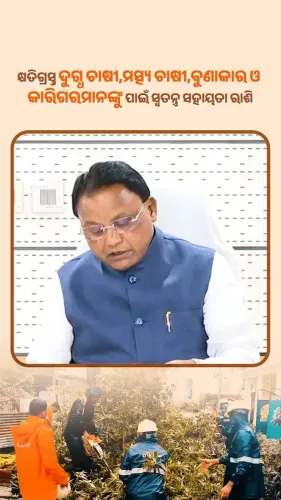
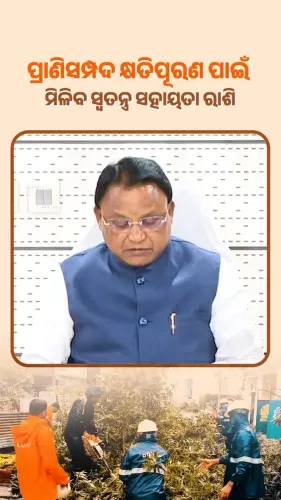
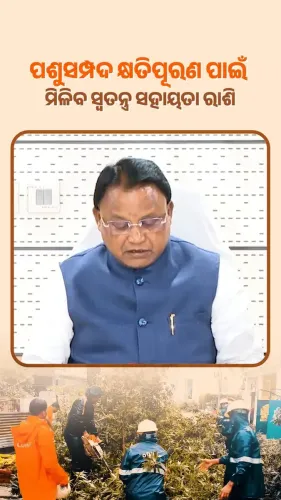
CM Majhi deploys mobile vet units in post-cyclone Odisha
Synopsis
Odisha CM Mohan Charan Majhi has announced mobile veterinary unit camps and mass livestock vaccination drives in cyclone-hit areas including Ganjam, aiming to prevent disease outbreaks and protect the rural economy in the disaster's aftermath.
Key Takeaways
Mobile Veterinary Units (MVUs) are conducting village-level animal health camps across cyclone-affected districts in Odisha.
Ganjam district — repeatedly hit by Bay of Bengal cyclones — is a named focus area of the post-disaster livestock drive.
Large-scale vaccination campaigns are underway to prevent infectious disease outbreaks typically triggered by floods and storms.
Cattle herders and farmers are receiving awareness sessions on livestock care alongside medical treatment at the camps.
The MVU model was significantly expanded after Cyclone Fani (2019) to reduce livestock mortality in future events.
Protecting livestock is framed as safeguarding the foundation of the rural economy during natural disasters.
When a cyclone sweeps through coastal Odisha, the damage does not stop at broken homes and flooded fields — it reaches into the cattle sheds and goat pens that underpin the rural economy. Odisha Chief Minister Mohan Charan Majhi on Thursday, 5 November 2026, shared that the state administration has launched a comprehensive livestock protection drive across affected districts, including Ganjam, in the wake of a recent cyclone.
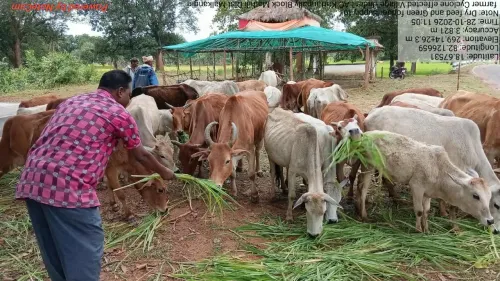
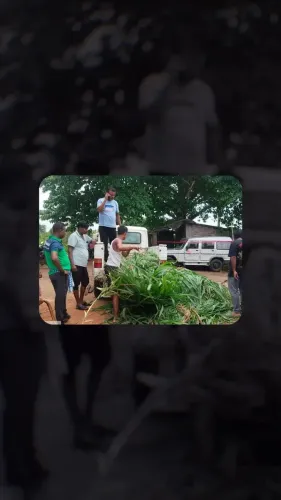
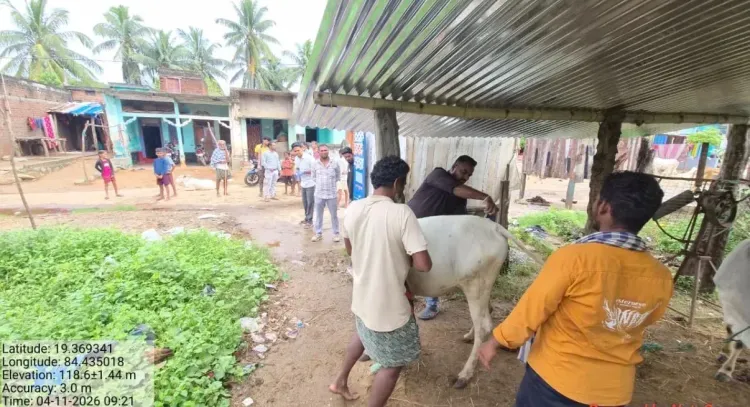
Village-by-village animal health camps through Mobile Veterinary Units
At the centre of the response are Mobile Veterinary Units (MVUs) — teams that travel directly to villages, setting up special animal health camps where livestock receive essential medicines and emergency treatment. The Chief Minister's post, in Odia, describes the camps as reaching gaon gaon re ('every village'), a deliberately ground-up design that sidesteps the need for farmers to travel to distant veterinary centres in the chaotic post-disaster period.
The MVU model is not new to Odisha. After Cyclone Fani devastated the state in 2019, the government significantly expanded mobile veterinary services and instituted post-disaster vaccination drives precisely because livestock mortality in those weeks had hit rural households hard — often harder than any government relief cheque could repair.
Mass vaccination to cut off post-flood disease outbreaks
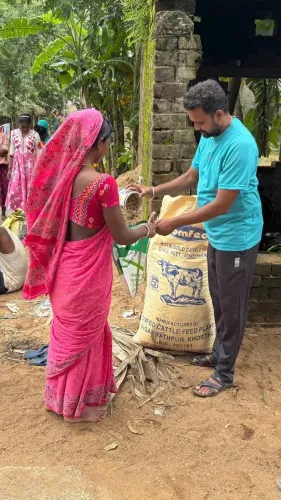
Beyond immediate treatment, the administration is running large-scale vaccination campaigns targeted at infectious diseases that typically surge in flooded areas — waterborne pathogens and foot-and-mouth disease among the documented post-cyclone risks in coastal Odisha. Cattle herders and farmers are simultaneously being given awareness sessions on livestock care during natural disasters, turning the camp visits into a two-way exchange of medicine and knowledge.
Ganjam district, a recurring flashpoint on Odisha's southern coast due to its direct Bay of Bengal exposure, is explicitly named in the post as one of the focus areas. Its farming communities rely heavily on animal husbandry — a loss of cattle or poultry in a bad season can erase months of household income in a single week.
Livestock as the backbone of Odisha's rural economy
Odisha's successive governments have learnt through repeated cyclone seasons that disaster management is incomplete without an animal husbandry component. For smallholder farmers, a cow or a pair of bullocks is not just a domestic animal — it is working capital, collateral, and livelihood. Protecting that asset with timely vaccination and treatment is, in economic terms, one of the highest-return interventions a state government can make in the days after a storm.
What to watch in the coming weeks: vaccination coverage figures and any disease surveillance data from Ganjam and neighbouring affected districts will tell whether the MVU mobilisation translated into measurable protection — or whether the scale of the cyclone outpaced the response.
The state's post-cyclone playbook is being stress-tested again. If the MVU camps hold the line against an outbreak, Odisha will have one more proof point that integrating livestock care into disaster management is not a welfare extra — it is essential infrastructure.
Point of View
Visible MVU deployment in Ganjam also carries political weight in a district with significant farming constituencies. The broader pattern here is telling: Odisha is quietly building one of India's more sophisticated state-level disaster-to-rural-economy response frameworks, with livestock protection no longer treated as an afterthought to human relief. The real test will be whether vaccination coverage data and disease surveillance reports in coming weeks confirm that the mobilisation scaled fast enough.
NationPress
5 Nov 2026
Frequently Asked Questions
What are Mobile Veterinary Units (MVUs) in Odisha?
Mobile Veterinary Units are government-deployed teams that travel to villages to provide animal health camps, medicines, emergency treatment, and vaccination directly to livestock farmers, without requiring them to visit a veterinary centre.
Which districts are covered by Odisha's post-cyclone livestock relief?
CM Mohan Charan Majhi's post specifically mentions Ganjam and describes relief operations across various affected districts in Odisha following the recent cyclone.
Why is livestock protection important after cyclones in Odisha?
For smallholder farmers in coastal Odisha, cattle and poultry represent working capital and livelihoods. Post-flood infectious disease outbreaks can cause mass livestock deaths, wiping out rural household income. Vaccination and treatment immediately after a disaster limit those losses.
What diseases threaten livestock after floods and cyclones?
Post-flood conditions in Odisha raise the risk of waterborne infections and diseases such as foot-and-mouth disease. The current vaccination drive is specifically aimed at preventing such disease surges in affected villages.
What was Odisha's livestock response after Cyclone Fani?
After Cyclone Fani in 2019 , Odisha expanded its mobile veterinary services and introduced systematic post-disaster vaccination drives, forming the institutional basis for the current MVU-led response in cyclone-hit districts.