CM Himanta's rural vision to power Assam's next growth chapter
Synopsis
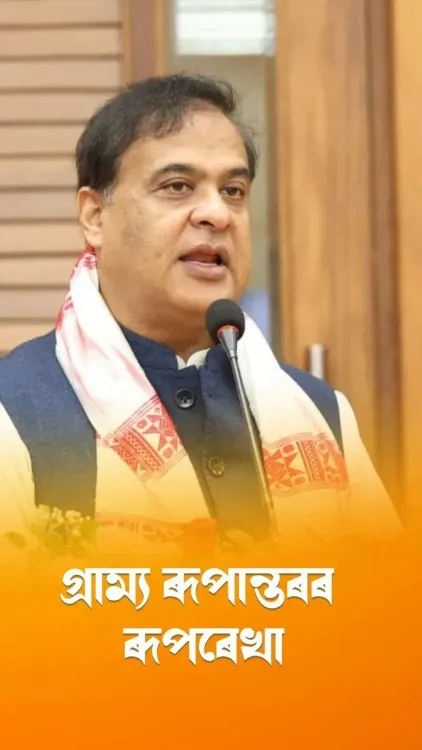
The Chief Minister's Office of Assam has declared that the state's next growth chapter will be written in its villages, with CM Himanta Biswa Sarma driving a rural transformation roadmap focused on last-mile connectivity and household-level opportunity. No specific schemes or timelines were detailed in the post.
Key Takeaways
The Chief Minister's Office of Assam posted on 31 May 2026 outlining a rural-first development vision for the state.
Himanta Biswa Sarma is described as driving a 'clear roadmap for rural transformation' with last-mile delivery as its core goal.
The vision aims to ensure every household in Assam is connected to opportunity and development.
Assam's rural programmes are implemented through panchayati raj institutions and supported by central schemes such as PMGSY .
No specific new schemes, timelines, or budget figures were announced in the post.
Concrete policy details are expected to emerge in the next Assam budget session.
The Chief Minister's Office of Assam, on Sunday, 31 May 2026, outlined a vision for rural transformation under Chief Minister Dr. Himanta Biswa Sarma, stating that the state's next phase of growth will be anchored in its villages and driven by last-mile development.
Context
The official post from the Chief Minister's Office declared that 'the next chapter of Assam's growth will be written in its villages,' framing rural empowerment as the central pillar of the state's development agenda. It described a 'clear roadmap for rural transformation' under Dr. Himanta Biswa Sarma, with the stated aim of connecting every household to opportunity and ensuring development reaches the last mile.
The statement, shared with a video, positions rural communities not as beneficiaries of trickle-down growth but as the primary engine of the state's forward momentum — a rhetorical shift that signals a deliberate political and administrative emphasis heading into the next phase of governance.
Policy Backdrop
Dr. Himanta Biswa Sarma has served as Chief Minister of Assam since May 2021, having previously been a senior Congress leader before joining the BJP in 2015. Since assuming office, his administration has listed rural infrastructure and last-mile service delivery among its core stated priorities, beginning with the first budget presentation of his tenure.
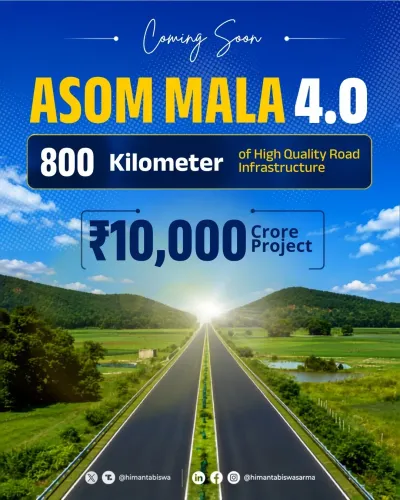
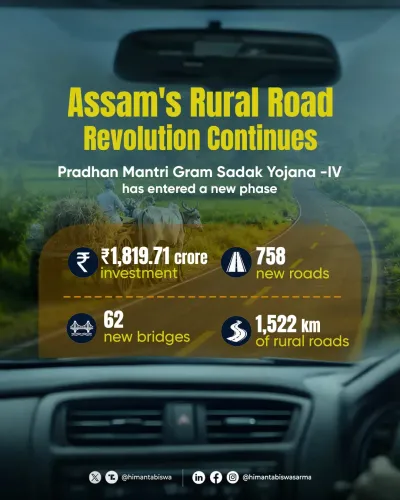
Rural connectivity in Assam has historically been advanced through the national Pradhan Mantri Gram Sadak Yojana (PMGSY), the rural roads programme expanded in phases since 2000, alongside state-specific interventions targeting electrification and livelihood support. The Government of Assam implements these programmes through panchayati raj institutions spread across the state's large rural population.
Across northeastern India, state governments have routinely packaged connectivity, electrification, and livelihood schemes into integrated rural roadmaps. Such vision statements typically precede budget allocations or scheme launches rather than announce new statutory measures in themselves.
Stakeholders and Impact
Assam has a predominantly rural population, and village panchayats serve as the primary institutional interface for delivering central and state welfare programmes. Any sustained push toward last-mile connectivity directly affects rural households' access to roads, digital infrastructure, financial services, and government entitlements.
The emphasis on 'every community being empowered' signals an intent to address regional disparities that have historically left interior and remote villages underserved. Village panchayats would be key implementation partners in translating such a vision into measurable outcomes at the ground level.
What's Next
The specifics of the rural roadmap — including scheme names, timelines, and budget allocations — have not been detailed in the post. Observers and stakeholders will look to the next Assam budget session and panchayat-level scheme saturation reports for concrete policy announcements that give shape to this stated vision.
If the administration follows through with a structured rural development push, it could set a benchmark for how northeastern states integrate central programmes with state-level interventions — and reinforce Dr. Himanta Biswa Sarma's positioning ahead of the next electoral cycle.
Point of View
Suggesting this post may be laying rhetorical groundwork for a larger policy reveal. The emphasis on 'last mile' delivery taps into a well-established governance vocabulary that resonates both with voters in interior constituencies and with central government priorities around scheme saturation. Whether this translates into measurable outcomes will depend on the specifics that follow — and those specifics will be the real test of the roadmap's ambition.
NationPress
20 Sept 2026
Frequently Asked Questions
What is CM Himanta Biswa Sarma's rural development plan for Assam?
The Chief Minister's Office of Assam has described a vision for rural transformation focused on last-mile connectivity and empowering every household with access to opportunity, though specific schemes and timelines have not yet been publicly detailed.
What rural schemes is the Assam government currently implementing?
The Government of Assam implements central programmes such as the Pradhan Mantri Gram Sadak Yojana (PMGSY) for rural roads alongside state-specific interventions in electrification and livelihoods, delivered through panchayati raj institutions.
When did Himanta Biswa Sarma become Chief Minister of Assam?
Dr. Himanta Biswa Sarma became Chief Minister of Assam in May 2021 after the BJP-led alliance won the state assembly elections.
What does 'last mile development' mean in the context of Assam?
'Last mile development' refers to ensuring that government services, infrastructure, and welfare benefits reach the most remote and underserved villages and households in Assam , bridging gaps in connectivity, electrification, and access to schemes.
What is the role of panchayats in Assam's rural development?
Village panchayats in Assam serve as the primary institutional channel through which both central and state rural development programmes are implemented and monitored at the grassroots level.