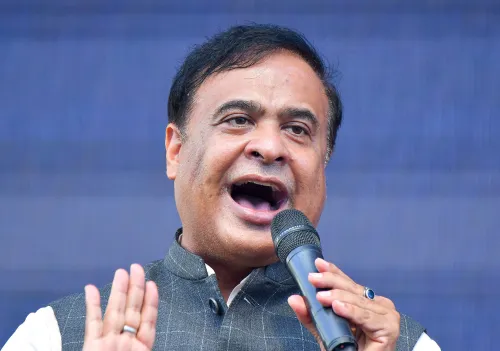
CM Himanta Biswa Sarma Drives Healthcare Expansion Across Assam

Synopsis
The Chief Minister's Office of Assam announced on 19 July 2026 that CM Himanta Biswa Sarma is spearheading a rapid, district-wide transformation of the state's medical infrastructure — expanding capacity, upgrading technology, and making advanced healthcare accessible to every citizen across the northeastern state.
Key Takeaways
The Chief Minister's Office of Assam announced on 19 July 2026 that healthcare infrastructure is being transformed district by district across the state.
Himanta Biswa Sarma , in office since May 2021 , is credited with leading this multi-district medical infrastructure push.
The stated goals include expanding hospital capacity, upgrading medical technology, and bringing advanced care closer to every citizen.
The drive aligns with the Ayushman Bharat Pradhan Mantri Jan Arogya Yojana (2018) framework for district hospital upgrades and decentralised health coverage.
Primary beneficiaries are rural patients and district health facilities in Assam , a state with historically limited access to specialist and tertiary care.
Future indicators include state budget allocations for new medical colleges, equipment tenders, and potential central approvals for AIIMS-style facilities in the state.
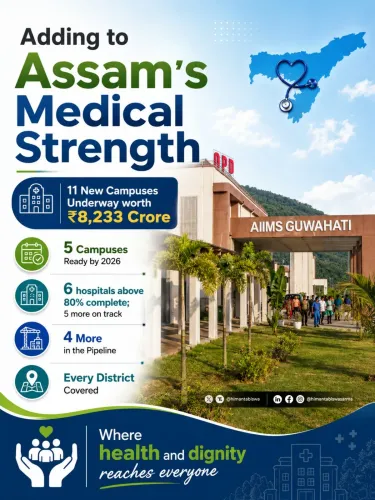
The Chief Minister's Office of Assam announced on Sunday, 19 July 2026 that the state is undergoing a rapid transformation of its medical infrastructure under the leadership of Chief Minister Dr. Himanta Biswa Sarma, with district-level upgrades expanding capacity, modernising technology, and bringing advanced healthcare closer to citizens across the state.
Context
The official post from the Chief Minister's Office stated that 'district after district, the future of healthcare in Assam is being transformed,' describing the current phase as one of rapid unfolding of medical infrastructure statewide. The announcement signals a coordinated push to decentralise advanced and accessible care, moving beyond urban centres to reach every corner of the state.
Assam, a northeastern state with a large rural population and historically limited access to tertiary healthcare, has been at the centre of sustained infrastructure investment since Dr. Himanta Biswa Sarma assumed office as Chief Minister in May 2021. The latest communication underscores that this effort is now entering a more intensive, multi-district phase.
Policy Backdrop
The expansion aligns with the framework established by the Ayushman Bharat Pradhan Mantri Jan Arogya Yojana, launched in 2018, which provided states a pathway to upgrade district hospitals, expand health coverage, and integrate advanced diagnostics at the grassroots level. Assam has been among the states channelling this central framework into district-level action.
Across India, state governments accelerated public hospital modernisation and medical education capacity after 2020, prioritising decentralised access to advanced treatment. Assam's current drive fits squarely within this national pattern, with the state seeking to reduce the burden on a handful of large urban hospitals by building credible alternatives in each district.
Stakeholders and Impact
The primary beneficiaries of this infrastructure push are rural patients and communities in districts that have historically lacked access to specialist care, advanced diagnostics, or sufficient hospital beds. For these populations, district-level upgrades can mean the difference between receiving timely treatment locally and undertaking costly, often delayed travel to Guwahati or other major cities.
District health facilities stand to gain in both physical capacity and technological capability, with the stated goals of expanding beds, upgrading equipment, and improving the overall standard of care. Healthcare workers at these facilities would also benefit from improved infrastructure and, potentially, enhanced training environments.
What's Next
Observers will watch closely for state budget allocations directed at new medical colleges, equipment tenders, and any central government approvals for additional high-capacity facilities in Assam. The scale and pace of district-level rollouts will be a key indicator of whether the ambition outlined in the Chief Minister's Office communication translates into measurable outcomes on the ground.
If the current trajectory holds, Assam could emerge as a reference model for northeastern states seeking to close the gap between urban and rural healthcare access — a challenge that remains one of the most persistent in Indian public health policy.
Point of View
Not merely a budget line item. By framing the rollout as district-by-district transformation, the Sarma administration is building a narrative of visible, distributed progress that speaks directly to rural constituencies ahead of any future electoral cycle. The alignment with central schemes like Ayushman Bharat also allows the state to claim both independent initiative and partnership with New Delhi — a politically useful duality. Whether the pace of actual infrastructure delivery matches the scale of the announcement will determine the long-term credibility of this positioning.
NationPress
18 Oct 2026
Frequently Asked Questions
What is Assam's plan for healthcare expansion in 2026?
The Chief Minister's Office of Assam announced in July 2026 that the state is rapidly expanding medical infrastructure district by district, focusing on increasing hospital capacity, upgrading technology, and making advanced healthcare accessible to all citizens under CM Himanta Biswa Sarma's leadership.
Who is leading Assam's healthcare transformation?
Chief Minister Dr. Himanta Biswa Sarma, who has led Assam since May 2021, is credited by the Chief Minister's Office as the driving force behind the state's ongoing district-level healthcare infrastructure expansion.
How does Ayushman Bharat relate to Assam's health infrastructure push?
The Ayushman Bharat Pradhan Mantri Jan Arogya Yojana, launched in 2018, provides the central policy framework that states including Assam have used to upgrade district hospitals, expand health coverage, and improve access to diagnostics and treatment.
Which areas in Assam benefit most from the healthcare upgrade?
Rural populations and communities in districts that previously lacked specialist care or advanced diagnostics stand to benefit most, as the push aims to reduce dependence on urban centres like Guwahati for medical treatment.
What should we watch for next in Assam's healthcare expansion?
Key indicators to follow include state budget allocations for new medical colleges, government tenders for medical equipment, and any central approvals for high-capacity or AIIMS-style facilities in Assam.