Anurag Thakur: Viksit Bharat roadmap runs through Himachal
Synopsis
BJP MP Anurag Thakur addressed the Himachal Kalyan Sabha's 55th annual event and the 107th half-yearly conference of ABHSSS in Delhi on 25 October 2026, arguing that achieving Viksit Bharat by 2047 requires a parallel vision for a developed Himachal Pradesh.
Key Takeaways
BJP MP Anurag Thakur addressed Himachali migrants at a twin event in Delhi on 25 October 2026 .
He declared: 'The road to a developed India passes through Himachal,' directly linking state growth to the Viksit Bharat @2047 national goal.
His four development pillars were village growth, youth employment, stronger horticulture and farmer support, and tourism-driven local jobs.
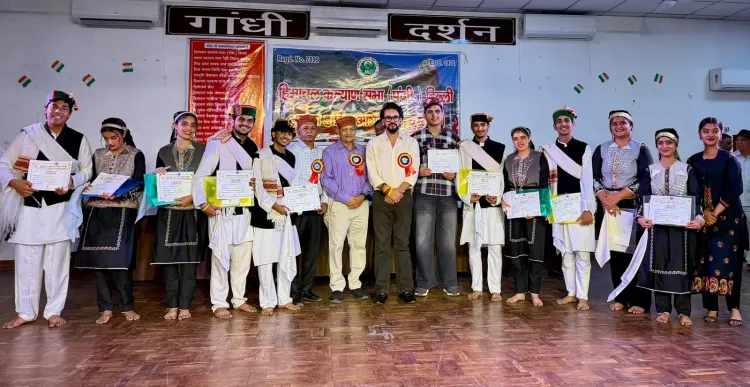
Himachal Kalyan Sabha was marking its 55th Annual Utsav ; the Akhil Bharatiya Himachal Samajik Sanstha Sangh held its 107th half-yearly conference at the same event.
Thakur called for balancing cultural heritage preservation with an active, concrete development roadmap for the state.
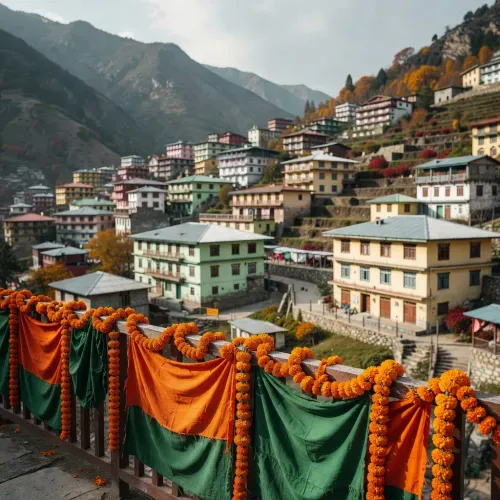
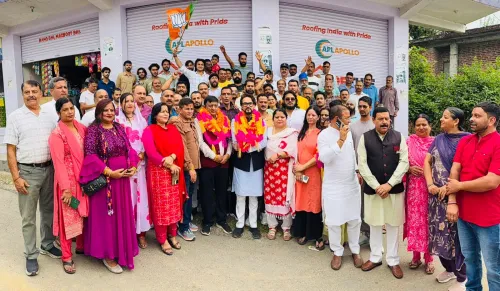
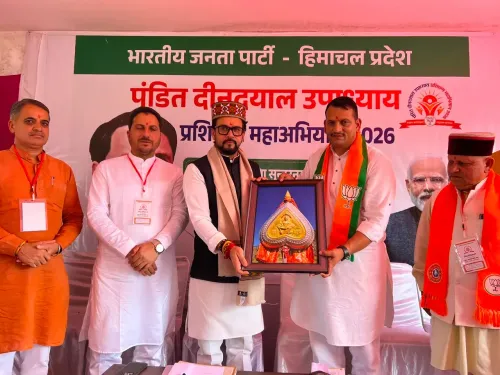
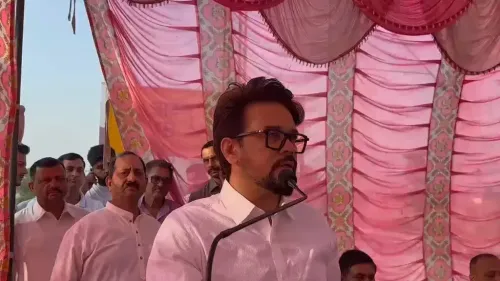
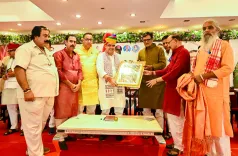
A hill state of apple orchards and high passes took centre stage in the capital on Sunday, 25 October 2026, when BJP MP Anurag Thakur addressed thousands of Himachali migrants in Delhi, weaving their personal stories into the nation's biggest long-term ambition — Viksit Bharat @2047.
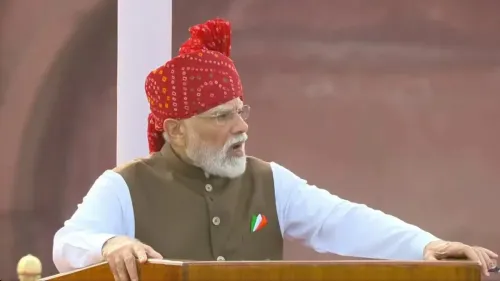
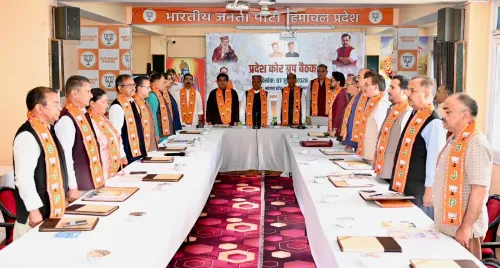
Speaking at the 55th Annual Utsav and Himachal Mela organised by Himachal Kalyan Sabha and the closing ceremony of the 107th Half-Yearly Conference of the Akhil Bharatiya Himachal Samajik Sanstha Sangh (Delhi), Thakur delivered a message that was equal parts cultural pride and policy intent.
Himachal as the gateway to a developed India
Thakur opened with a five-fold declaration in Hindi: 'हिमाचल हमारी जन्मभूमि है, हिमाचल हमारा संस्कार है, हिमाचल हमारी परंपरा है, हिमाचल हमारा परिचय है, हिमाचल हमारा परिवार है' — 'Himachal is our birthplace, Himachal is our values, Himachal is our tradition, Himachal is our identity, Himachal is our family.' The cadence was deliberate. Before policy came belonging.
He then sharpened the argument: 'The road to a developed India passes through Himachal.' If the country must reach developed-nation status by 2047 — India's centenary of independence — then Himachal Pradesh must get there too. The logic is simple and the stakes are real: a state left behind is a gap in the national story.
Villages, youth, orchards and tourism — a four-point agenda
Thakur laid out four concrete pillars for Himachal's transformation. First, village development as the foundation. Second, connecting Himachali youth to new economic opportunities. Third, strengthening farmers and horticulturists — the backbone of a state whose hill economy runs heavily on apples, stone fruits and hydropower. Fourth, expanding tourism so that local households, not just outside investors, pocket the employment gains.
The framing is consistent with the Viksit Bharat @2047 vision articulated by Prime Minister Narendra Modi, which tasks every state with aligning its own development arc to the national centenary target. For a hill state like Himachal — geographically stunning but logistically challenging — that alignment demands a specific roadmap, not just a generic national template.
Heritage and development — not a trade-off
The most pointed line in Thakur's address was a call to hold both ideas at once: heritage preservation and active development planning. 'Along with heritage, there must be talk of development — what the roadmap for apna Himachal should look like,' he said. It is a subtle but important distinction. Hill communities often face a binary choice between preserving cultural identity and chasing growth. Thakur's pitch was that the two are not rivals.
The gathering itself illustrated the scale of the Himachali diaspora in Delhi. Himachal Kalyan Sabha has been organising this annual cultural and welfare event for 55 years, and the Akhil Bharatiya Himachal Samajik Sanstha Sangh conference — now in its 107th half-yearly edition — reflects decades of organised community life among Himachalis who have settled in the capital but retain deep ties to the state.
Ruling-party MPs from hill states increasingly use such diaspora platforms to anchor state-level aspirations within the larger Viksit Bharat narrative — and to keep community networks warm between election cycles. Thakur's address on Sunday was a textbook example: equal parts cultural homecoming, economic vision and political investment.
The question now is whether this speech seeds concrete policy — a Himachal-specific development roadmap coordinated between the state and the Centre before the 2047 deadline comes into sharper focus.
Point of View
Which raises the political and policy stakes for any party governing the state. By invoking a concrete deadline (2047) and specific sectors (horticulture, tourism, youth employment), he moves the conversation from platitude to accountability. The diaspora setting is strategically significant: organised Himachali networks in Delhi historically influence both electoral sentiment and philanthropic flows back to the state. Expect this framing — 'Viksit Himachal as a precondition for Viksit Bharat' — to recur in BJP messaging as the next Himachal Pradesh assembly cycle approaches.
NationPress
25 Oct 2026
Frequently Asked Questions
What did Anurag Thakur say about Himachal Pradesh development?
Thakur said the road to a developed India passes through Himachal, and that achieving Viksit Bharat by 2047 requires building a developed Himachal Pradesh by the same year. He stressed village growth, youth employment, horticulture support and tourism as key pillars.
What is Viksit Bharat 2047?
Viksit Bharat @2047 is the central government's national goal, articulated by Prime Minister Narendra Modi, to achieve developed-country status by 2047 — India's 100th year of independence — by aligning development across all states and sectors.
What is Himachal Kalyan Sabha?
Himachal Kalyan Sabha is a Delhi-based association of Himachali migrants that organises annual cultural and welfare events. It recently held its 55th Annual Utsav and Himachal Mela, which Anurag Thakur attended on 25 October 2026.
Where is Anurag Thakur from?
Anurag Thakur is a BJP Lok Sabha MP from the Hamirpur constituency in Himachal Pradesh. He previously served as Union Minister for Information and Broadcasting and Youth Affairs and Sports.
What is the Akhil Bharatiya Himachal Samajik Sanstha Sangh?
The Akhil Bharatiya Himachal Samajik Sanstha Sangh (Delhi) is an umbrella social organisation of Himachali community groups in Delhi. It held its 107th half-yearly conference, the closing ceremony of which Thakur addressed on 25 October 2026.