Stalin Slams Rival Govt: Even Voters Who Backed It Are Complaining
Synopsis
DMK president M. K. Stalin sharply attacked a rival Tamil Nadu administration on October 25, 2026, saying the government has become one that even its own voters — not just opponents — are lamenting, in a pointed social media broadside.
Key Takeaways
Stalin posted a sharp political attack on Sunday, October 25, 2026 .
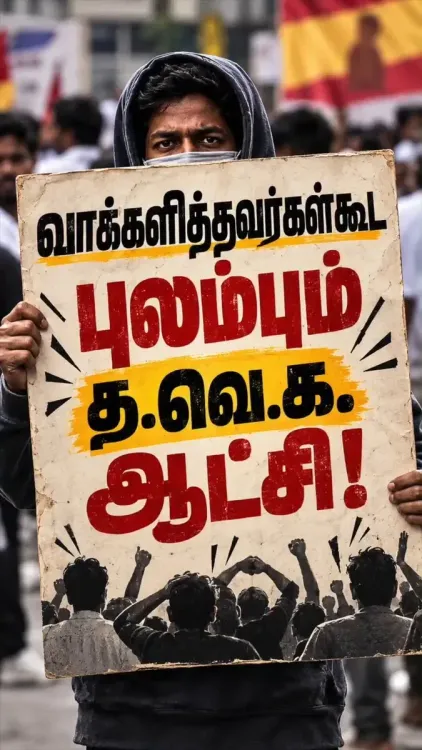
He declared that the rival த.வெ.க. government is being lamented even by those who voted for it, not just those who opposed it.
The framing targets voter disillusionment within the rival party's own support base — a politically loaded argument.
Tamil Nadu politics regularly features such social media-driven governance critiques between election cycles.
The post signals ongoing DMK mobilisation against the rival administration ahead of future electoral contests.
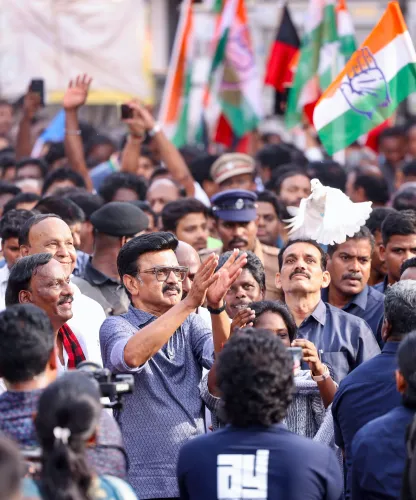
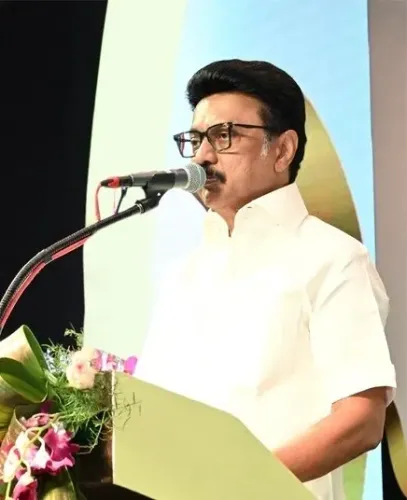
Even the faithful have turned. DMK president M. K. Stalin fired a pointed broadside on Sunday, October 25, 2026, declaring that the rival administration — which he referred to by the abbreviation த.வெ.க. — has become a government that draws complaints not just from those who opposed it at the ballot box, but from its own supporters.
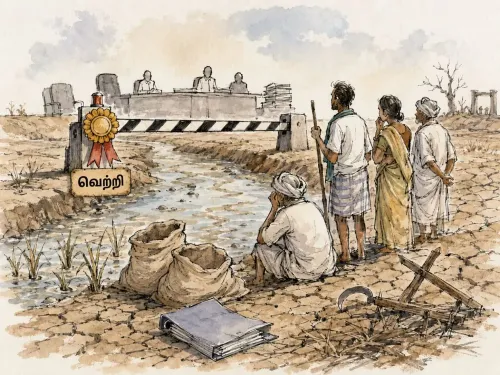
In Tamil, Stalin wrote: 'வாக்களிக்காதவர்கள் மட்டுமல்ல, வாக்களித்தவர்களும் புலம்பும் ஆட்சியாக த.வெ.க. ஆட்சி இருக்கிறது!' — which translates as: 'The த.வெ.க. government is not merely one that those who did not vote for it are lamenting — even those who voted for it are lamenting it!'
The sting in the line: when your own voters turn
The rhetorical precision here is deliberate. Criticism from political opponents is expected and easily dismissed. What Stalin is flagging — and what gives the line its edge — is the alleged disillusionment among the party's own vote bank. It is a classic political framing: the sharpest verdict on a government is not from its enemies, but from the constituency it was elected to serve.
Tamil Nadu politics has long been contested on exactly this terrain — governance delivery, public sentiment, and the gap between electoral promises and lived experience. DMK leaders have historically deployed social media as a rapid-response platform to highlight what they characterise as administrative failures by rival parties, keeping pressure on between election cycles.
Stalin's pattern of sharp, short political messaging
The post is compact but calculated. Rather than cataloguing specific policy failures, Stalin uses voter sentiment itself as the evidence — positioning public disappointment as the most credible indictment of governance. It is a format Stalin has used before: the short, declarative social media post that frames a broader narrative without requiring a press conference.
With Tamil Nadu's political calendar always live — local body elections, assembly by-elections, and the perpetual groundwork for the next state contest — messages like this are rarely just commentary. They are also mobilisation signals, reminding the DMK's base why the rivalry matters.
When even the loyal start lamenting, the clock starts ticking louder.
Point of View
He pre-empts the standard rebuttal that criticism is merely partisan. In Tamil Nadu's fiercely competitive two-pole political environment, narratives of broken voter trust have historically moved ground faster than policy debates. The timing of such messaging, outside an immediate election window, also reflects the DMK's deliberate strategy of keeping governance accountability as a continuous campaign rather than an election-season pivot.
NationPress
25 Oct 2026
Frequently Asked Questions
What did M. K. Stalin say about the rival government in Tamil Nadu?
Stalin posted on X that the rival Tamil Nadu government — referred to by the abbreviation த.வெ.க. — is one that even its own voters are lamenting, not just those who opposed it at the polls.
Who is M. K. Stalin?
M. K. Stalin is the president of the Dravida Munnetra Kazhagam (DMK) and a former Chief Minister of Tamil Nadu.
What does த.வெ.க. refer to in Tamil Nadu politics?
The research does not verify the specific identity of the party referred to by the abbreviation த.வெ.க. in this post, so NationPress is not asserting a specific identification.
Why does Stalin's criticism focus on the rival party's own voters?
Highlighting disillusionment among a government's own supporters is a deliberate rhetorical strategy — it signals that failures are so significant they cannot be dismissed as merely partisan opposition, making the critique harder to deflect.
Is Tamil Nadu heading towards an election soon?
Tamil Nadu's political calendar is always active, with local body and assembly by-elections possible at various points; DMK's sustained social media pressure is consistent with continuous campaign strategy rather than a specific election announcement.