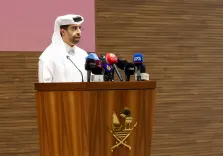
Stalin urges DMK cadre: stay constructive as allies join govt
Synopsis
DMK president M. K. Stalin on 22 May 2026 congratulated allies Vanni Thamizhan and Shajahan on their ministerial inductions, while urging party workers to avoid harsh rhetoric, invoking the legacies of Annadurai and Karunanidhi to call for constructive opposition.
Key Takeaways
Stalin publicly congratulated Vanni Thamizhan (VCK) and Shajahan on being sworn in as ministers on 22 May 2026 .
Stalin appealed to DMK cadre to refrain from using harsh or hurtful language against allies who have made independent political decisions.
He invoked DMK founders C.
Karunanidhi as guiding examples of ideological discipline and dignity.
Stalin committed the DMK to functioning as a 'constructive opposition' — praising good governance and criticising failures.
The post signals an attempt to manage intra-alliance tensions without publicly breaking ties with the individuals concerned.
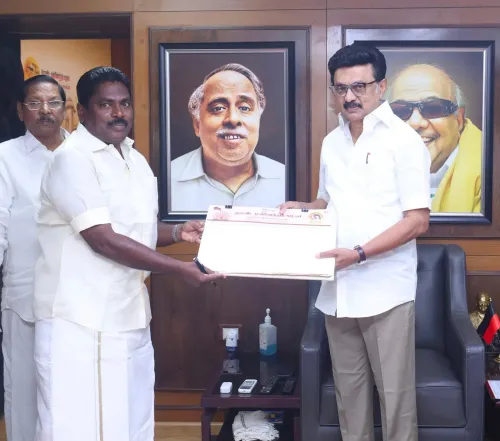
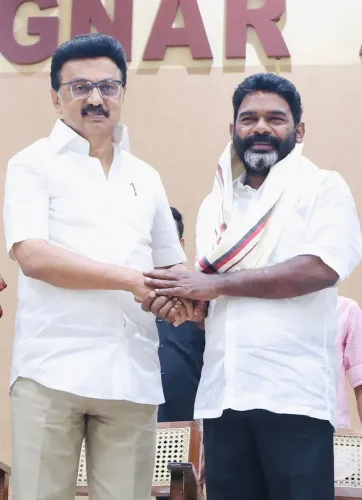
DMK president M. K. Stalin on Friday, 22 May 2026, congratulated two political allies — Vanni Thamizhan (VCK) and Shajahan — on being sworn in as ministers, while simultaneously issuing a firm but measured appeal to his party cadre to refrain from harsh words against them or their political choices.
Context
Writing in Tamil on X, Stalin offered his congratulations to the newly inducted ministers, addressing them as 'கொள்கைத் தோழமைகள்' ('ideological comrades'). He then pivoted to an internal message, telling DMK workers: 'Every party has the right to determine its own political decisions. Therefore, as your leader, my affectionate appeal is that comrades should not speak harsh words that hurt anyone at this time.'
The post reflects a moment of alliance flux in Tamil Nadu politics, where smaller parties that have historically aligned with the DMK are now taking positions — including ministerial berths — within a government formation. Stalin's tone was calibrated: warm toward the individuals, firm toward his own cadre.
Policy Backdrop
The Dravida Munnetra Kazhagam traces its ideological lineage to C. N. Annadurai, the party's founder and former Chief Minister who built its core platform on social justice and rationalism, and to M. Karunanidhi, the long-serving leader who deepened Tamil cultural identity through decades of governance. Stalin invoked both in his post — 'பேரறிஞர் அண்ணா வழியிலும், முத்தமிழறிஞர் கலைஞர் வழியிலும் வந்தவர்கள் நாம்' — 'We are those who came in the path of the great scholar Anna and the scholar of three Tamils, Kalaignar. Let us not forget that.'
Tamil Nadu's Dravidian parties have a long tradition of tolerating individual political choices by allied leaders while expecting public discipline from rank-and-file workers. References to Annadurai and Karunanidhi are a recurring rhetorical device used to restrain intra-party rhetoric during periods of political realignment.
Stakeholders and Impact
The message is directed squarely at DMK cadre, who may have reacted with frustration on social media to allies accepting ministerial positions in a rival formation. By publicly asking workers to hold their tongues, Stalin is attempting to contain any backlash that could damage inter-party relations or project the DMK as undisciplined.
For Vanni Thamizhan of the VCK and Shajahan, the acknowledgement from Stalin lends a degree of legitimacy to their new roles even as they move into a different political arrangement. The VCK, led by Thol. Thirumavalavan, has been a longstanding ally of the DMK on the social-justice platform, making the transition particularly sensitive for the Dravidian bloc's identity.
What's Next
Stalin closed his post with a forward-looking commitment: 'நல்லதைப் பாராட்டி, அல்லதை விமர்சிக்கும் ஆக்கப்பூர்வமான எதிர்க்கட்சியாகச் செயல்படுவோம்' — 'We will act as a constructive opposition that praises the good and criticises the bad.' This framing positions the DMK as a responsible opposition force, a stance it has historically used to build electoral credibility ahead of assembly or local-body contests. Formal announcements on ministerial portfolios and any public response from the newly inducted ministers' new affiliations will be closely watched in the coming days.
Point of View
Contains cadre anger, and repositions the DMK as a mature opposition — all in three short paragraphs. The invocation of Annadurai and Karunanidhi is not incidental; it is a disciplinary tool that places the burden of restraint on workers by appealing to party pride rather than issuing a directive. The 'constructive opposition' framing is a deliberate electoral signal, echoing the DMK's strategy in earlier cycles when it used opposition discipline to contrast itself with more combative rivals. How the cadre responds on the ground, and whether the new ministers publicly acknowledge Stalin's gesture, will determine whether this rhetorical bridge holds.
NationPress
6 Oct 2026
Frequently Asked Questions
Why did MK Stalin congratulate Vanni Thamizhan and Shajahan?
Stalin congratulated them on being sworn in as ministers, describing them as ideological comrades even as they joined a government formation separate from the DMK's immediate political position.
What did MK Stalin ask DMK workers to do?
Stalin asked DMK cadre to refrain from using harsh or hurtful language against the two ministers or anyone else, saying every party has the right to make its own political decisions.
Why did Stalin mention Annadurai and Karunanidhi in his post?
He invoked DMK founders C. N. Annadurai and M. Karunanidhi to remind workers of the party's tradition of dignified political conduct, urging them not to forget those values during a period of alliance flux.
What does 'constructive opposition' mean in this context?
Stalin used the phrase to describe the DMK's intended role: praising good governance decisions and criticising failures rather than engaging in blanket attacks, positioning the party as a responsible political force.
Who is Vanni Thamizhan and which party does he represent?
Vanni Thamizhan is associated with the VCK (Viduthalai Chiruthaigal Katchi), a Dalit-rights party that has been a longstanding ally of the DMK on the social-justice platform in Tamil Nadu.