Stalin welcomes ex-MLA Panaiyur Babu, 1,000+ into DMK
Synopsis
DMK president M. K. Stalin welcomed former MLA Panaiyur Babu and more than 1,000 supporters into the party on June 7, 2026, quoting founder C. N. Annadurai's doctrine of 'eradication of dominance' and urging new entrants to pursue constructive field work ahead of the 2026 Tamil Nadu assembly elections.
Key Takeaways
Stalin formally welcomed former MLA Panaiyur Babu and over 1,000 supporters into the party on June 7, 2026 .
Stalin opened his post with a quote from DMK founder C.
Annadurai : 'Eradication of dominance is DMK's plan,' anchoring the induction in party ideology.
Stalin publicly praised Panaiyur Babu for leaving his previous party 'with admirable civility' and clearly stating his reasons before joining.
Stalin instructed all members — new and old — not to speak with bitterness or resentment about those who parted ways.
The induction is seen as a ground-level boost ahead of the 2026 Tamil Nadu assembly elections , adding booth-level workers to the DMK's organisational network.
The DMK, founded in 1949 , has consistently used Annadurai's anti-dominance language to frame membership drives as ideological rather than purely numerical events.
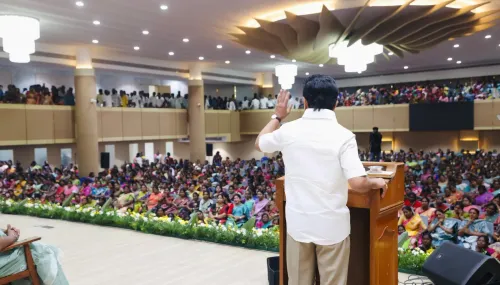
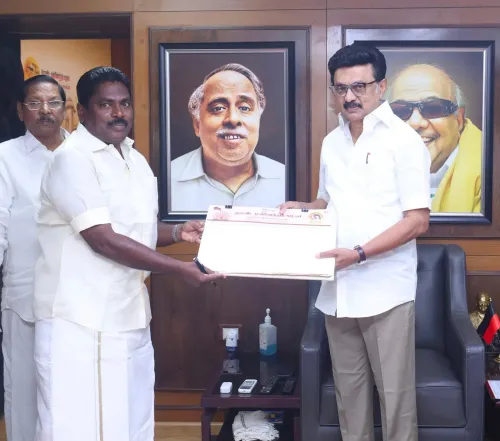
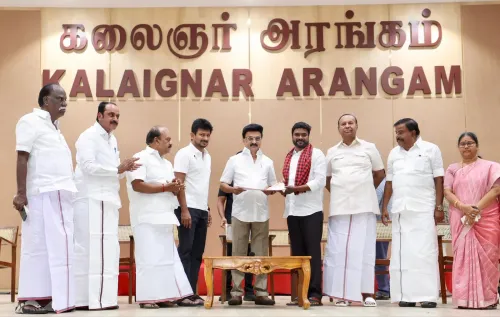
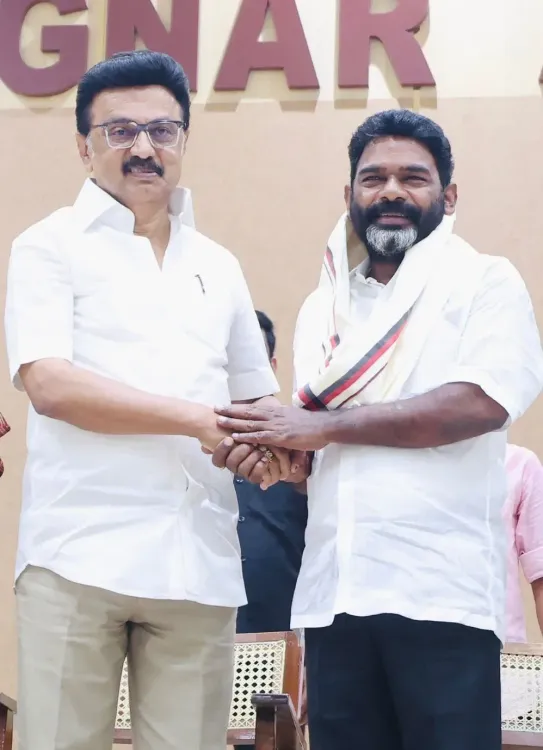
DMK president M. K. Stalin on Sunday, June 7, 2026, formally welcomed former legislator Panaiyur Babu and more than 1,000 supporters into the party, invoking the foundational Dravidian principle of 'eradication of dominance' to frame the induction as an ideological homecoming rather than a numerical gain.
Posting in Tamil on X, Stalin quoted DMK founder C. N. Annadurai — 'Aadhikka ozhippey, DMK-vin thittam!' ('Eradication of dominance is DMK's plan!') — at the very top of his message, signalling that the party's welcome of new entrants is anchored in doctrine, not mere political arithmetic.
Context
Stalin praised Panaiyur Babu, who goes by the handle @PanaiyurBabu on X, for the manner of his departure from his previous political home. 'Even while leaving, he stated his reasons with admirable civility and then joined the party,' Stalin wrote, holding up the conduct as a model of political dignity. The former MLA brought with him over 1,000 followers, a significant grassroots addition.
Stalin also issued a pointed message to all party members: those who have joined after switching sides should not speak with bitterness about those they left behind. 'Do not speak with resentment against anyone merely because they parted ways,' he wrote, urging constructive thinking and continued field work.
Policy Backdrop
The Dravida Munnetra Kazhagam was established in 1949 by C. N. Annadurai on the explicit ideological tenet of dismantling social and caste-based dominance — a principle the party calls aadhikka ozhippu. Successive DMK presidents have consistently returned to this founding language when inducting new members, using the occasion to reaffirm ideological continuity.
Tamil Nadu politics has historically seen waves of legislator-level movement between parties, particularly in the run-up to assembly elections. The DMK's practice of framing such inductions in Annadurai's words is a deliberate organisational signal: that new entrants are expected to absorb the party's rationalist, federalist and social-justice ethos, not merely add to its headcount.
Stakeholders and Impact
Panaiyur Babu's induction, alongside more than 1,000 workers, strengthens DMK's ground presence at the booth level — the unit that matters most in Tamil Nadu's highly mobilised electoral geography. For the incoming members, association with the ruling party provides both ideological legitimacy and organisational resources ahead of the next election cycle.
Stalin's public instruction against bitterness also serves an internal party-management function: it signals to existing DMK cadre that new entrants should be integrated without friction, preserving cohesion ahead of what is expected to be a keenly contested electoral season.
What's Next
Attention will now turn to DMK's organisational meetings and candidate-selection processes as the 2026 Tamil Nadu assembly election cycle advances. Further public inductions of this kind — each wrapped in Annadurai-era language — are likely as the party consolidates its coalition and positions itself for the contest. Stalin's emphasis on 'constructive thinking and field work' suggests the party is shifting from outreach mode to ground-level mobilisation.
Point of View
Lending the induction moral weight beyond electoral arithmetic. The explicit instruction against post-defection bitterness is equally significant — it is a public party-management directive aimed at preventing factional friction as the DMK absorbs new entrants ahead of a high-stakes election cycle. The welcome of a former legislator with over 1,000 workers also signals that the party is prioritising booth-level organisational depth, the decisive variable in Tamil Nadu's closely fought constituencies. Taken together, the post reflects a party leadership that is simultaneously managing ideology, internal discipline and electoral logistics in a single public communication.
NationPress
21 Oct 2026
Frequently Asked Questions
Who is Panaiyur Babu and why did he join DMK?
Panaiyur Babu is a former Tamil Nadu MLA who joined the DMK in 2026 along with over 1,000 supporters. DMK president M. K. Stalin stated that Babu left his previous party with clarity and civility, publicly stating his reasons before joining the DMK.
What does 'eradication of dominance' mean in DMK ideology?
'Eradication of dominance' — aadhikka ozhippu in Tamil — is a foundational principle of the DMK , articulated by party founder C. N. Annadurai when the party was established in 1949 . It refers to dismantling social, caste-based and political hegemony as a core party objective.
Why did Stalin quote Annadurai when welcoming new members?
M. K. Stalin quoted C. N. Annadurai to signal that the induction of Panaiyur Babu and his supporters is rooted in the DMK's founding ideology, not just a numerical political gain. This is a consistent DMK practice of reinforcing ideological continuity during membership drives.
How significant is Panaiyur Babu's joining for DMK ahead of 2026 elections?
The induction of former MLA Panaiyur Babu with over 1,000 workers strengthens DMK's booth-level presence, which is critical in Tamil Nadu's competitive assembly constituencies. The move is seen as part of the party's ground-level mobilisation ahead of the 2026 Tamil Nadu assembly elections .
What message did Stalin give to DMK members about new joiners?
Stalin urged all DMK members not to speak with bitterness or resentment against those who had previously parted ways from other parties. He called for constructive thinking and continued field work, framing it as the standard of dignity the party expects from its cadre.