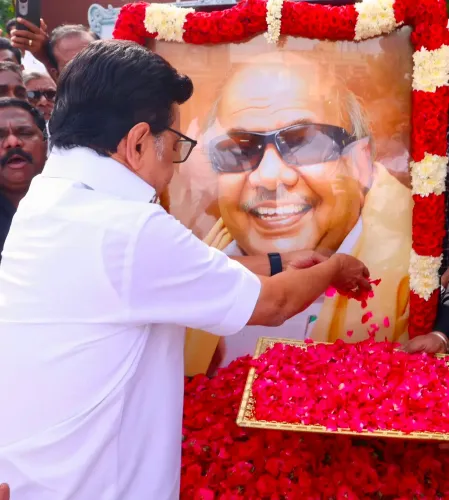
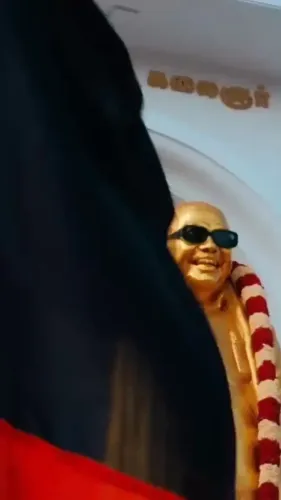
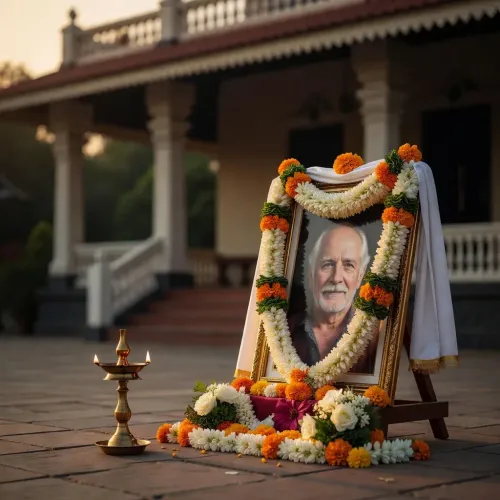
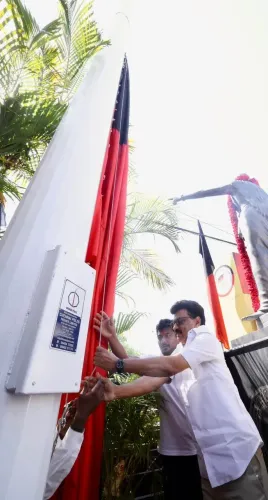
Stalin pays tribute to Karunanidhi on birth anniversary, vows DMK comeback
Synopsis
On Karunanidhi's June 3 birth anniversary, DMK president M. K. Stalin posted a Tamil tribute calling his late father the 'exalted leader of the Tamil race', acknowledged a recent electoral setback, and pledged that the party would write a new chapter of victory and dispel the darkness around Tamil Nadu.
Key Takeaways
Stalin posted a Tamil tribute on 3 June 2026 marking the birth anniversary of M.
Karunanidhi (1924-2018).
Stalin called Karunanidhi the 'exalted leader of the Tamil race' who worked till his last breath, even from a wheelchair.
The post candidly admits the DMK has 'lost the opportunity of victory' but promises to 'write the story of victory once again'.
It invokes the party's Rising Sun symbol, vowing to drive away the 'darkness' gathering around Tamil Nadu.
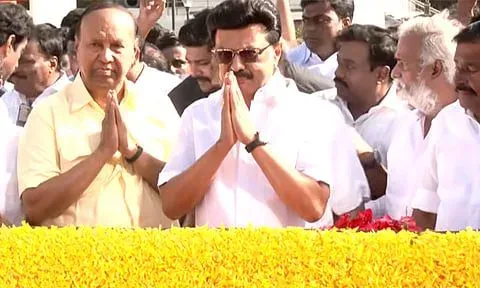
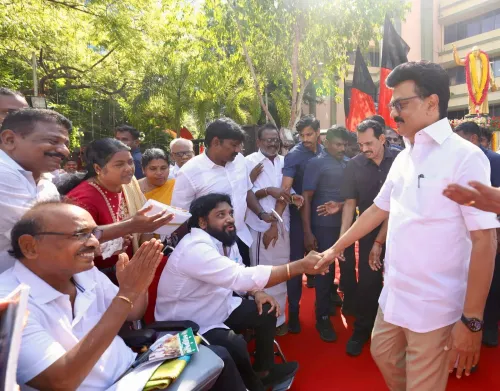
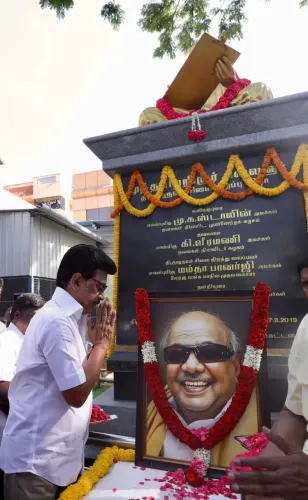
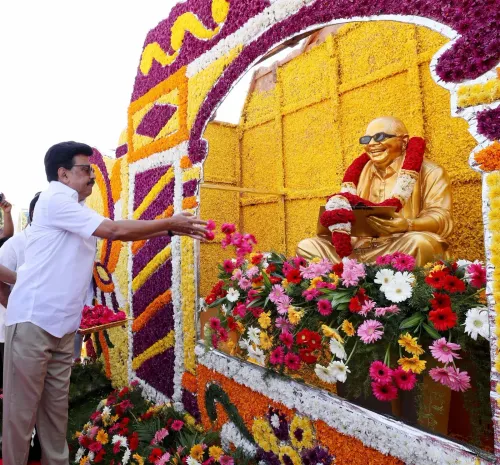
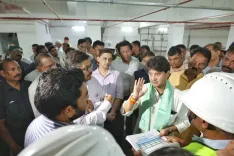
The message closes with the hashtag #KalaignarForever and was shared with four images.
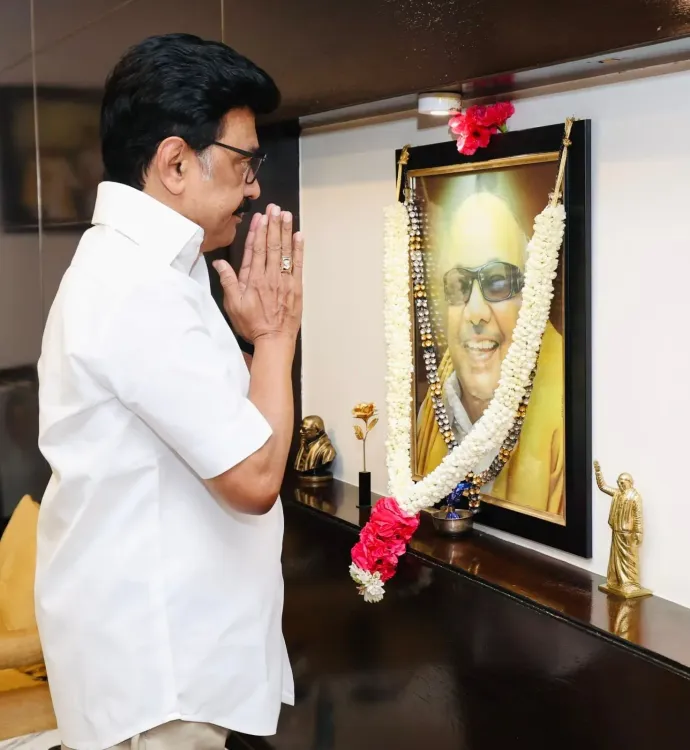
DMK president M. K. Stalin on Wednesday, June 3, 2026, paid a deeply personal tribute to his late father and Dravidian icon M. Karunanidhi on the latter's birth anniversary, describing him as the 'leader of the Tamil race' whose energy continues to drive the party even after a recent electoral setback. In a multilingual Tamil post accompanied by four images, Stalin pledged that the DMK would 'write the story of victory once again' and dispel the darkness gathering around Tamil Nadu.
Calling Karunanidhi the 'unnatha thalaivar' (exalted leader) who 'worked tirelessly for the upliftment of the Tamil people till his last breath, even after age confined him to a wheelchair', Stalin wrote, 'Leader Kalaignar, who forever moves me…' He went on to say that the strength of a man 'who swam through seas of trial without fatigue, never letting victory go to his head nor defeat to his heart' now lived within him and within every party worker Karunanidhi had nurtured.
The post closed with the hashtag #KalaignarForever and a striking metaphor drawn from the party's symbol: 'With the light of the Rising Sun, we will drive away the darkness surrounding Tamil Nadu.'
Context
June 3 marks the birth anniversary of Muthuvel Karunanidhi (1924-2018), the five-time Chief Minister of Tamil Nadu who led the Dravida Munnetra Kazhagam for nearly five decades until his death in August 2018. Since then, the DMK has observed the date as a major organisational occasion, and Stalin — who succeeded him as party president in 2018 — has used it to renew the cadre's ideological commitment.
This year's message is notable for its candid acknowledgement of an electoral reverse. 'Now, we have lost the opportunity of victory,' Stalin wrote, before insisting that Karunanidhi's legacy of resilience would power a return. He framed the moment as a test rather than a terminus, invoking the elder leader's own decades of alternating between government and opposition.
Policy backdrop
Karunanidhi led the DMK to assembly victories in 1967, 1971, 1989, 1996 and 2006, and is credited with shaping the state's welfare architecture in education, nutrition and prohibition, as well as with championing Tamil language rights and federalism. Stalin's tribute draws explicitly on that lineage, casting the present-day DMK as the continuation of a long political project rather than a party in transition.
Founded in 1949, the DMK has built much of its mass identity around the figure of Karunanidhi — orator, screenwriter and administrator — and the party's annual commemorations function as an ideological renewal exercise, binding successive generations of cadre to the founder-era narrative of perseverance.
Stakeholders and impact
The immediate audience is the DMK's organisational base across Tamil Nadu, where the message is designed to steady morale after the unspecified setback. By stressing that Karunanidhi's 'strength is not with me alone, but with every brother and sister you raised with inspiration', Stalin spreads the burden of revival across the cadre rather than centralising it in the leadership.
For the wider Tamil Nadu electorate, the tribute signals that the DMK intends to fight the next round of contests on the familiar terrain of Dravidian continuity, social justice and the Karunanidhi mythos rather than reinvent its pitch. Allies and rivals alike are likely to read the 'Rising Sun' line as an early framing device for the campaigns to come.
What's next
Attention now turns to how the DMK consolidates its organisation, finalises candidates and sharpens its messaging ahead of the next assembly and local body cycles in Tamil Nadu. Expect more leader-anniversary set pieces — Karunanidhi's death anniversary in August, party foundation day in September — to be deployed in the same key, with Stalin positioning the party's recovery as a generational duty owed to its founding figure.
The forward-looking promise embedded in the post — to 'write the story of victory once again' — sets a public benchmark against which the DMK's performance in the coming polls will be measured.
Point of View
He leans on the founder's biography of repeated comebacks to manage cadre morale. The deliberate invocation of the Rising Sun symbol and the call to dispel 'darkness' read as the opening notes of a longer political recovery campaign. How quickly that translates into organisational changes and a refreshed Tamil Nadu pitch will define the next phase of Stalin's leadership.
NationPress
21 Sept 2026
Frequently Asked Questions
When is M. Karunanidhi's birth anniversary?
M. Karunanidhi was born on 3 June 1924, and the DMK observes the date each year as Kalaignar's birth anniversary with statewide tributes and commemorations.
What did M. K. Stalin say about the DMK's recent defeat?
Stalin acknowledged that the DMK had 'lost the opportunity of victory' but said Karunanidhi's strength lived on in him and in every party worker, and pledged to 'write the story of victory once again'.
Why does the DMK call Karunanidhi 'Kalaignar'?
Kalaignar, meaning 'the artist' in Tamil, is the honorific by which Karunanidhi is known, reflecting his work as a screenwriter, poet and orator alongside his political career as five-time Chief Minister of Tamil Nadu.
What is the significance of the 'Rising Sun' in Stalin's post?
The Rising Sun is the DMK's official election symbol, and Stalin's pledge to use its light to 'drive away the darkness' over Tamil Nadu is a direct appeal to party identity and a signal of intent for upcoming electoral contests.
How many times was Karunanidhi Chief Minister of Tamil Nadu?
Karunanidhi served as Chief Minister of Tamil Nadu five times, having led the DMK to assembly victories in 1967, 1971, 1989, 1996 and 2006 before his death in August 2018.