Stalin Blasts Tamil Nadu Govt on Inflation, Power Crisis
Synopsis
DMK president M. K. Stalin launched a sweeping attack on Tamil Nadu's ruling government on 13 October 2026, alleging record inflation within four months of its tenure, costly last-minute power procurement at ₹35 per unit, and a botched Mettur Dam opening that has left delta farmers without water.
Key Takeaways
Stalin accused Tamil Nadu's ruling government of pushing the state to number one in inflation and essential-goods price rise within its first four months.
He alleged the Food Minister publicly denied any price rise, calling it a 'brazen lie' that has deepened public anger among poor households.
Stalin charged that the government cancelled cheaper electricity contracts from the previous administration and is now buying power on the open market at ₹35 per unit — which he described as the highest rate any Indian state has paid.
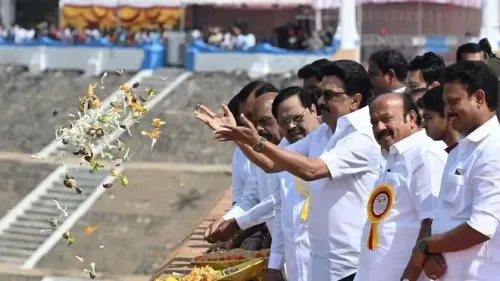
He alleged the Mettur Dam was opened on a wrong date following an astrologer's advice rather than farmers' recommendations, jeopardising both kuruvai and samba crop seasons in the Cauvery delta .
A separate ₹5-crore roadside barricade project, he said, served only as Chief Minister social-media content with no agricultural benefit.
Stalin tied the electricity expenditure to allegations that the ruling party openly admitted plans to purchase 15 more AIADMK MLAs , raising questions about public funds.
Four months into a new government's tenure, DMK president M. K. Stalin has issued one of his sharpest broadsides yet — accusing Tamil Nadu's ruling administration of pushing the state to the top of a list no one wants to lead: inflation and price rise. In a blistering post on Tuesday, 13 October 2026, Stalin catalogued what he called a cascading failure of governance — from soaring essential commodity prices to a looming electricity crisis and a dam-opening decision he says was taken on an astrologer's advice rather than farmers' counsel.
The inflation charge and a minister's 'brazen lie'
Stalin opened his attack on the price front, writing — 'த.வெ.க. ஆட்சி அமைந்த நான்கே மாதங்களில் தமிழ்நாடு முதலிடம்!' ('In just four months of the ruling government, Tamil Nadu has taken first place!') — and then turned the irony: first place in inflation and rising costs of essential goods. He accused the Food Minister of issuing what he called a 'thoroughly filtered lie' — claiming publicly that no price rise has occurred — and said that lie has left ordinary poor citizens seething.
Price management of essential commodities has long been a political flashpoint in Tamil Nadu. Both the DMK and the AIADMK have traded accusations on this front across multiple election cycles, making it a perennial instrument of opposition politics in the state.
Power at ₹35 a unit — and cancelled cheaper contracts
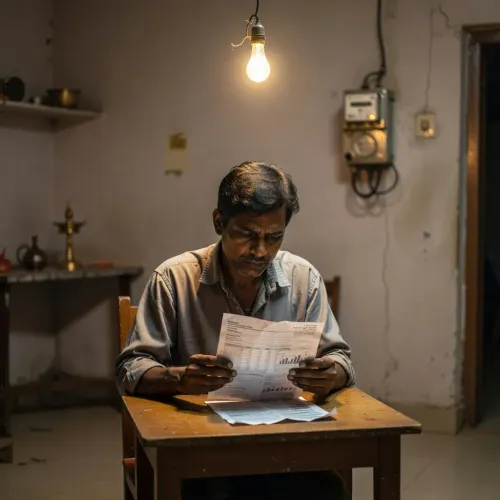
The electricity section of Stalin's post carried the heaviest financial charge. He alleged that while opposition parties had been warning about power cuts for months, the government did nothing — and that the Electricity Minister was busy pointing to Punjab as a reference while the Chief Minister flew off to London. Now, he claimed, the administration is scrambling to buy power on the open market at ₹35 per unit — a rate he described as the highest any Indian state has ever paid.
He went further: the government, he alleged, cancelled lower-cost electricity purchase agreements made during the previous DMK (Kalacham) administration before turning to this expensive emergency procurement. 'Whose money is this?' he asked pointedly, tying the power expenditure to a separate accusation that the ruling party had openly admitted to planning the purchase of 15 more AIADMK MLAs — and suggesting the two financial drains might be connected in public perception.
Tamil Nadu's electricity procurement costs and load-shedding cycles have drawn political fire since the 2010s, when the state first faced acute shortfalls. The specific figures Stalin cited — the ₹35-per-unit rate and the contract cancellations — could not be independently verified from available records, but the structural pattern of last-minute open-market power purchases at a premium is a well-documented feature of state electricity boards across India during demand spikes.
Mettur Dam, an astrologer, and farmers without water
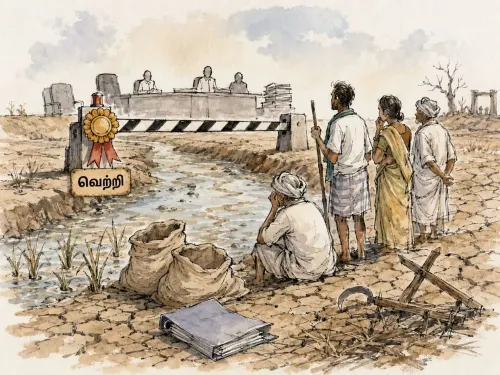
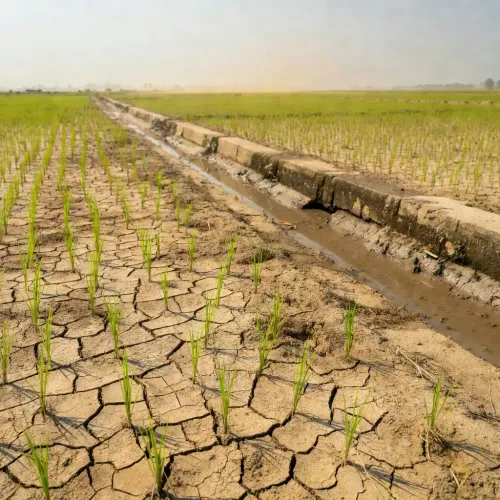
Stalin's agricultural indictment centred on Mettur Dam, the lifeline of the Cauvery delta. He alleged that after the kuruvai (short-season) crop had already failed, the government compounded the damage by opening the dam on the wrong date — ignoring the pleas of delta farmers and, he charged, acting instead on an astrologer's recommendation. A ₹5-crore roadside barricade project, he said, generated footage for the Chief Minister's social media reels but delivered nothing of agricultural value.
With the samba (main-season) cultivation window now in doubt, he said, tail-end farmers in the delta are struggling without water. Mettur's opening date has been politically contested in the Cauvery basin for decades — successive governments have faced protests from Thanjavur and surrounding districts when water arrives late or in insufficient quantities.
A cabinet compared to 'monkeys with tails on fire'
Stalin's closing was rhetorical thunder. He described the ruling cabinet as a group with 'neither foresight nor brains' — and invoked the Tamil literary image of monkeys with burning tails leaping through a forest and setting it ablaze. The Chief Minister, he wrote, was busy gracing functions in Udupi, London, and Vijayawada — 'one city per month' — while Tamil Nadu deteriorated before the public's eyes.
His sign-off was not a political slogan but a statement of anxiety: that given this 'negligence and destructiveness', the overriding fear is how the people of Tamil Nadu will cope in the months ahead.
The hashtag #Collectionகுமாரு appended to the post is a pointed local political reference — a label that has circulated in Tamil political discourse as a nickname for political operators associated with financial 'collection' or transactional politics.
Point of View
Power, water) into a single narrative of incompetence and corruption, timed to inflict maximum damage before any legislative session where supplementary power budgets will face scrutiny. The ₹35-per-unit electricity charge, if it gains traction in public discourse, could become the defining accountability symbol of this government's early months, much as specific power-procurement scandals have elsewhere in India. The Mettur Dam angle is particularly potent in delta constituencies where agricultural grievances translate directly into electoral outcomes. The explicit reference to buying MLAs from the AIADMK — framed as a 'confession' — signals that Stalin intends to run a dual-track assault: administrative failure alongside democratic legitimacy.
NationPress
13 Oct 2026
Frequently Asked Questions
What did M. K. Stalin accuse the Tamil Nadu government of in his October 2026 post?
Stalin accused the ruling government of driving Tamil Nadu to the top of the national inflation index within four months, procuring electricity on the open market at ₹35 per unit after cancelling cheaper contracts, mismanaging the Mettur Dam opening date, and planning to purchase 15 more opposition MLAs.
What is the controversy about Tamil Nadu buying electricity at ₹35 per unit?
Stalin alleged that the current Tamil Nadu government first cancelled low-cost power purchase agreements made by the previous administration, then turned to expensive last-minute open-market procurement at ₹35 per unit — a price he claimed is the highest any Indian state has ever paid for electricity.
Why is the Mettur Dam opening date politically sensitive in Tamil Nadu?
Mettur Dam is the primary water source for Cauvery delta farmers cultivating kuruvai and samba crops. Delays or incorrect opening dates can ruin entire crop seasons for thousands of farmers in Thanjavur and surrounding districts, making it a recurring flashpoint in Tamil Nadu politics.
What does the hashtag #Collectionகுமாரு mean in Tamil politics?
The hashtag is a pointed Tamil political reference — 'Collection குமாரு' (Collection Kumaru) — that has circulated as a nickname implying transactional or money-driven political dealings, used here by Stalin to frame his corruption allegations against the ruling dispensation.
Is DMK currently in power in Tamil Nadu?
Based on Stalin's post, the DMK is currently in opposition in Tamil Nadu, with a government he refers to as 'த.வெ.க.' (TVK) in power. Stalin served as Chief Minister when the DMK held office.