Jal Shakti Minister Paatil Reviews FMBAP Flood Projects
Synopsis
Union Jal Shakti Minister C. R. Paatil reviewed the Flood Management and Border Areas Programme on October 13, 2026, directing officials to complete all ongoing flood-control projects on schedule and reaffirming the government's commitment to strengthening flood resilience across vulnerable regions.
Key Takeaways
Union Jal Shakti Minister C.
Paatil chaired an FMBAP review meeting on October 13, 2026 .
The meeting focused on strengthening flood-control capacity, reducing flood damage, and improving flood management in sensitive areas.
Paatil directed officials to ensure time-bound completion of all ongoing projects under the scheme.
FMBAP is a centrally sponsored scheme under the Ministry of Jal Shakti , which was formed in May 2019 by merging two water-sector ministries.
The scheme particularly targets border regions and flood-prone river basins , funding embankments, drainage, and anti-erosion works.
Post-monsoon October reviews are critical for identifying project gaps before pre-monsoon preparations begin for the following year.
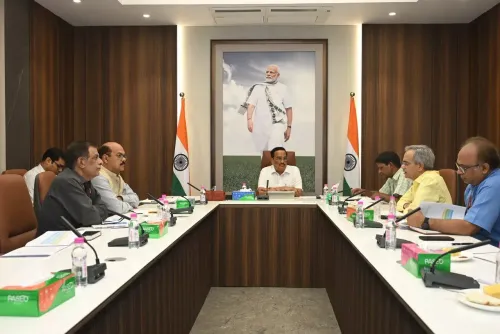
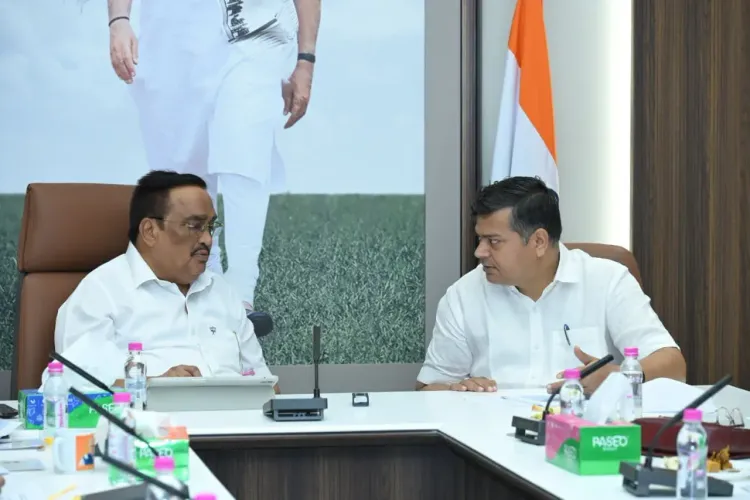
Flood defences across India's most vulnerable river basins came under scrutiny on Tuesday, October 13, 2026, as Union Jal Shakti Minister C. R. Paatil chaired a high-level review of the Flood Management and Border Areas Programme (FMBAP) — the central government's primary instrument for structural flood control — and issued a clear directive: every project must finish on time.
Posting in Hindi on X, Minister Paatil said the meeting focused on 'बाढ़ नियंत्रण की क्षमता को मजबूत करने' — 'strengthening flood-control capacity' — along with reducing flood-related losses and building a more robust flood-management system in sensitive areas. Officials were instructed to ensure 'time-bound completion' of all ongoing projects.
What FMBAP Does — and Why It Matters
The Flood Management and Border Areas Programme is a centrally sponsored scheme under the Ministry of Jal Shakti, the umbrella water ministry formed in May 2019 by merging the erstwhile Ministries of Water Resources and Drinking Water and Sanitation. The consolidation was designed precisely to integrate river management, flood control, and water supply under one roof.
FMBAP funds state-level flood-control works — embankments, drainage channels, anti-erosion measures — with a particular focus on flood-prone border regions and ecologically sensitive river basins. The scheme's beneficiaries are the communities most exposed to annual monsoon flooding: farmers, riverside settlements, and border-area populations who have historically had the least buffer against inundation.
Paatil's October Directive: Timelines as a Non-Negotiable
The October review is a standard but consequential part of the programme's governance cycle. Paatil's public emphasis on 'time-bound completion' signals administrative pressure on states and implementing agencies to close out lagging works before the next monsoon season. Delayed embankments or incomplete drainage projects can translate directly into preventable flood casualties and crop losses the following year.
The minister also framed the effort within Prime Minister Narendra Modi's broader governance vision, stating that under Modi's 'visionary leadership' (दूरदर्शी नेतृत्व) the government remains 'continuously committed' to making India's flood-management system more effective and resilient — tagging the Prime Minister directly in the post.
The Stakes for Flood-Prone India
India loses billions of rupees annually to flood damage, with states along the Brahmaputra, Ganga, and Kosi river systems among the hardest hit each monsoon. Successive central governments have channelled plan funds through overlapping flood schemes, but project-completion delays — a persistent bottleneck — often mean infrastructure arrives after the damage is done.
The October timing matters: with the 2026 monsoon season just concluded, this review is exactly when project-completion gaps are freshest in administrators' minds — and when course-corrections made now can still feed into pre-monsoon readiness for 2027. What happens next in the FMBAP pipeline — completion reports, state utilisation certificates, and any supplementary Budget allocations — will determine whether the minister's directive translates into boots-on-ground results before the rains return.
Point of View
When supplementary FMBAP allocations may be at stake. The October timing is shrewd: post-monsoon reviews carry the freshest evidence of infrastructure gaps and political salience for flood-hit constituencies. Framing the exercise under PM Modi's 'visionary leadership' also serves a dual purpose — it connects routine scheme governance to the larger NDA infrastructure narrative while keeping Paatil's own ministerial record anchored to the Prime Minister's credibility. The real test, as with every FMBAP cycle, is whether the directive clears the last-mile bottleneck: slow state-level execution that has historically blunted the programme's impact.
NationPress
14 Oct 2026
Frequently Asked Questions
What is FMBAP and what does it do?
FMBAP stands for the Flood Management and Border Areas Programme, a centrally sponsored scheme under India's Ministry of Jal Shakti. It funds state-level flood-control infrastructure such as embankments, drainage channels, and anti-erosion works, with a focus on vulnerable border regions and flood-prone river basins.
Why did C. R. Paatil hold an FMBAP review in October 2026?
Minister Paatil chaired the review to assess the progress of ongoing FMBAP projects, discuss ways to strengthen flood-control capacity, and direct officials to complete all projects on a time-bound basis — a standard but critical post-monsoon administrative exercise.
Which ministry oversees FMBAP in India?
FMBAP is overseen by the Ministry of Jal Shakti, which was created in May 2019 by merging the Ministries of Water Resources and Drinking Water and Sanitation to integrate river management and flood control under a single ministry.
Which states and regions benefit from FMBAP projects?
FMBAP primarily benefits flood-prone states along major river systems such as the Brahmaputra, Ganga, and Kosi, as well as communities in border areas that are especially vulnerable to annual monsoon flooding and river erosion.
What happens if FMBAP projects are not completed on time?
Delays in completing flood-control infrastructure such as embankments or drainage works mean the structures are not in place before the next monsoon, directly increasing the risk of preventable flood damage, crop losses, and casualties in vulnerable communities.