CM Rekha Gupta Fires Back at Rahul Gandhi Over EC Criticism
Synopsis
Delhi Chief Minister Rekha Gupta took aim at Congress leader Rahul Gandhi on October 14, 2026, accusing him of questioning the Election Commission only after losing power — and calling out Congress's long history of rewarding allies through the same institutions it now critiques.
Key Takeaways
Delhi CM Rekha Gupta publicly challenged Rahul Gandhi on October 14, 2026 , over his criticism of the Election Commission of India .
Gupta listed four specific ways the Congress rewarded individuals — tickets, ministerial posts, governorships, and overlooked allegations — before questioning the EC.
She asked whether Gandhi's criticism represents genuine democratic concern or 'post-defeat frustration.' The Election Commission has not responded to the opposition commentary that prompted this exchange.
The pattern of opposition parties questioning electoral bodies after losses, while defending them in power, has recurred since EVMs were introduced in the late 1990s .
The upcoming winter parliamentary session could bring formal debate on electoral reform, making this exchange a preview of the coming political argument.
When does institutional concern become partisan convenience? Delhi Chief Minister Rekha Gupta posed exactly that question on Wednesday, October 14, 2026, firing a sharp retort at Congress leader Rahul Gandhi for questioning the Election Commission of India — and she did it by turning the Congress party's own history against it.
Posting in Hindi, CM Gupta's message landed like a prosecutor's closing argument. Translated, it reads: 'Kabhee ticket se nawaza, kabhee mantri pad se samman kiya, kabhee rajyapal ki kursi di, kabhee aaropon ko nazar-andaaz kiya' — 'Once rewarded with a ticket, once honoured with a ministerial post, once given the chair of a governor, once allegations were ignored.' The kicker followed: 'Now that power has slipped away, there is a shower of questions on the Election Commission? Rahul Gandhi ji, is this concern for democracy — or an expression of post-defeat frustration?'
The Convenient Memory of Power
The broadside is pointed and structured. Gupta's four-part opening is a deliberate inventory — tickets, ministries, governorships, overlooked allegations — sketching a portrait of an institution the Congress relied upon and rewarded allies through, for decades. The implication is unambiguous: the same party that operated comfortably within these constitutional frameworks now interrogates them only after losing.
It is not an entirely new accusation. The pattern of opposition parties raising doubts about the Election Commission and electronic voting machines after electoral setbacks — while defending the same processes when in power — has played out repeatedly since EVMs were introduced in the late 1990s. Congress governments themselves defended the Commission's autonomy robustly after the 2009 and 2014 general elections. Ruling dispensations, just as routinely, frame such post-poll criticism as frustration rather than principle.
Rahul Gandhi's Recurring Friction with Electoral Bodies
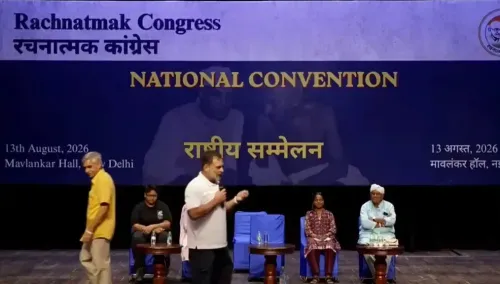
Rahul Gandhi has, over several electoral cycles, questioned aspects of India's voting infrastructure — from EVM reliability to the integrity of voter rolls. The Election Commission, as a constitutional body charged with superintendence of Parliament and state elections, has consistently maintained the robustness of its processes. Whether any specific recent statement by Gandhi triggered this particular response from CM Gupta could not be independently verified.
BJP's Delhi Base and the Broader Stakes
For CM Gupta, the post serves a dual purpose: it defends a constitutional institution from the ruling party's vantage point while simultaneously framing the Congress — and its most prominent face — as sore losers. In Indian politics, where the credibility of electoral machinery is perennially contested, landing that framing first and loudly matters. The Election Commission has so far not responded to the broader wave of opposition commentary that prompted this exchange.
The winter parliamentary session may yet bring formal debate on electoral reform — and when it does, exchanges like this one will set the argumentative table.
Point of View
She shifts the burden by indicting the Congress's own conduct in power. This rhetorical tactic — 'you used the institution when it served you' — is designed to delegitimise the opposition's critique before it gains traction. The exchange reflects a deeper structural tension in Indian democracy: the credibility of electoral bodies is contested not through formal legal channels but through social-media skirmishes that shape public perception long before any parliamentary inquiry begins. Whichever party succeeds in anchoring the dominant narrative on institutional trust typically gains the upper hand heading into the next election cycle.
NationPress
14 Oct 2026
Frequently Asked Questions
Why did Delhi CM Rekha Gupta criticise Rahul Gandhi about the Election Commission?
CM Rekha Gupta accused Rahul Gandhi of questioning the Election Commission only after losing power, arguing that the Congress party had previously rewarded individuals through the same institutions it now critiques.
What did Rekha Gupta say about Rahul Gandhi on X?
She posted in Hindi listing four ways Congress previously used institutional power — tickets, ministerial posts, governorships, overlooking allegations — and then asked whether Gandhi's EC criticism was democratic concern or 'hار ki baukhlahat' (post-defeat frustration).
Has Rahul Gandhi criticised the Election Commission before?
Yes. Rahul Gandhi has, across multiple electoral cycles, questioned aspects of India's electoral infrastructure, including EVM reliability and voter roll integrity, typically after electoral setbacks for the Congress party.
Has the Election Commission responded to the opposition's criticism?
As of this report, the Election Commission has not issued a formal response to the current wave of opposition commentary that prompted CM Gupta's post.
Is questioning the Election Commission after losing elections a new trend in India?
No. Since EVMs were introduced in the late 1990s, multiple opposition parties have raised doubts about the electoral machinery after defeats, while defending the same processes when in power — a recurring pattern across party lines.