CM Rekha Gupta Demands Sedition Case Against Rahul Gandhi
Synopsis
Delhi CM Rekha Gupta has demanded a sedition case against Rahul Gandhi and Opposition leaders, accusing them of making baseless allegations against the Election Commission — which she says the Commissioners themselves have denied as '100% false.'
Key Takeaways
Delhi CM Rekha Gupta publicly demanded a sedition case be filed against Rahul Gandhi and other Opposition leaders on September 27, 2026 .
The demand follows Opposition allegations that Election Commissioners were being 'bypassed' in decision-making — claims Gupta says the Commissioners called ' 100% false .' Gupta accused the Opposition of trying to 'mislead people and divert attention from development and their own failures.' The sedition demand marks a significant rhetorical escalation, framing criticism of an electoral institution as an attack on the state.
The dispute echoes similar opposition challenges to Election Commission neutrality that surfaced after the 2024 general elections .
No formal case had been filed at the time of the post; formal legal or ECI responses remain to be seen.
A sharp political flashpoint erupted on Sunday, September 27 when Delhi Chief Minister Rekha Gupta escalated the ruling party's counter-offensive against the Opposition, demanding that a case of sedition be filed against Rahul Gandhi and other Opposition leaders for what she called baseless and destabilising attacks on the Election Commission of India.
The Sedition Demand — and Why It Lands Like a Grenade
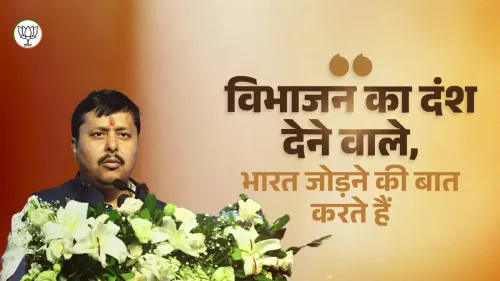
CM Gupta's statement does not mince words. She argues that the Opposition's campaign of 'baseless allegations' against the Election Commission and the Chief Election Commissioner is not merely political mudslinging — it is, in her framing, 'no less than sedition.' She goes further, calling explicitly for a formal sedition case to be filed against Rahul Gandhi and others involved.
Invoking sedition against a sitting Leader of the Opposition is a serious rhetorical escalation. Whether or not it translates into a legal filing, the demand itself signals that the BJP intends to treat the Opposition's election-integrity campaign as an attack on a constitutional institution, not a legitimate policy debate.
The Election Commission Row at the Centre of the Clash
The immediate trigger is a dispute over the internal workings of the Election Commission of India. Opposition leaders, according to CM Gupta's post, alleged that Election Commissioners were being 'bypassed' in decision-making — a claim she says the Commissioners themselves have categorically denied, calling it '100% false' and confirming that all decisions were taken unanimously.
This is not a new battlefield. Questions over Election Commission procedures and EVM integrity surfaced repeatedly during and after the 2024 general elections, and opposition parties have persistently framed institutional independence as a live concern. The ruling party has, with equal consistency, dismissed such challenges as deflection from the Opposition's electoral failures.
Rekha Gupta's Framing: Diversion, Distraction, Disruption
CM Gupta layers her accusation carefully: the Opposition is not merely wrong, she contends — it is deliberately 'misleading people and diverting attention from development and their own failures.' This three-part framing (distraction, failure-concealment, institutional damage) is a standard BJP counter-narrative, but the addition of a sedition demand gives it unusual legal teeth, or at least unusual legal theatre.
The post also broadens the target beyond Rahul Gandhi to 'other Opposition leaders,' widening the implied legal threat across the opposition benches.
What the Election Commission and the Courts Could Do Next
Two threads are worth watching. First, whether any BJP-aligned complainant actually files a sedition or related case, and if so, whether courts admit it. Second, whether the Election Commission issues any further formal clarification — or chooses institutional silence, which carries its own signal. Opposition parties are unlikely to retreat; expect counter-statements before the day is out.
A constitutional body's credibility, a sedition demand against the country's main opposition leader, and a ruling party confident enough to go on offence — this argument is far from over.
Point of View
Keeping the BJP on aggressive front-foot ahead of any upcoming electoral cycle. The invocation of sedition against a prominent opposition leader — however unlikely to survive court scrutiny — forces the narrative onto the ruling party's preferred ground of patriotism versus disruption. This mirrors a well-worn BJP playbook of treating opposition attacks on constitutional bodies as attacks on the nation itself. The Election Commission, caught in the middle, faces pressure to either defend its public credibility or risk being seen as a passive backdrop in a partisan war.
NationPress
27 Sept 2026
Frequently Asked Questions
Why is Delhi CM Rekha Gupta demanding sedition charges against Rahul Gandhi?
CM Rekha Gupta has demanded sedition charges against Rahul Gandhi because she says he and other Opposition leaders made false allegations that Election Commissioners were being bypassed in decision-making — claims she says the Commissioners themselves denied as '100% false.'
What did the Election Commission say about being bypassed?
According to CM Gupta's statement, the Election Commissioners themselves clarified that the allegation of Commissioners being bypassed is '100% false' and that all decisions were taken unanimously. This has not been independently verified.
What is the Opposition's allegation against the Election Commission?
Opposition leaders, including Rahul Gandhi, allegedly claimed that Election Commissioners were being bypassed in internal decision-making — part of a broader pattern of opposition concerns about Election Commission independence that intensified after the 2024 general elections.
Has a sedition case actually been filed against Rahul Gandhi?
As of CM Gupta's post on September 27, 2026, no formal sedition case had been confirmed as filed. Her statement is a public demand for such action, not a confirmation that a case has been registered.
What is the BJP's broader argument about Opposition criticism of the Election Commission?
The BJP, as articulated by CM Gupta, argues that the Opposition's attacks on the Election Commission are a deliberate distraction from development failures and constitute an attempt to destabilise institutions — rhetoric the party has used consistently since the 2024 election cycle.