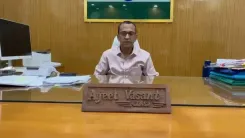
CM Rekha Gupta warns opposition 'regime change' bids will fail
Synopsis
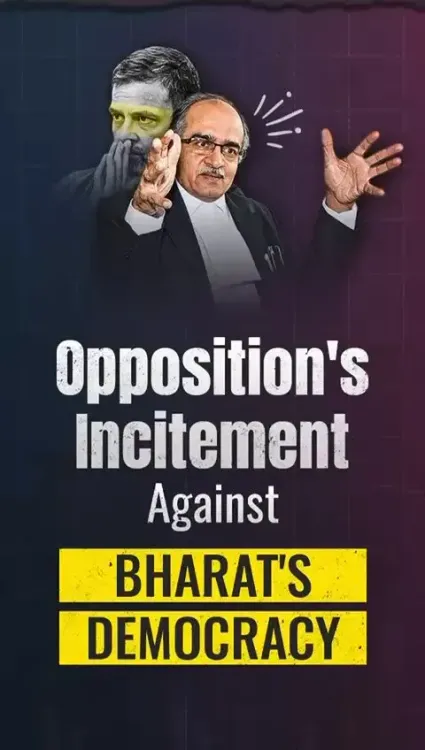
Delhi Chief Minister Rekha Gupta warned on October 16 that opposition 'regime change' conspiracies will not work in India, asserting that the country's aware public will deliver a befitting reply to those spreading anarchy against the democratic mandate.
Key Takeaways
Delhi CM Rekha Gupta posted a strong political warning on October 16, 2026 , targeting what she called opposition 'regime change' conspiracies.
She declared that plots to seize power by 'spreading anarchy against the public mandate' will never succeed in India.
Gupta appealed to jagruk janta (the aware public) as the ultimate check, not the courts or security apparatus.
The rhetoric frames the opposition's conduct as an assault on democratic legitimacy rather than conventional political opposition.
No specific incident triggering the statement was identified; no immediate response from Delhi opposition parties was recorded at publication time.
The 'regime change' framing is part of a broader pattern used by ruling parties across India's multi-party system when facing sustained opposition pressure.
A sharp political warning echoed out of Delhi on Friday, October 16, 2026, as Delhi Chief Minister Rekha Gupta took to X to declare that opposition conspiracies aimed at toppling elected governments through 'regime change' will find no ground in India — and that an alert citizenry will deliver a decisive rebuff to any such attempt.
Posting in Hindi, CM Gupta wrote: 'विपक्ष की 'Regime Change' की साजिशें हिंदुस्तान में नहीं चलेंगी!' — ('The opposition's 'Regime Change' conspiracies will not work in Hindustan!') — adding that plots to seize power by 'spreading anarchy against the public mandate' will never succeed, and that the country's aware and awakened public will give such anarchic elements a 'befitting reply.'A charge rooted in a familiar political battleground
Gupta, a senior BJP leader who leads the Delhi government, was firing at what she described as a deliberate strategy by opposition forces to destabilise a legitimately elected administration rather than engage through democratic means. The language — 'mandate', 'anarchy', 'regime change' — is pointed. It frames the opposition's conduct not merely as political opposition but as an assault on democratic legitimacy itself. This is not an isolated rhetorical frame. Across India's competitive multi-party system, ruling parties at both the state and national level have repeatedly invoked the spectre of 'anti-democratic' subversion when faced with sustained opposition pressure, street protests, or legal challenges to the sitting government. The accusation of engineering 'regime change' specifically carries an internationally loaded resonance — evoking external-interference narratives while applying them to domestic political rivals.Why 'the people' are the argument
Crucially, Gupta's post does not appeal to the courts, security agencies, or the legislature as the intended check on the opposition. It appeals to jagruk janta — the aware public. This is a deliberate rhetorical move: it returns authority to the voter, positions the ruling party as a defender of the electoral verdict, and casts the opposition as being at war with the popular will rather than merely with the BJP. The invocation of 'anarchy' (arajkata) is equally calculated. It implies that the methods being employed — whatever their specific form — cross the line from legitimate dissent into disorder, delegitimising opposition mobilisation before the public even evaluates it on its merits.Opposition response and what follows
No immediate response from Delhi's opposition parties had been registered at the time of publication. Whether this statement is a standalone salvo or the opening of a broader political confrontation in the capital will depend on how the opposition chooses to engage — or whether they allow the framing to stand unchallenged. Delhi's political temperature, rarely lukewarm, is worth watching closely.The battle over who speaks for the mandate in Delhi is, for now, decisively joined.
Point of View
She reinforces the BJP's standard positioning as the guardian of the electoral verdict — a frame that has proven durable across multiple election cycles. The use of the English phrase 'Regime Change' inside a Hindi post is deliberate signalling: it evokes external-interference narratives and elevates a domestic political dispute to the register of national sovereignty. The real political test arrives when the opposition responds — and defines on its own terms what it is actually doing.
NationPress
16 Oct 2026
Frequently Asked Questions
What did Delhi CM Rekha Gupta say about regime change?
On October 16, 2026, Rekha Gupta posted on X declaring that opposition 'regime change' conspiracies will not work in India, warning that plans to seize power by spreading anarchy against the public mandate will never succeed and that an aware public will give such elements a befitting reply.
Which party is Rekha Gupta targeting with the regime change remark?
Gupta's post refers broadly to 'the opposition' without naming a specific party. No particular opposition group was identified in her statement.
What does 'regime change conspiracy' mean in Indian politics?
In the Indian political context, the term is used by ruling parties to accuse opposition groups of attempting to destabilise or remove elected governments through protests, legal manoeuvres, or other means rather than through elections — framing such actions as anti-democratic.
Did opposition parties respond to Rekha Gupta's statement?
At the time of publication, no immediate formal response from Delhi's opposition parties had been recorded.