CM Rekha Gupta Slams Congress Over Parliament 'Sanatan Insult'
Synopsis
Delhi Chief Minister Rekha Gupta publicly accused Congress and the INDIA alliance of insulting Sanatan Dharma and Lord Ram inside Parliament, invoking the Ayodhya dispute's history and warning of electoral punishment through 'vote ki chot.'
Key Takeaways
Delhi CM Rekha Gupta accused Congress and the INDIA alliance of an 'audacious insult' to Sanatan Dharma and Lord Ram inside the Parliament complex on July 31, 2026 .
She cited Congress's alleged decades-long opposition to the Ram Mandir , including legal challenges and statements questioning Lord Ram's historical existence.
The Supreme Court's 2019 verdict enabling Ram Temple construction at Ayodhya forms the key historical backdrop to her charges.
Gupta closed with an electoral warning — 'vote ki chot' — signalling BJP's intent to make the episode a campaign issue.
The specific Parliament incident she referenced could not be independently verified from available records.
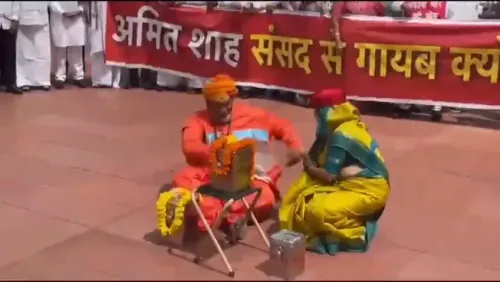
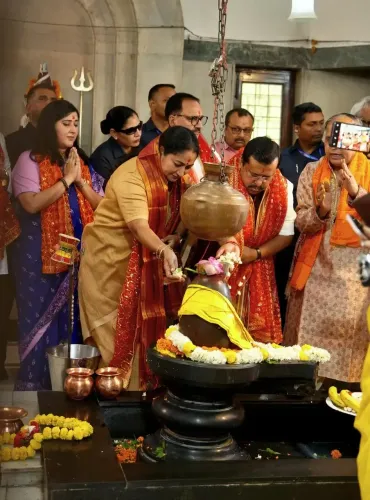
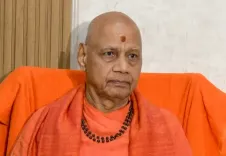
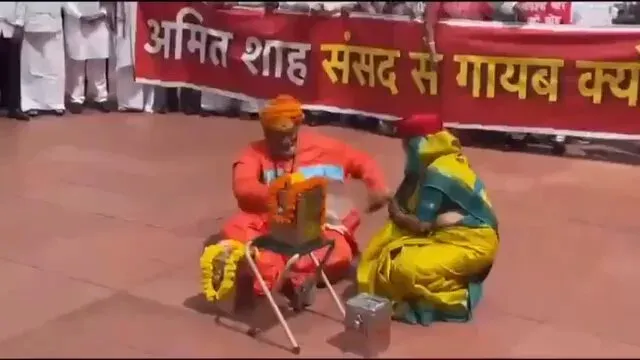
A sharp political broadside landed in Parliament's orbit on Friday, July 31, 2026, as Delhi Chief Minister Rekha Gupta accused the Congress party and the INDIA alliance of brazenly insulting Sanatan Dharma, Lord Ram, and India's saint tradition inside the Parliament complex — and declared the episode proof of what she called the opposition's true 'anti-Hindu face.'
Posting in Hindi, CM Gupta did not mince words: 'dussahasik apamaan' — 'audacious insult' — was her opening charge. She framed the alleged incident not as an isolated outburst but as the latest chapter in a long history, writing that 'the country has not forgotten how they blocked the Ram Temple's construction for decades, weaved a vicious legal labyrinth in the judiciary, declared Lord Ram's very existence fictional, and even spoke of demolishing Ram Lalla's idol and rebuilding the Babri Masjid.'
The Ayodhya Fault Line, Reopened
The Babri Masjid, a 16th-century mosque in Ayodhya, was demolished in December 1992, triggering communal violence and three decades of litigation that consumed Indian courts and politics alike. The Supreme Court of India finally delivered its verdict in November 2019, clearing the way for construction of the Ram Mandir at the disputed site — a ruling the BJP has since wielded as a civilisational vindication. CM Gupta invoked that entire arc to argue that Congress's record on Ayodhya is not a matter of interpretation but of documented opposition.
BJP leaders have long deployed this framing — positioning Congress as an obstacle to the temple and themselves as its enablers — as a cornerstone of cultural mobilisation before elections. Gupta's post follows that established playbook, but the specific Parliament-premises allegation gives it fresh urgency and a concrete, dateable peg.
The Electoral Warning Embedded in the Outrage
The closing lines of CM Gupta's post carry an unmistakable electoral sting. She wrote that the public had already taught this 'anti-Hindu mindset' a democratic lesson — and would deliver another through 'vote ki chot', literally 'the blow of the vote.' The phrase is a deliberate echo of the BJP's standard counter to street politics: that the ballot box, not the street, is where such battles are settled — and, implicitly, where they will be lost by the opposition.
The specific incident she references inside Parliament could not be independently verified from available records. What is verifiable is the political architecture around it: with state elections on the horizon and the INDIA alliance working to consolidate opposition votes, any moment that can be cast as an affront to Hindu sentiment becomes a high-value mobilisation tool for the ruling BJP.
India's cultural identity debates rarely stay inside Parliament's walls for long. This one is already in the open.
Point of View
She collapses time: the 1992 demolition, the 2019 verdict, and a 2026 Parliament moment become a single, continuous accusation. The phrase 'vote ki chot' signals that this is not just outrage for the record — it is a campaign asset being minted in real time. Congress's response, and whether it engages or sidesteps the Hindu-identity framing, will determine whether this episode gains traction or fades.
NationPress
15 Sept 2026
Frequently Asked Questions
What did Delhi CM Rekha Gupta say about Congress and Sanatan Dharma?
CM Rekha Gupta accused Congress and the INDIA alliance of brazenly insulting Sanatan Dharma, Lord Ram, and India's saint tradition inside the Parliament complex, calling it 'unforgivable and highly condemnable.'
What is the Ram Mandir controversy Rekha Gupta referenced?
The Ram Mandir at Ayodhya was built after a Supreme Court verdict in November 2019 resolved a decades-long dispute over the site where the Babri Masjid — a 16th-century mosque demolished in 1992 — once stood. BJP has long accused Congress of obstructing the temple's construction through legal and political means.
What did Rekha Gupta mean by 'vote ki chot'?
'Vote ki chot' literally means 'the blow of the vote.' CM Gupta used the phrase to warn that voters would electorally punish Congress and the INDIA alliance for what she described as their anti-Hindu stance.
What is the INDIA alliance that Rekha Gupta criticised?
The INDIA alliance is an opposition coalition of political parties formed to contest elections against the BJP-led NDA government at the national level.
Was the Parliament incident Rekha Gupta mentioned verified?
The specific incident alleged to have occurred inside the Parliament complex, which triggered CM Gupta's post, could not be independently verified from available records at the time of publication.